Rosin is a pure, solventless cannabis concentrate that’s getting a lot of love for its clean production process and incredible flavor. The best way to think about it is like squeezing fresh juice from a fruit. But instead of juice, you’re getting a potent, flavorful resin from cannabis using nothing but heat and pressure. This completely avoids chemical solvents, keeping the plant's natural profile of cannabinoids and terpenes just as nature intended.
An Introduction To The World Of Rosin
At its heart, rosin is the pure essence of the cannabis plant. Unlike other concentrates that lean on solvents like butane or CO2 to strip out the good stuff, rosin is made through a completely mechanical process. This is its defining feature and a huge reason why it’s become a favorite among cannabis connoisseurs. The simplicity of the method is its greatest strength, making sure nothing gets between you and the plant's natural chemistry.
The result is a concentrate that delivers a truly authentic expression of the original cannabis strain. By skipping the solvents, the final product holds onto a rich spectrum of terpenes—the aromatic compounds that give cannabis its flavor and smell—and a full house of cannabinoids. This means the taste and effects of rosin often feel more true-to-the-plant than many other extracts you'll find on the market.
What Makes Rosin Special
The appeal of rosin really comes down to a few key benefits that make it stand out. Whether you’re new to concentrates or a seasoned pro, these advantages are hard to ignore.
- Purity and Safety: With no residual solvents, you’re consuming a cleaner product. This puts to rest any worries about improperly purged extracts that can sometimes come with other methods.
- Full-Spectrum Experience: The gentle extraction preserves a wide array of cannabinoids and terpenes. These compounds work together to create the "entourage effect," giving you a more nuanced and complete experience.
- Unmatched Flavor: Because those delicate terpenes aren't damaged or stripped away by harsh chemicals, rosin delivers a vibrant and complex flavor profile that is truly second to none.
Rosin represents a back-to-basics approach in a world full of complex extractions. It’s proof that sometimes the simplest method gives you the most profound results, capturing the soul of the plant without changing a thing.
To help you get the gist quickly, here’s a table that breaks down the essential facts about this unique concentrate.
Rosin At A Glance Key Facts
This table summarizes what rosin is, how it's made, and its key characteristics. Think of it as your cheat sheet before we dive deeper into this awesome extract.
| Attribute | Description |
|---|---|
| What It Is | A solventless cannabis concentrate made using only heat and pressure. |
| Extraction Method | Mechanical separation; no chemical solvents are used in the process. |
| Key Benefit | High purity and a rich, preserved terpene profile for superior flavor. |
| Common Types | Flower Rosin, Hash Rosin, and Live Rosin, each derived from different starting materials. |
| Consumption | Primarily consumed by dabbing, but can also be vaped or added to flower. |
Now that you have the basics down, you’re ready to explore what makes each type of rosin special and find the perfect one for you at Cannavine.
The Art of Extraction: How Rosin Is Made
Making rosin is surprisingly simple, feeling more like a kitchen craft than a complex lab experiment. The whole process boils down to two key ingredients: heat and pressure.
Think about squeezing an orange to get juice. Rosin extraction works on a similar idea, just with more specialized gear. The goal is to gently melt the trichomes—those frosty, cannabinoid-packed crystals on the plant—and then use a whole lot of force to squeeze out the golden oil. It’s a clean, mechanical separation that pulls out the good stuff without adding any chemicals.
The main tool for the job is a rosin press. It's basically two heated plates that can apply very precise amounts of pressure. The cannabis, often tucked into fine micron bags, gets placed between them. These bags act like a filter, letting the pure, melted resin flow out while keeping all the plant bits behind. The result? A clean, pure concentrate.
This simple diagram shows you exactly how it works.
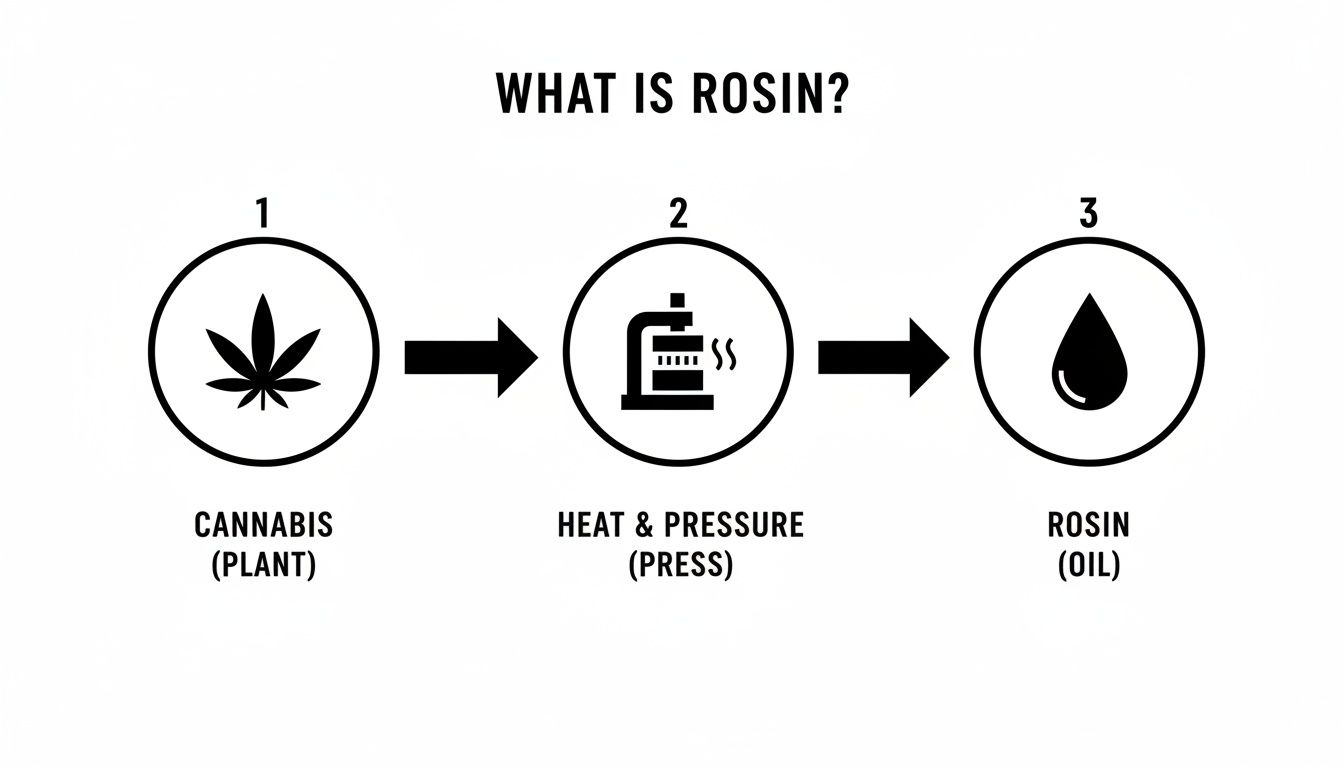
As you can see, it's a straightforward path from raw cannabis to pure rosin oil, all achieved with just heat and pressure. No solvents needed.
Mastering Temperature And Pressure
Making great rosin isn't just about squishing the plant as hard as you can; it's a delicate dance. The extractor's two biggest controls are the temperature of the plates and the amount of pressure they apply. Get these right, and you can dictate the final yield, consistency, and most importantly, the flavor.
Lower temperatures, usually around 160-220°F, are the secret to preserving the delicate terpenes that give rosin its incredible aroma and taste. This approach often creates a sappier or budder-like texture packed with flavor, though the trade-off is usually a smaller yield.
On the flip side, cranking up the heat to 220-250°F can squeeze out more rosin, but you risk scorching those precious terpenes and losing the flavor. This is where the real skill comes in. It takes experience and a feel for the starting material to hit that perfect balance.
It's a lot like searing a perfect steak. Too much heat for too long, and you'll ruin the flavor. Too little, and you won't get that beautiful crust. The art of making great rosin is all about finding that sweet spot where potency and flavor peak.
This clean, solvent-free method is a huge part of why rosin has become so popular. It taps into a growing desire for natural, pure products. In fact, the global rosin market was valued at about USD 1.84 billion in 2024 and is expected to keep growing, largely because people want cleaner, bio-based options. You can check out more stats on the rosin market's growth at IntelMarketResearch.com. It just goes to show that purity and quality are what today's consumers are really looking for.
Exploring The Different Types Of Rosin
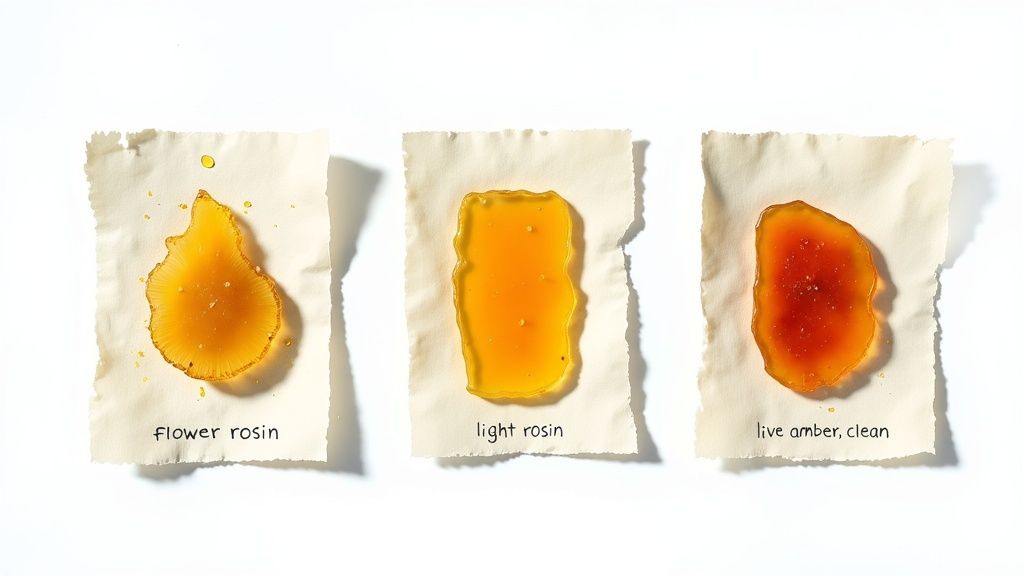
Just like different grapes create distinct wines, the starting material used to make rosin is what defines its final character. The term "rosin" is really an umbrella for several varieties, and each one offers a totally unique experience in flavor, potency, and texture. The biggest difference always comes back to one simple question: what did they press?
Getting a handle on these distinctions is your first step to finding the rosin that perfectly matches what you're looking for. Let’s break down the three main types you'll find on the shelves at Cannavine: Flower Rosin, Hash Rosin, and the highly sought-after Live Rosin. Each one tells a different story about the plant it came from.
Flower Rosin: The Most Direct Expression
Flower rosin is the most straightforward of the bunch. It’s made by taking dried and cured cannabis flower and pressing it directly between the heated plates. Think of it as the freshly squeezed orange juice of the cannabis world—it’s pure, unfiltered, and a direct taste of the plant in its classic form.
This method captures the full, robust profile of the cured bud you’d otherwise smoke. However, because it's pressed straight from the plant, it can sometimes contain microscopic plant lipids and other compounds. This isn't a bad thing, but it can result in a darker color and a slightly less refined flavor compared to its more polished cousins.
- Starting Material: Cured cannabis flower.
- Key Trait: Delivers a powerful and authentic flavor that is very true to the original bud.
- Best For: Purists who want an experience that's as close to smoking the flower as you can get.
Hash Rosin: A Refined And Cleaner Concentrate
Hash rosin takes the process a step further, and the result is a much cleaner concentrate. Instead of pressing the flower itself, extractors first make a concentrate like bubble hash or kief. This hash—which is essentially a pile of the plant's potent trichomes—is then put into the press.
This extra refinement step makes a huge difference. By getting rid of the bulky plant matter beforehand, hash rosin delivers a purer, more potent, and often more flavorful experience. The final product is usually lighter in color with a cleaner taste, since all the undesirable stuff was left behind before it ever saw the press.
Hash rosin represents a significant leap in quality. By pressing an already-refined material, you're essentially concentrating the concentrate. This leads to a product that’s exceptionally clean, potent, and bursting with cannabinoids and terpenes.
Live Rosin: The Pinnacle Of Flavor
Live rosin stands at the very top of the rosin hierarchy, celebrated for its incredible flavor and aroma. The "live" in its name means the starting material was freshly harvested cannabis that was flash-frozen the moment it was cut down. This freezing process perfectly preserves the plant's delicate volatile terpenes—the compounds responsible for its vibrant smell and taste.
From this frozen flower, extractors create live bubble hash, which is then carefully pressed at low temperatures to protect those terpenes. The result? A concentrate that truly captures the living essence of the plant. If you're curious about other "live" concentrates, you can learn more by exploring our detailed guide on what live resin is and how it compares.
Dabbing live rosin is an experience unlike any other. It’s a burst of fresh, complex flavors that you just can't find in products made from cured material. This intricate, labor-intensive process is exactly why live rosin is often the most prized and expensive type you'll find on the market.
To make it even clearer, here’s a quick side-by-side comparison of the three main types of rosin.
Flower Rosin vs. Hash Rosin vs. Live Rosin
| Feature | Flower Rosin | Hash Rosin | Live Rosin |
|---|---|---|---|
| Starting Material | Dried, cured flower | Bubble hash or kief | Fresh-frozen flower (made into live hash) |
| Flavor Profile | Robust, earthy, true-to-flower | Clean, refined, potent | Bright, fresh, complex, "living" plant taste |
| Potency | High | Very High | Highest |
| Cost | Most affordable | Mid-range | Premium |
Each type has its place, from the rustic authenticity of flower rosin to the clean power of hash rosin and the unparalleled terpene explosion of live rosin. The best one really just comes down to what you value most in your concentrate experience.
Potency, Terpenes, And The Rosin Experience
While everyone talks about rosin's incredible potency, the real magic is in the harmony of all its natural compounds. The star of the show isn’t just THC; it’s the amazingly rich and diverse profile of terpenes that the solventless process so carefully preserves. These are the aromatic molecules behind cannabis's signature scents and flavors, from zesty citrus and fresh pine to deep, earthy notes.
Because rosin extraction skips the chemical solvents, these delicate terpenes aren't stripped away or destroyed. Instead, they're gently squeezed out right alongside the cannabinoids. The result is a concentrate that delivers the authentic, full-flavored taste of the original plant. This careful preservation is what makes the rosin experience so vibrant and special.
The Entourage Effect In Action
The real depth of the experience comes from the relationship between cannabinoids and terpenes. This teamwork, known as the entourage effect, is the idea that all these compounds work better together than they do alone. Terpenes don’t just add flavor—they can actually shape and influence the effects of cannabinoids like THC.
For example, a terpene like myrcene might lead to a more relaxing, mellow feeling, while limonene could provide a more uplifting vibe. This synergy creates a more nuanced, full-spectrum experience that just feels more complete than what you'd get from a high-THC distillate stripped of its natural terpenes. To really get a handle on their impact, you can explore our detailed articles on the role of terpenes in cannabis.
Rosin offers a holistic experience that truly respects the plant's natural chemistry. It's not just about the intensity, but the quality and character of the effect—a full orchestra of cannabinoids and terpenes playing in perfect harmony.
This focus on natural compounds isn’t just a cannabis trend. While we're perfecting solventless methods in our industry, other sectors use rosin from pine sap for things like adhesives and coatings. In fact, the Asia Pacific region makes up about 45% of the global rosin resin market, with China alone producing up to 450,000 metric tons a year. This industrial scale shows just how versatile rosin is, though the artisan quality of cannabis rosin is in a class of its own. You can find more details on the global rosin market at Persistence Market Research.
Ultimately, for cannabis enthusiasts, choosing rosin means choosing a product that captures the complete, authentic fingerprint of the plant.
How To Use Rosin For The Best Experience
Alright, so now you get what makes rosin special—that pure, terpene-packed profile is hard to beat. The next step is knowing how to consume it properly to really unlock that incredible flavor and potency. While you've got a few options, one method really stands out for getting the most out of your concentrate.
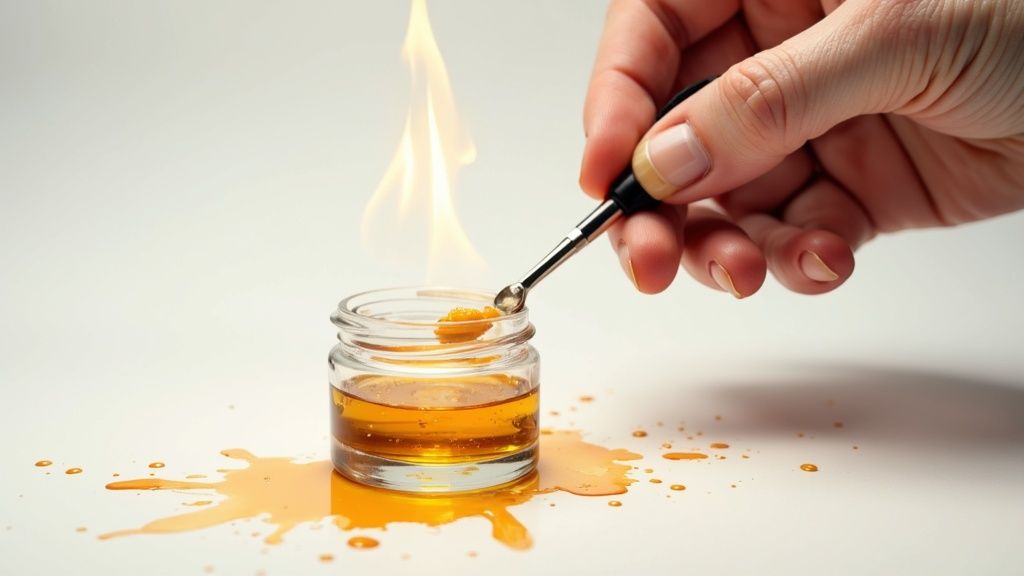
Hands down, the most popular and effective way to consume rosin is dabbing. This involves vaporizing the concentrate on a hot surface and inhaling. Done right, it lets you experience the full spectrum of flavors and effects with unmatched clarity.
To get started, you’ll need a few key pieces of gear. This setup is usually called a dab rig, and it’s all designed to get your rosin to the perfect temperature.
- Dab Rig: Think of it as a water pipe built specifically for concentrates.
- Nail or Banger: This is the small dish, usually made of quartz, that you’ll heat up.
- Dab Tool: A little metal or glass wand used to scoop the rosin and apply it to the hot nail.
- Carb Cap: This covers the nail to trap the heat, making sure you vaporize every last bit of the good stuff.
- Butane Torch: Your heat source for getting the nail up to temperature.
Perfecting The Low-Temp Dab
The real secret to a mind-blowing rosin experience is all about temperature control. If you go in too hot, you'll scorch those delicate terpenes, killing the flavor and creating a harsh hit. That's why seasoned dabbers live by the low-temp dabbing method, aiming for a sweet spot between 450-550°F.
This lower temperature range gently vaporizes the rosin instead of just burning it. The result? A smooth, unbelievably flavorful vapor that lets you taste every single nuance of the plant's terpene profile. It’s the best way to do justice to a high-quality solventless concentrate. If you're new to this, our complete guide on how to dab cannabis concentrates breaks down the whole process to get you started safely.
Low-temp dabbing isn’t about chasing massive clouds; it's about savoring the experience. It’s the difference between flash-frying a delicate herb and gently warming it to release its essential oils—one destroys the flavor, while the other brings it to life.
Other Ways To Enjoy Rosin
While dabbing is the gold standard for many, it’s not the only way to enjoy this versatile concentrate. If you don't have a full dab rig, you still have some great options.
A concentrate vape pen or a portable e-nail is a popular alternative, offering a much more convenient and discreet way to dab when you're on the go. You can also just add a small amount of rosin on top of a bowl of flower or mix it into a joint. This technique, sometimes called "twaxing," will seriously boost the potency and flavor of your flower, giving you a taste of the rosin experience without any specialized equipment.
Your Guide To Buying High Quality Rosin
Navigating the world of rosin is exciting, but knowing how to spot a top-tier product is the real key to getting the experience you’re after. With so many options available here at Cannavine, learning a few simple quality checks will make sure you always walk away with the good stuff. Your own senses—sight, smell, and even touch—are the best tools you have when you're evaluating rosin.
High-quality rosin usually has a beautiful, appealing color, ranging from a pale, creamy white or light blonde to a rich, golden amber. While darker colors don't automatically mean low quality (this is especially true for flower rosin), they can sometimes be a sign of older starting material or too much heat during the press.
The consistency is another big clue. Look for a soft, easy-to-handle texture like a budder or batter. Of course, a stable, glassy shatter can also be excellent. The most reliable sign of a superior product, though? A powerful, inviting aroma. That strong smell tells you it has a rich terpene profile, which is exactly what you want for a flavorful and dynamic experience. If the rosin barely has a scent, that's a red flag.
Verifying Quality With Lab Results
While your senses can tell you a lot, nothing provides more certainty than a third-party lab test. Reputable dispensaries like Cannavine make sure every single product is tested for purity and potency. These lab reports, often just a QR code scan away on the packaging, are your window into the product's true chemical makeup.
When you’re looking at a lab report, here’s what to focus on:
- Cannabinoid Profile: This is the potency breakdown, detailing the percentage of THC, CBD, and other cannabinoids. Make sure the levels match the experience you’re looking for.
- Terpene Analysis: A detailed terpene report is a fantastic sign. It confirms that rich flavor profile you smelled and gives you a much better idea of the potential effects.
- Purity Screening: This one is non-negotiable. The test must show that the product is completely free from contaminants like pesticides, heavy metals, and residual solvents (though rosin should be solvent-free by its very nature).
A transparent lab test isn't just a piece of paper; it's a producer's commitment to quality and your assurance of a safe, clean product. Never hesitate to ask a budtender to see the test results before you buy.
Proper Storage To Maintain Freshness
Once you've picked out a fantastic rosin, storing it properly is crucial to protect your investment. Terpenes and cannabinoids degrade when they're exposed to heat, light, and air, which will quickly diminish the flavor and potency.
To keep your rosin in peak condition, store it in an airtight glass container. For short-term storage, a cool, dark place like a drawer will do the trick. For anything longer than a few days, refrigeration is your best bet. This simple step locks in the terpenes, preserving that fresh-from-the-press flavor for your next session and ensuring every dab is as good as the first.
Frequently Asked Questions About Rosin
Let's wrap up by tackling some of the questions we hear all the time about rosin. This quick guide should clear up any lingering curiosities and help you feel totally confident when you're browsing the menu.
Is Rosin Better Than Other Concentrates?
"Better" is always in the eye of the beholder, but rosin’s biggest claim to fame is its solventless purity. For many cannabis fans, nothing beats the clean, chemical-free process. They feel it delivers a taste and experience that’s just more true to the plant.
Sure, other concentrates like Butane Hash Oil (BHO) can pack a serious punch in the potency department. But they get there using chemical solvents that have to be meticulously purged from the final product. Rosin skips that whole process, offering a full-spectrum high that many find more well-rounded and definitely more flavorful.
Why Is Live Rosin So Expensive?
That premium price tag on live rosin? It’s a direct reflection of the incredibly detailed and hands-on work required to produce it. Making true craft live rosin is an art form that demands serious precision and the absolute best starting material.
It all starts with fresh-frozen cannabis, flash-frozen right after harvest to lock in all those delicate, volatile terpenes. That flower is then turned into ice water hash—another tricky, multi-step process. Finally, that top-tier hash is gently pressed. Each step needs special gear, a skilled hand, and a lot of time, all adding up to its higher cost.
The price of live rosin reflects the incredible effort taken to capture the true, living essence of the cannabis plant. It’s an investment in a top-tier flavor and terpene experience that is simply unmatched.
How Should I Store My Rosin?
Proper storage is non-negotiable if you want to keep your rosin fresh, tasty, and potent. Heat, light, and air are the enemies here; they'll quickly degrade the terpenes and cannabinoids that make rosin so special.
For best results, always keep your rosin in a small, airtight glass container. Find a cool, dark spot for it. And if you're storing it for more than a day or two, refrigeration is highly recommended. This keeps those amazing terpenes locked in, making sure every dab is as good as the first.
Ready to explore the pure, potent world of rosin for yourself? Cannavine offers a curated selection of premium, lab-tested rosin from California's top brands. Whether you prefer the bright flavors of live rosin or the clean power of hash rosin, our friendly team can help you find the perfect product. Browse our menu online for fast pickup or convenient delivery. Find your new favorite today at https://trycannavine.com.