When you're trying to find the best cannabis strains for anxiety, it's easy to get lost in the sea of Indica and Sativa labels. Here's a pro tip: look deeper than that. The most effective strains for calming your nerves usually have a high ratio of soothing CBD to psychoactive THC, along with a specific cocktail of terpenes like myrcene, limonene, and caryophyllene that help ease the mind.
Navigating Your Path to Anxiety Relief
Finding the right cannabis for anxiety can feel like a huge task, but it's simpler than you might think. Forget getting bogged down in broad categories. It's all about understanding the unique chemical symphony happening inside each plant. This guide is your roadmap, whether you're a seasoned user or just starting out, helping you decode how these compounds really work together.
To make things even easier, we've put together a flowchart that walks you through the process, from figuring out your needs to actually finding relief.
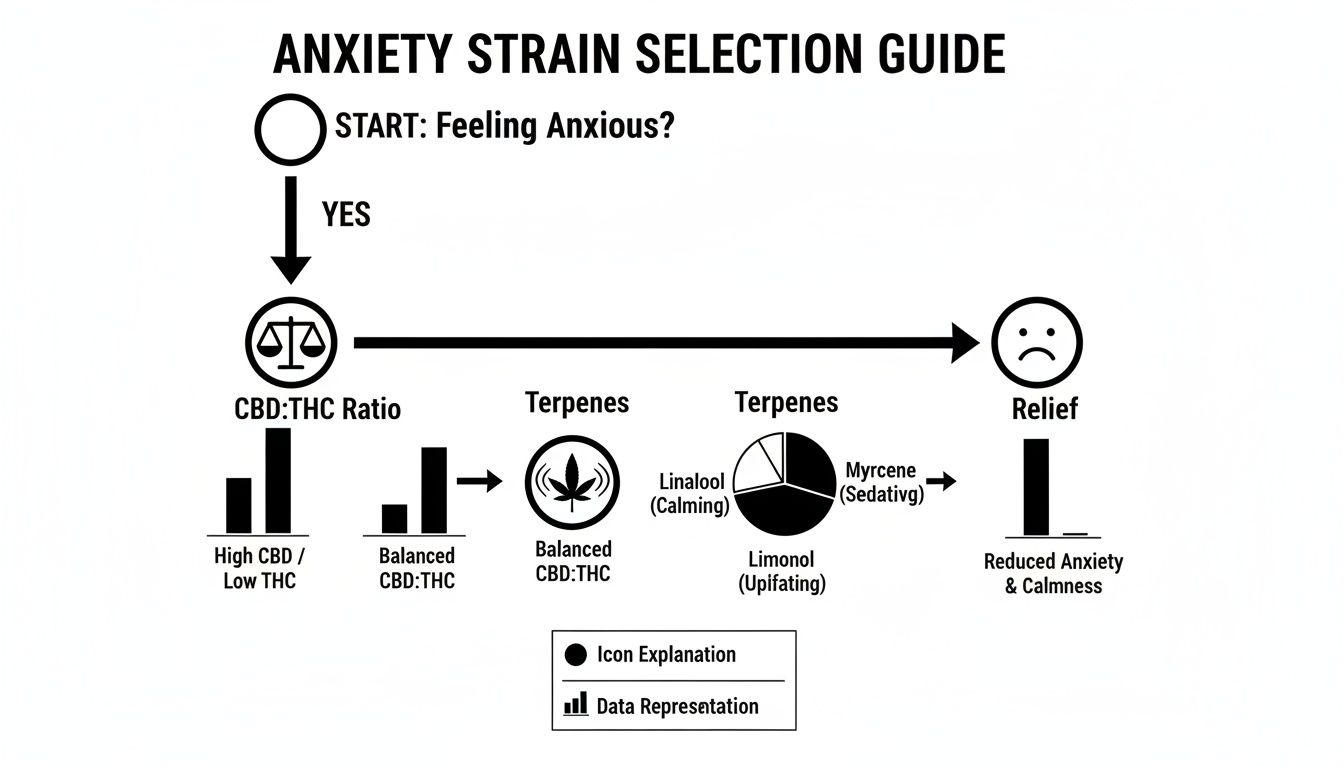
As you can see, the most critical steps are balancing that CBD-to-THC ratio and zeroing in on the right terpene profile to get the calming effect you're after.
Understanding the Chemical Teamwork
Think of the compounds in cannabis like members of a band. Each one plays a different instrument, but it's how they play together that creates the final song. The main players here are cannabinoids and terpenes, and their interaction is what truly defines how a strain will affect your anxiety.
- Cannabinoids (CBD & THC): CBD is the chill, non-intoxicating member of the group, known for its calming properties. THC is the lead singer, delivering potent effects that can be either therapeutic or, in the wrong dose, anxiety-inducing. For anxiety, a higher ratio of CBD to THC is almost always the way to go to keep potential paranoia in check.
- Terpenes: These are the aromatic compounds that give cannabis its scent and flavor. But they do way more than that—they actively shape a strain's effects. Myrcene, for example, is famous for its relaxing vibes, while limonene can help lift your mood.
The goal is to find a strain where all these elements are in perfect harmony. This synergy between cannabinoids and terpenes is what's known as the "entourage effect," and it’s the secret to getting nuanced and effective anxiety relief.
This is a much better approach than relying on the old Indica vs. Sativa vs. Hybrid debate. While those labels can be a starting point, they just don't tell the whole story. By focusing on the complete chemical profile, you empower yourself to make smarter choices that lead to more predictable and positive results.
To make this even clearer, let's break down the essential elements in a quick-reference table.
Key Factors When Choosing a Strain for Anxiety
| Factor | What to Look For | Why It Matters for Anxiety |
|---|---|---|
| CBD:THC Ratio | High-CBD, Low-THC (e.g., 20:1, 10:1) or Balanced (1:1) | CBD can counteract the potential anxiety-inducing effects of THC, promoting relaxation without an overwhelming "high." |
| Key Terpenes | Myrcene, Linalool, Caryophyllene, Limonene | Myrcene and Linalool are known for sedation and calm. Caryophyllene can ease stress, and Limonene can elevate mood. |
| Dosage | "Start low and go slow." Microdosing is often effective. | Overconsumption, especially of THC, is a common trigger for cannabis-induced anxiety. Less is almost always more. |
| Consumption Method | Tinctures, edibles (low-dose), or vaporization at low temps. | These methods offer more controlled and predictable dosing compared to smoking, which can have a rapid and intense onset. |
Ultimately, a strain's name or its Indica/Sativa classification is far less important than its actual chemical makeup. By paying attention to these key factors, you can move past the guesswork and find what truly works for you.
Understanding How CBD and THC Affect Anxiety
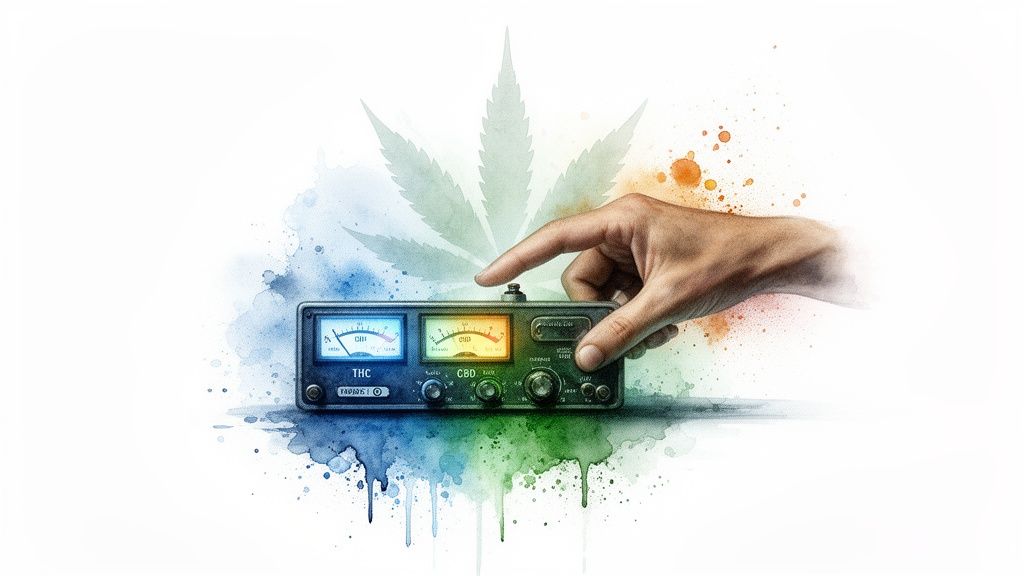
When you're looking for cannabis to help with anxiety, it's helpful to think of the main compounds, THC and CBD, like controls on a stereo. THC is the volume knob. For some, turning it up brings on euphoria and creativity. But for others, it can just amplify anxious thoughts, making everything feel too loud and overwhelming.
CBD, on the other hand, is like the equalizer. It doesn’t get you high, but it masterfully smooths out the experience, toning down the sharp, psychoactive edges of THC. This partnership is the secret to finding real relief.
The Balancing Act of Cannabinoids
This isn't just a convenient analogy; it's how these compounds actually work together in your body. CBD literally gets in the way of THC, preventing it from binding so strongly to the brain’s CB1 receptors. Those are the receptors responsible for the intense "high" that can sometimes tip over into paranoia.
This is exactly why strains with a healthy amount of CBD are often the go-to for managing anxiety. Instead of a jarring, potent high, you get a much smoother, more controlled effect that prioritizes calm. For a deeper dive, check out our guide on the differences between CBD vs. THC.
This dynamic is what we're talking about when we say a strain's entire profile matters. It's not about one compound being "good" and the other "bad." It's about finding the synergy that works for you.
Decoding CBD to THC Ratios
The ratio of CBD to THC is probably the most important number to look for when you're trying to manage anxiety. The results are pretty impressive, too. Some studies have found that high-CBD strains can reduce anxiety levels by as much as 52% with consistent use.
Getting familiar with the common ratios will help you read product labels with confidence and make smarter choices.
- 20:1 Ratio (Very High CBD): Think of strains like ACDC. This ratio delivers powerful calming benefits with almost zero psychoactive "high." It's a perfect starting place if you're new to cannabis or know you're sensitive to THC.
- 5:2 or 2:1 Ratios (CBD-Dominant): Strains like Harlequin fall in this category, offering what many describe as "clear-headed relief." There's just enough THC to create a subtle boost without the risk of paranoia, making it a great option for daytime use.
- 1:1 Ratio (Balanced): This even split provides a gentle, balanced experience where you feel the therapeutic effects of both cannabinoids. It can produce a mild euphoria alongside some serious relaxation.
By focusing on the CBD-to-THC ratio, you move beyond just strain names and start making informed decisions based on predictable effects. This foundational knowledge is your most powerful tool in finding reliable and consistent anxiety relief.
How Terpenes Shape Your Anxiety Relief
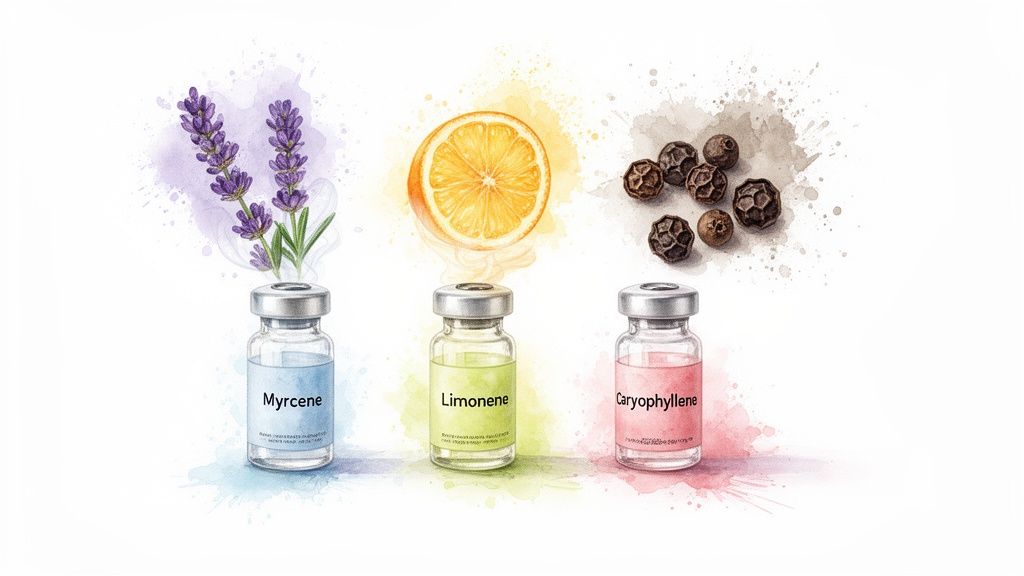
While cannabinoids like THC and CBD tend to get all the credit, the real unsung heroes for anxiety relief are terpenes. If cannabinoids are the lead singers in a band, terpenes are the backup vocalists and the entire orchestra, creating the full, rich sound that makes each strain unique.
These aromatic oils are what give cannabis its signature smells and tastes, from earthy pine to zesty citrus. But they do so much more. Terpenes work in synergy with cannabinoids to steer the effects of a strain, a teamwork known as the "entourage effect."
This means the terpene profile is just as critical as the CBD:THC ratio when you’re hunting for the best strains for anxiety. Understanding this lets you look past strain names and choose products based on their complete chemical makeup for more predictable and effective relief.
Key Terpenes for Calming Anxious Thoughts
When your goal is to quiet an anxious mind, a few specific terpenes consistently show up for their calming, mood-lifting, and stress-busting properties. Learning to spot these key players will help you zero in on the perfect product. Interestingly, many of these are the same aromatic compounds found in other plants known for their soothing qualities.
Here are the top terpenes to look for on a product's lab report:
- Myrcene: Often the most common terpene in cannabis, myrcene has an earthy, musky scent you’d also find in mangoes and hops. It’s famous for its sedative and muscle-relaxing effects, making it perfect for quieting a racing mind and finding deep relaxation.
- Limonene: This terpene is responsible for the bright, zesty aroma of lemons and oranges. Limonene is linked to elevated moods and stress relief, providing a pleasant lift that can cut through anxiety without making you feel jittery.
- Caryophyllene: With a spicy, peppery kick found in black pepper and cloves, caryophyllene is special because it also acts like a cannabinoid. It can directly engage with your endocannabinoid system to help dial down stress and anxiety.
- Linalool: Best known for its floral scent, linalool is the star terpene in lavender. Its calming and anti-anxiety properties are well-established, making it a fantastic choice for promoting tranquility and easing tension.
You can dive deeper into the fascinating world of cannabis aromatics by exploring our full guide on terpenes.
The Terpene to Approach with Caution
Just as some terpenes can soothe, others might do the opposite. The science behind terpenes and anxiety has gotten a lot more specific, sometimes challenging old ideas like "Sativa for energy, Indica for relaxation." For example, some Sativa-dominant strains like Jack Herer can be surprisingly effective against anxiety, thanks to a unique blend of terpinolene, pinene, and caryophyllene.
But terpinolene on its own can be a double-edged sword. Some research has flagged it as a potentially tricky compound for people with anxiety. In fact, the terpinolene-heavy strain Chocolope was rated among the least effective in one patient survey, with some users reporting it actually made their anxiety worse.
Proven Cannabis Strains for Anxiety Relief
Alright, now that we’ve covered the science behind cannabinoids and terpenes, let's put that knowledge to work. Finding the right strain for anxiety isn’t about guesswork; it’s about matching those chemical profiles we talked about to actual products on the shelf.
To make things easier, we've broken down some of the most reliable and popular choices into three simple categories. Think of this as your practical guide for the next time you visit the dispensary, turning those abstract concepts into real-world relief.
High-CBD Champions for Clear-Headed Calm
If you’re looking for anxiety relief without a noticeable "high," high-CBD strains are the perfect place to start. These plants are specifically cultivated to be rich in CBD while keeping THC levels super low. This makes them great for daytime use or for anyone who’s sensitive to THC.
- ACDC: This one is a legend for a reason. Often featuring a 20:1 CBD-to-THC ratio, ACDC delivers powerful therapeutic effects without the buzz. Users often report feeling a sense of calm focus, which is perfect for managing work stress or social jitters.
- Harlequin: With a more balanced 5:2 CBD-to-THC ratio, Harlequin offers a gentle sense of clear-headed relaxation. It’s known for quieting anxious thoughts while keeping you alert and functional.
Think of these strains as taking a deep, calming breath. They provide stability without really changing your headspace.
Balanced Hybrids for Gentle Support
Looking for something in the middle? Balanced hybrids are where it's at. They give you the therapeutic benefits of both major cannabinoids, offering a gentle lift from the THC that's perfectly cushioned by the calming effects of CBD.
This synergy often results in a feeling of well-rounded well-being that’s both uplifting and grounding. A good hybrid can be the ideal companion for unwinding after a stressful day or managing that nagging, low-level anxiety without feeling heavily sedated. It's the "entourage effect" at its most harmonious.
Time-Tested Indicas for Deep Relaxation
For many people, the classic Indica strains are synonymous with total relaxation. Names like Northern Lights and Granddaddy Purple are practically the bedrock of anxiety management in the cannabis world, with roots going back decades.
Northern Lights, a pure indica that came from Afghani and Thai landrace strains, has been a go-to for relief since the 1980s. That's over 40 years of people consistently saying it works. Likewise, Granddaddy Purple (or GDP) became so well-known for its calming power that it's still a top request at dispensaries. You can learn more about the history behind these legendary strains over at greenleafwellness.com.
These strains are typically packed with the sedating terpene myrcene, making them a fantastic choice for the evening. When you need to shut off a racing mind and ease into a restful state, these are powerful allies against stress-induced insomnia and physical tension.
A Practical Guide to Dosing and Consumption
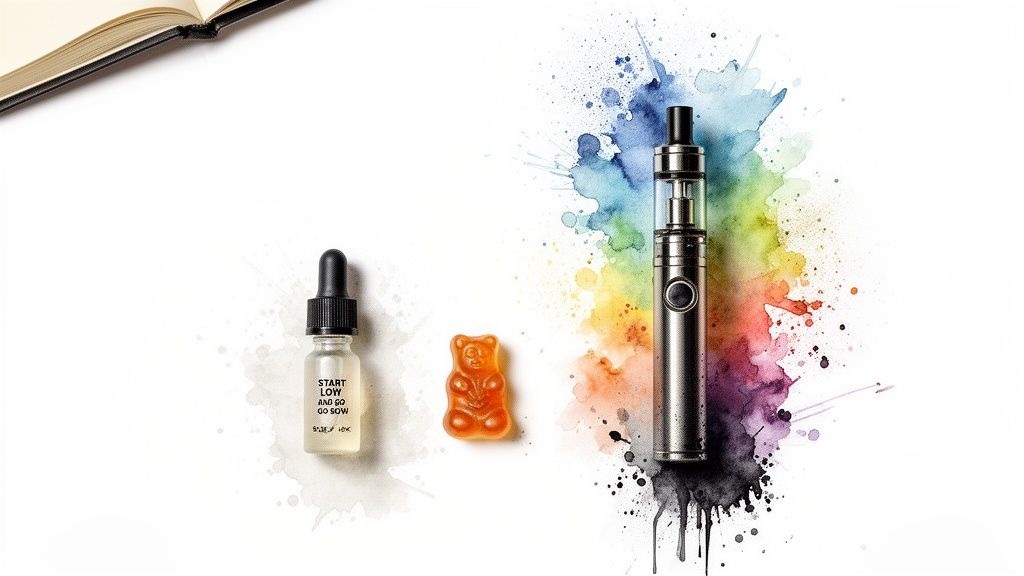
Finding the perfect strain is a huge step, but it’s only half the story. How you use that cannabis is just as critical for keeping anxiety in check. If there’s one golden rule in the cannabis world, it’s this: start low and go slow. This isn't just a catchy phrase; it's the single best way to avoid feeling overwhelmed and to pinpoint your "minimum effective dose"—the sweet spot where you get just enough relief without unwanted side effects.
Think of it like seasoning a soup. You can always add another pinch of salt if you need it, but you can’t exactly scoop it back out once it’s in there. The goal is a gentle sense of calm, not a tidal wave of effects.
Microdosing for Daytime Relief
The thought of using cannabis during a busy workday might seem completely out of the question for most people. That’s exactly where microdosing comes in. This strategy involves taking a tiny, sub-perceptual dose—we’re talking just 1-2.5 milligrams of THC—to take the edge off anxiety without clouding your mind.
With a microdose, you can stay sharp, focused, and totally functional while keeping those anxious feelings from taking over. It’s a fantastic way to weave cannabis into your daily wellness routine without hitting the pause button on your life.
Remember, the point of microdosing isn't to feel "high," it's simply to feel better. You’re aiming for a subtle shift that improves your well-being, not something that distracts you from your day. A simple journal can be a huge help in tracking what dose works best.
Choosing Your Consumption Method
The way you take your cannabis has a massive impact on how quickly the effects kick in and how long they stick around. Picking the right method really comes down to what you need in the moment.
- Inhalation (Vaping & Flower): This is your express lane to relief. Effects can be felt within minutes, which is perfect for those sudden waves of anxiety or a panic attack where you need immediate calm. The trade-off? The effects are shorter, usually lasting about 1-3 hours.
- Ingestion (Edibles & Tinctures): When you eat or swallow cannabis, it takes the scenic route through your digestive system. It can take anywhere from 30 minutes to two hours to feel anything. But once the effects arrive, they’re in it for the long haul, often providing steady relief for 4-8 hours. This makes edibles and tinctures a great choice for managing persistent, all-day anxiety.
If you ever find you've taken a bit too much and the anxiety is creeping back in, the most important thing is to stay calm. Find a comfortable, quiet spot, sip some water, and maybe have some CBD on hand—it’s known to help mellow out THC’s intensity. And of course, our team at Cannavine is always here to offer guidance and ensure your experience is a positive one.
Your Questions About Cannabis and Anxiety, Answered
It's only natural to have a few questions when you start exploring cannabis for something as personal as anxiety. We get it. Here are some straightforward answers to the questions we hear most often, designed to give you the confidence to find what works for you.
Will Using Cannabis for Anxiety Make Me Feel High All the Time?
Absolutely not. The whole point is to find relief, not to be in a constant state of intoxication. Many people get fantastic results by choosing strains that are high in CBD and low in THC, like the popular ACDC. This approach lets you tap into the plant's calming benefits with little to no "high."
Another highly effective strategy is microdosing. This just means taking a very small, controlled dose that’s enough to ease your symptoms but not enough to feel impaired. It’s all about staying clear-headed and functional while keeping anxiety at bay. It’s a balancing act, and we can help you find the right product and dose for your lifestyle.
Are Indica or Sativa Strains Better for Anxiety?
This is probably one of the biggest myths in the cannabis world. While the old-school advice was to grab a calming Indica, we now know it’s not that simple. Honestly, a strain's real potential for anxiety relief comes from its specific cannabinoid and terpene profile, not whether it’s labeled Indica or Sativa.
For example, some Sativa strains with the right terpenes can feel incredibly uplifting and calming, melting away anxiety without a hint of paranoia. So, instead of getting hung up on those broad labels, it's much more effective to look at the lab results and focus on the chemistry.
Key Takeaway: Don't get stuck on the Indica vs. Sativa debate. A strain's complete chemical profile—its cannabinoids and terpenes—tells the real story about how it will likely affect your anxiety.
What Should I Do If a Strain Makes My Anxiety Worse?
First thing's first: don't panic. Remind yourself that the feeling is temporary and it will pass. This kind of reaction is almost always caused by too much THC or a sensitivity to a specific terpene. Find a quiet, comfortable spot, maybe put on some calming music, and just focus on taking slow, deep breaths.
A pro tip is to have some pure CBD on hand, like a tincture or gummy. CBD is known to counteract some of THC's more intense effects and can help bring you back down to a more comfortable level. Make a note of the strain that didn't agree with you. Next time, you'll know to look for something with a much higher CBD-to-THC ratio and a different terpene mix.
Ready to find the right product for your needs? The knowledgeable staff at Cannavine can provide personalized recommendations based on our curated, lab-tested menu. Explore your options for pickup or delivery at https://trycannavine.com.