When you hear people talking about cannabis, there's one compound that’s almost always the star of the show: Delta 9 THC. Its full name is Delta-9-tetrahydrocannabinol, but it's best known as the main ingredient that produces the classic "high" we associate with marijuana.
Decoding the Main Cannabinoid

If someone just says "THC," they're almost certainly talking about Delta 9. Think of the cannabis plant as a bustling chemical factory that churns out over a hundred different compounds, which we call cannabinoids. In this factory, Delta 9 is the most famous and plentiful psychoactive product coming off the line.
Its discovery back in 1964 really kickstarted our modern understanding of how cannabis works. Delta 9 acts like a key that perfectly fits into specific locks in our body’s endocannabinoid system, especially the CB1 receptors found in the brain. This connection is what triggers the wide range of effects people experience, from altered senses and mood lifts to deep relaxation and a sudden craving for snacks.
Simply put, what is Delta 9 THC? It's the engine driving the entire psychoactive experience of cannabis. While other players like CBD or Delta 8 have their own important roles, Delta 9 is without a doubt the main character.
Key Characteristics of Delta 9 THC
Getting a handle on its core features helps make sense of why it’s so central to the cannabis conversation. Whether you’re looking for recreational fun or therapeutic relief, this compound is at the heart of the plant’s most well-known effects.
Here’s a quick rundown of its defining traits:
- Psychoactivity: It’s strongly psychoactive. This means it has a direct effect on brain function, causing noticeable shifts in mood, perception, and consciousness.
- Source: It's found naturally and in high concentrations in the cannabis plant, especially in the resinous flowering buds.
- Legality: Here in California, Delta 9 THC from cannabis is legal for recreational use for adults 21+ and for medical patients 18+ with a doctor's recommendation.
Delta 9 THC at a Glance
For a quick and easy reference, the table below sums up the most important things to know about Delta 9 THC.
It's a great snapshot of what to expect, how it's used, and its legal standing in California, giving you the essential facts before we dive deeper.
| Characteristic | Description |
|---|---|
| Primary Effect | Produces the classic cannabis "high," including euphoria, relaxation, and altered sensory perception. |
| Common Forms | Available as flower, edibles (gummies, chocolates), vapes, tinctures, and concentrates. |
| Legal Status | Legal for recreational and medical use in California; remains a Schedule I controlled substance federally. |
| Medical Uses | Often used for pain relief, nausea reduction, appetite stimulation, and sleep support. |
| Main Target | Binds primarily with CB1 receptors located in the brain and central nervous system. |
This table gives you the basics, but there's a lot more to explore about how Delta 9 works and how it might work for you. For more background info on its market and history, you can find industry deep dives on Delta-9-tetrahydrocannabinol.
How Delta 9 THC Interacts with Your Body

To really get what Delta-9 THC is, we have to look at how it works on the inside. Your body runs on a complex network called the endocannabinoid system (ECS). You can think of the ECS as your internal balancing act, working behind the scenes to keep things like your mood, appetite, sleep, and memory running smoothly.
This system has receptors all over your brain and body, which act like tiny, specialized locks. Your body produces its own molecules—called endocannabinoids—that are the natural keys for these locks. When a key turns a lock, it sends a signal that helps maintain that internal balance.
So, where does Delta-9 THC fit in? It’s essentially a molecular copycat. Its structure is so similar to your body’s own keys that it can slide right into the same locks, especially the CB1 receptors found all over the brain and central nervous system. This is the classic "lock and key" interaction that produces the famous effects of cannabis.
The Lock and Key Analogy Explained
Let's break that down. Imagine your brain is filled with millions of these specific locks (the CB1 receptors) that influence perception, mood, and coordination.
- The Lock: A cannabinoid receptor, like CB1, waiting for the right signal.
- The Natural Key: An endocannabinoid your body makes to keep things in check.
- The Master Key: Delta-9 THC, which fits the CB1 lock perfectly and turns it with much more force than your natural keys.
This powerful activation is what creates the signature cannabis high, from feelings of euphoria and deep relaxation to shifts in sensory perception. THC is essentially borrowing your body's own communication network to send its own powerful messages.
By binding to these receptors, Delta 9 THC temporarily changes the conversation between your neurons. This interruption of normal signaling is the very foundation of both its recreational appeal and its therapeutic potential.
How Consumption Method Shapes Your Experience
The way you choose to consume Delta-9 THC has a huge impact on how quickly you'll feel it and how long the experience will last. This all comes down to how the THC gets into your bloodstream—each path has its own unique timeline.
Understanding these differences is key to having a good, predictable experience, particularly if you're new to cannabis.
Inhalation (Smoking and Vaping)
When you inhale THC, it takes the express route. It goes straight from your lungs into your bloodstream, reaching your brain in just a few minutes.
- Onset: Super fast, usually within 2-10 minutes.
- Peak Effects: You'll typically feel the strongest effects within 30-60 minutes.
- Duration: The effects generally last for 1-3 hours.
This quick onset is great for controlling your dose. You can feel the effects building in real-time and decide when you've reached your desired level. It’s a popular method for anyone seeking fast relief or a more manageable session.
Oral Ingestion (Edibles and Tinctures)
Eating an edible sends THC on a much longer journey. It has to travel through your digestive system and get processed by your liver first. During this pit stop, your liver converts Delta-9 THC into a much more potent compound called 11-hydroxy-THC, which is known for producing a stronger and significantly longer-lasting effect.
- Onset: Much slower, anywhere from 30 minutes to 2 hours, sometimes even longer.
- Peak Effects: It can take 2-4 hours to hit the peak.
- Duration: The experience is a long one, often lasting 4-8 hours or more.
The golden rule of edibles is always start low and go slow. The delayed onset can be tricky; it's easy to think it’s not working and take more, only to find yourself with an uncomfortably intense experience an hour later. With edibles, patience is your best friend.
Exploring the Effects and Therapeutic Potential
When people ask, "what is Delta 9 THC?" they’re really asking about how it feels. The experience is incredibly broad, ranging from the uplifting euphoria and creative spark many people love to the deep sense of calm that helps others unwind after a long day in the Bay Area.
For many, a big part of the appeal is how it can sharpen sensory perception. Music seems to have more depth, food tastes richer, and a simple walk through Wine Country can feel more alive and vibrant. This unique shift in awareness is what makes Delta 9 THC the heart and soul of the classic cannabis experience.
But these effects are just one side of the coin. For decades, Delta 9 THC has also been recognized for its powerful therapeutic potential, bringing relief to countless people.
The Therapeutic Side of Delta 9 THC
Beyond just feeling good, Delta 9 plays a huge role in wellness and medicine. By working with the body’s own endocannabinoid system, it can influence critical functions like how we perceive pain, our appetite, and even feelings of nausea. This makes it an incredibly useful tool for managing a variety of health issues.
Some of the most well-documented therapeutic uses include:
- Chronic Pain Management: By interacting with pain receptors in the brain, THC can dial down the discomfort from conditions like arthritis, neuropathy, and fibromyalgia.
- Nausea and Vomiting Relief: It’s especially effective at easing the severe nausea that can come with chemotherapy, helping patients keep their strength up during treatment.
- Appetite Stimulation: For those dealing with appetite loss from medical treatments or conditions like HIV/AIDS, THC can be a powerful way to get hunger back on track.
This medicinal value is so well-established that scientists have created synthetic versions of Delta 9 THC that are now FDA-approved drugs. Dronabinol (you might know it by brand names like Marinol and Syndros) has been prescribed since the 1980s for exactly these reasons.
The growing awareness of these benefits is fueling massive growth in medical cannabis. The global market, where THC is a key player, is expected to hit a staggering $211.54 billion by 2035. This boom underscores its vital role in pain management and palliative care. You can dive deeper into the Delta 9 THC market trends on cognitivemarketresearch.com.
Understanding and Managing Potential Side Effects
While the effects of Delta 9 are overwhelmingly positive for most, it’s smart to approach it with a little know-how. A dose that’s perfect for one person might be too much for someone else, leading to some less-than-fun side effects. Being informed is the best way to stay in control of your experience.
The most common potential side effects are:
- Anxiety or Paranoia: High doses, especially if you’re new to THC, can sometimes bring on feelings of anxiety. This is almost always temporary and manageable.
- Impaired Coordination: THC affects motor skills and reaction times, which is why you should never, ever operate a vehicle or heavy machinery after consuming.
- Dry Mouth and Red Eyes: These are classic, harmless side effects. Keep some water handy and use eye drops if you need them.
- Short-Term Memory Impairment: You might find it a bit tricky to remember what you were just talking about, but this effect fades as the THC wears off.
The key to a positive experience with Delta 9 THC is mindful consumption. Understanding your own sensitivity, starting with a low dose, and choosing a comfortable environment are the most effective ways to minimize risks and maximize benefits.
At the end of the day, whether you’re using it for fun or for relief, respecting the power of Delta 9 THC is what matters most. By starting slow and listening to your body, you can confidently find the experience that’s just right for you.
Finding Your Right Dose and Potency
Trying to figure out Delta 9 THC potency can feel like learning a new language. You see numbers like "25% THC" on flower and "10mg" on edibles, and it's easy to get a little lost. But once you get the hang of it, understanding these figures is the single most important step toward having a positive, predictable experience.
Let's use an analogy from our own backyard here in Wine Country. Think of THC potency like the alcohol percentage on a bottle of beer or wine. A light beer might be 4.5% ABV, while a craft IPA could hit 8%, and a bold Sonoma Zinfandel might be 15%. You wouldn't drink a pint of Zinfandel like you would a light beer, right? The same logic applies to cannabis. The percentage on flower tells you how much of the plant's weight is pure THC, while the milligrams (mg) on an edible tell you the exact dose in that specific piece.
Starting Doses: A Practical Guide
When you're just starting out with Delta 9 THC, there's one golden rule: start low and go slow. It’s simple advice, but it’s crucial. You can always take a little more, but you can never go back and take less. This approach lets you gently discover your own sensitivity and find the perfect amount without accidentally overdoing it.
For anyone new to cannabis or with a low tolerance, here are some solid starting points:
- Edibles: Begin with a dose between 2.5mg and 5mg of THC. California law makes this easy, capping edibles at 10mg per serving and 100mg per package. This means most gummies and chocolates are designed for precise dosing and can be easily cut in half for an even smaller starting amount.
- Inhalation (Vaping/Smoking): Take just one or two small puffs, then wait a good 15-20 minutes to see how you feel. Because the effects kick in so quickly, you have way more control. You can check in with yourself in near real-time before deciding if you want another puff.
Keep in mind, things like your metabolism, body weight, and even what you ate for lunch can all play a part in your experience. The goal isn’t to hit some magic number; it’s about finding what feels comfortable and right for you.
Why Potency Matters More Than Ever
Let’s be clear: the cannabis available today is not your parents' weed. Modern cultivation techniques have dramatically increased THC levels over the past few decades. For example, U.S. flower THC percentages have been steadily climbing for years, a trend that underscores just how important it is to understand potency and consume mindfully. This evolution makes the "start low, go slow" mantra more than just good advice—it's the foundation for a safe and enjoyable journey.
A higher potency isn't automatically "better." The best product is the one that gives you the experience you're looking for. For many people, a lower-potency product delivers a much more balanced, manageable, and fun effect.
Understanding California Edible Regulations
If you're shopping with us in the Bay Area or Wine Country, you’re in great hands. California has some of the clearest and strictest regulations for cannabis edibles in the nation, all designed to keep consumers safe. Knowing the rules helps you shop with total confidence.
Here’s what to look for on the labels of products at any licensed dispensary, including Cannavine:
- Serving Size Limit: A single serving of an edible can't have more than 10mg of THC. Think of this as the standard unit for dosing.
- Package Limit: One package of edibles can't contain more than 100mg of total THC. This typically means you'll get a package with 10 pieces at 10mg each, or maybe 20 pieces at 5mg each.
- Clear Labeling: Every product must clearly state the THC amount per serving and per package, along with a full list of ingredients and allergens.
These rules take all the guesswork out of the equation. When you buy a compliant product, you know exactly what you’re getting, allowing you to dose accurately every time. This is especially important with edibles and their famous delayed onset. For a deeper dive on that topic, check out our guide on the duration of edibles. This knowledge empowers you to make smart choices and find the perfect product for your needs.
Understanding How Delta 9 Compares to Other Cannabinoids
The cannabis plant is home to a whole family of compounds, and while Delta 9 THC is the most famous member, it’s far from the only one. You’ve likely seen other names on product labels at our Bay Area dispensaries, like CBD, Delta 8, and THCA. Each has a unique chemical structure and interacts with your body differently, creating a wide range of effects.
Think of them as siblings with distinct personalities. While they all come from the same plant family, one might be the energetic life of the party (Delta 9), another the calm, quiet one (CBD), and a third the mild-mannered cousin (Delta 8). Understanding these differences is key to choosing the product that truly aligns with your goals, whether that's potent psychoactive effects, gentle relaxation, or non-intoxicating therapeutic support.
This graphic breaks down the core concepts that differentiate cannabinoids: potency, dose, and regulation.
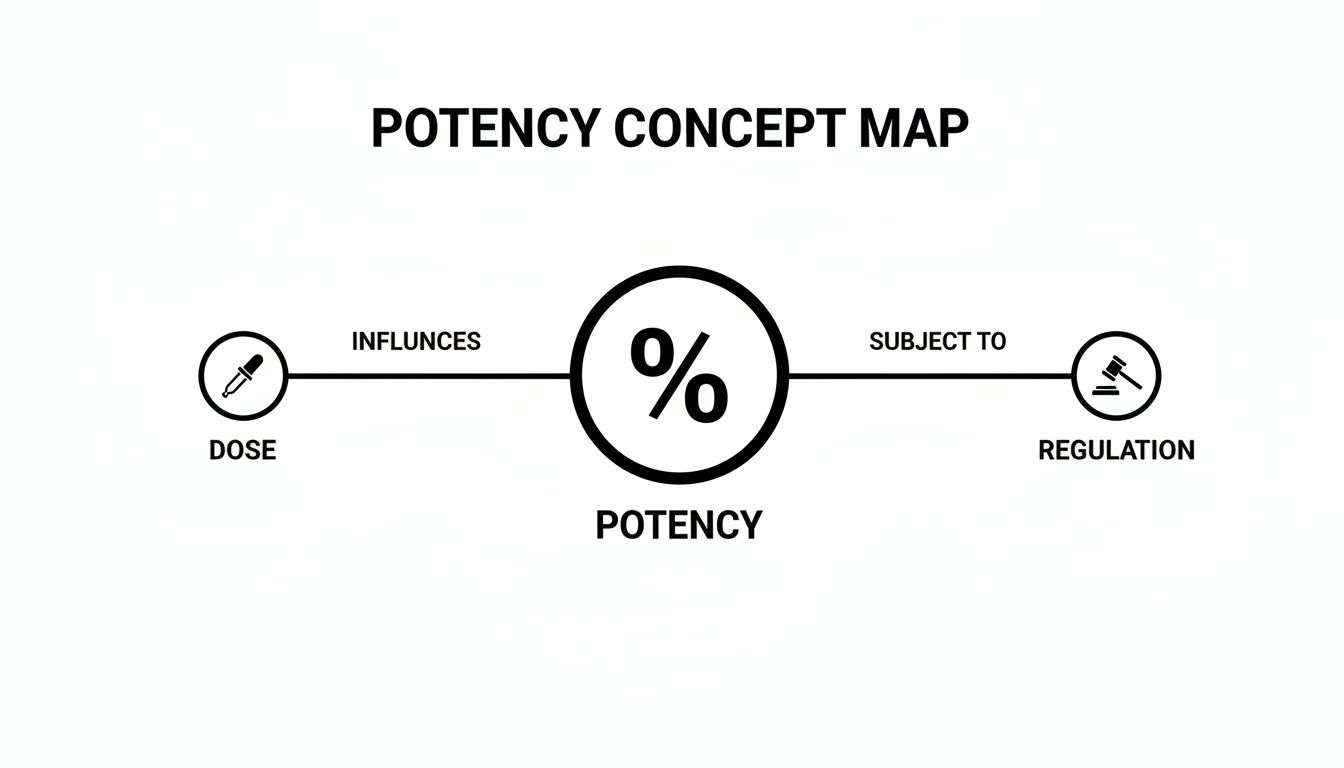
As you can see, the natural strength of a cannabinoid, combined with the amount you take, is all governed by state and federal rules to shape your final experience.
To help you navigate the shelves with confidence, we've put together a quick comparison of the cannabinoids you'll see most often.
Cannabinoid Comparison: Delta 9 THC vs The Alternatives
This table offers a side-by-side look at the most popular cannabinoids, clarifying their effects, legal status, and primary characteristics.
| Cannabinoid | Primary Effect | Psychoactivity Level | Legal Status (Federal/CA) |
|---|---|---|---|
| Delta 9 THC | Euphoric "high," pain relief, appetite stimulant | High | Legal in CA, Federally Illegal (except hemp-derived under 0.3%) |
| Delta 8 THC | Milder high, relaxation, less anxiety | Moderate | Federally murky (often hemp-derived), Legal in CA |
| CBD | Non-intoxicating relief, reduces anxiety/inflammation | None | Legal if hemp-derived |
| THCA | Non-intoxicating in raw form, potential anti-inflammatory | None (until heated) | Legal as long as it's not converted to Delta 9 THC |
Now, let's unpack these differences a little further.
Delta 9 THC vs. Delta 8 THC
Delta 8 THC is what’s known as an isomer of Delta 9. In simple terms, they have the exact same atoms, but they're arranged in a slightly different order. This small structural shift makes a big difference in the effects you feel.
While Delta 8 binds to the same brain receptors as Delta 9, it does so with less intensity. As a result, users often describe the Delta 8 experience as a milder, more clear-headed high with less of the anxiety that can sometimes accompany potent Delta 9. It’s a popular choice for folks who find traditional THC a bit too powerful for their liking.
Delta 9 THC vs. CBD
This is one of the most important distinctions in the cannabis world. Cannabidiol, or CBD, is completely non-psychoactive, meaning it won't make you feel high. While Delta 9 directly activates the CB1 receptors in your brain to produce its famous effects, CBD works more indirectly with your body's endocannabinoid system.
Instead of intoxication, CBD is known for its potential therapeutic benefits, like easing anxiety, inflammation, and pain—all without the buzz. For a deeper dive, you can learn more about the differences between CBD vs THC in our dedicated guide.
Delta 9 THC vs. THCA
Tetrahydrocannabinolic acid, or THCA, is the raw, non-psychoactive precursor to Delta 9 THC. In a living, unheated cannabis plant, you'll find an abundance of THCA, not Delta 9. Its unique molecular shape prevents it from binding effectively with the brain receptors that cause a high.
Heat is the magic ingredient here. The process of decarboxylation—which happens instantly when you light a joint, use a vape, or bake edibles—transforms THCA into the psychoactive Delta 9 THC we all know. This is why eating raw cannabis flower won't get you high; you're just consuming THCA. It's only after that heat is applied that it becomes the real deal.
Making Smart Choices When Shopping for Delta 9 Products

Walking into a dispensary for the first time can feel a little overwhelming, but making smart choices is easier than you might think. The first step is just getting a handle on the main types of products out there. Each consumption method offers a totally different kind of journey, so knowing the basics is key to finding the Delta 9 experience you're looking for.
Whether you're visiting us in Santa Rosa or browsing online for delivery to the Bay Area, you'll find a few go-to options, each with its own vibe.
- Flower: This is the classic, dried cannabis bud. Smoking or vaporizing it delivers fast-acting effects and lets you really appreciate the plant's natural aroma and flavor profile.
- Vapes: Vaporizer cartridges are a super convenient and discreet way to inhale THC. You get the same quick onset as flower but without the smoke, which is a big plus for a lot of people.
- Edibles: From gummies to chocolates, edibles are known for their long-lasting, potent effects. They're perfect if you want a smoke-free option with really precise dosing.
- Tinctures: These are liquid cannabis extracts that you take sublingually (under your tongue). They offer a nice middle ground between the fast kick of inhalation and the long-haul effects of edibles.
Why Licensed Dispensaries Are Non-Negotiable
With so many products on the market, your number one priority has to be safety and quality. That’s why you should only ever buy Delta 9 products from a state-licensed dispensary like Cannavine. Unlicensed sellers or sketchy online shops often operate in legal gray areas, pushing products that are mislabeled or, even worse, contaminated with things like pesticides, heavy metals, or residual solvents.
A licensed shop is your guarantee of safety. Every single product on our shelves has gone through rigorous third-party lab testing, just as California law requires. This makes sure that what’s on the label is exactly what’s in the product—nothing more, nothing less.
How to Read a Certificate of Analysis (COA)
The proof of a product's safety and potency is all laid out in its lab report, which is called a Certificate of Analysis (COA). Any reputable brand will have this document ready for you to check, usually through a QR code right on the package. Learning to read a COA empowers you to confirm the quality for yourself.
Think of a COA as a report card for your cannabis product. It tells you exactly how it performed on crucial tests for potency and purity, giving you complete confidence in your purchase.
When you pull up a COA, here are the key sections to check out:
- Cannabinoid Profile: This is where you confirm the potency. It shows the exact percentage or milligram count of Delta 9 THC, CBD, and other cannabinoids. Make sure these numbers line up with what’s advertised on the package.
- Pesticide Analysis: This screen checks for any harmful agricultural chemicals. The report should clearly say "Pass" or show that no pesticides were detected.
- Heavy Metals and Solvents: This section ensures the product is free from nasty contaminants like lead, mercury, and leftover chemicals from the extraction process. Again, you’re looking for a "Pass" result.
Learning how to scan a COA is a simple skill that instantly turns you into a more informed consumer. For more tips on making sense of our menu, read our guide on how to read a cannabis dispensary menu. This knowledge ensures every purchase you make is a safe, smart, and satisfying one.
A Few More Questions About Delta-9
As you get more familiar with Delta-9 THC, a few practical questions always seem to come up. Our customers in the Bay Area and Wine Country ask us these all the time, so let's get you some straight answers.
Is Delta-9 THC Legal in California?
Yes, absolutely. Delta-9 THC from cannabis is legal in California for both recreational and medical use. If you're 21 or older, you can legally walk into a licensed dispensary like Cannavine to purchase, possess, and enjoy cannabis products.
For medical patients with a valid doctor's recommendation, access starts at 18. Just remember, "legal" doesn't mean it's a free-for-all. State regulations still apply, like limits on how much you can carry and strict rules against using it in public or driving while under the influence.
How Long Does Delta-9 THC Stay in Your System?
There's no single answer here—the detection window for Delta-9 THC really depends on the person and their habits.
- How often you use it: If you only consume occasionally, THC might be out of your system in a few days. For regular, daily users, it can be detectable for 30 days or even longer.
- Your body: Everyone's metabolism is different. THC is fat-soluble, which means it gets stored in fat cells. People with higher body fat might hang onto it a bit longer.
- The type of test: This makes a huge difference. Blood tests usually only detect recent use (hours to a couple of days), while urine tests can find it for days or weeks. Hair follicle tests have the longest memory, sometimes up to 90 days.
If there's one thing to remember, it's that frequency is the biggest factor. Consistent use causes THC to build up in your body, and it takes longer for it all to clear out.
Can You Build a Tolerance to Delta-9 THC?
You sure can. Building a tolerance to Delta-9 THC is very common for people who consume regularly. What happens is that your body's cannabinoid receptors get a little less sensitive to THC's effects over time.
You might notice that you need a bigger dose to get the same feeling you used to get from a smaller amount. To hit the reset button, many experienced users take what’s called a "tolerance break" or "T-break." By taking some time off—even just a week or two—you give your body a chance to restore its sensitivity, which effectively lowers your tolerance.
Ready to explore a curated selection of safe, lab-tested cannabis products? The team at Cannavine is here to help you find exactly what you're looking for, whether you're a first-time visitor or an experienced consumer. Shop our live menu for pickup or delivery across the Bay Area. https://trycannavine.com