Mixing prescription medications with other substances can feel like walking a tightrope. It’s a delicate balance, and adding something like cannabis to the mix when you’re on Zoloft (sertraline) raises some serious questions.
While it’s not always a five-alarm fire for every single person, the potential for things to go sideways is very real. It’s absolutely critical to talk to your doctor before even considering it. Let's break down exactly why this combination needs a cautious approach.
Navigating Zoloft and THC: A Guide to Potential Risks
When you're taking something like Zoloft to manage your mental health, throwing another substance into the equation—even a natural one—can feel like navigating a maze blindfolded. The big question is simple: Is it safe to combine Zoloft and THC? The answer, unfortunately, isn't a clean "yes" or "no."
How your body reacts is a deeply personal thing. It depends on your unique body chemistry, your Zoloft dosage, and the specific type and amount of cannabis you use. For some, it might just mean feeling a bit more dizzy or tired than usual. For others, it could crank up their anxiety or lead to even more serious issues. It’s this unpredictability that makes understanding the risks so important.
Think of this guide as your roadmap. We’ll walk through the key concepts you need to know, starting with the basic science and moving into what it all means in the real world. Our goal is to give you clear, solid information so you can have an informed conversation with your healthcare provider and make safe choices.
Core Concepts to Understand
Before we get into the nitty-gritty, it helps to know the two main ways Zoloft and THC can interact in your body.
- Pharmacokinetic Interactions: Imagine a traffic jam inside your body. This is all about how your system processes and gets rid of substances. Both Zoloft and THC need the same enzymes in your liver to break them down. When they're competing for the same pathway, it can change how much of each one is active in your bloodstream at any given time.
- Pharmacodynamic Effects: This is about what the drugs actually do to your brain and body. Zoloft works by increasing serotonin to help balance your mood. THC, on the other hand, works on a whole different set of brain chemicals. When you mix them, their effects can overlap, clash, or even amplify each other in unexpected ways.
Getting a handle on these two ideas is the first step to seeing the full picture. THC is a major player here, but it's also worth knowing how it's different from its non-intoxicating cousin, CBD. You can get the full scoop by reading our guide explaining CBD vs. THC.
By understanding both how your body processes these substances and how they affect your brain, you can see why combining them isn't so simple. This knowledge empowers you to put your health first and have a much better talk with your doctor about your treatment plan.
To make this even clearer, here's a quick summary of the main risks.
Zoloft and THC Quick Risk Assessment
This table breaks down the primary safety concerns when considering mixing sertraline and THC.
| Risk Area | Description | Safety Tip |
|---|---|---|
| Increased Sedation | Both Zoloft and THC can cause drowsiness. Taking them together can amplify this effect, making you feel excessively tired, dizzy, or uncoordinated. | Avoid driving or operating machinery until you know how the combination affects you. Start with a very small amount of THC. |
| Heightened Anxiety | While Zoloft treats anxiety, high doses of THC can trigger it. The combination can lead to unpredictable mood swings, paranoia, or panic attacks. | Opt for cannabis products with a lower THC and higher CBD content, as CBD may help counteract THC's anxiety-inducing effects. |
| Mood Instability | The interaction can interfere with Zoloft's intended effect, potentially causing your mood to become unstable or worsening depressive symptoms. | Keep a close eye on your mood and mental state. If you notice negative changes, stop using THC and consult your doctor immediately. |
| Serotonin Syndrome | This is a rare but serious risk. THC may have a mild effect on serotonin. Combining it with a powerful SSRI like Zoloft could theoretically contribute to an overload of serotonin. | Be aware of the symptoms: agitation, confusion, rapid heart rate, and muscle rigidity. If you experience these, seek emergency medical attention. |
| Impaired Judgment | Combining a psychiatric medication with a psychoactive substance can significantly cloud your thinking and decision-making abilities. | Don't make important decisions while under the influence. It's best to be in a safe, comfortable environment with people you trust. |
Ultimately, this is all about harm reduction. Being aware of these potential interactions allows you to make smarter, safer choices for your health and well-being.
How Your Body Processes Zoloft and THC
To really wrap your head around why mixing Zoloft and THC isn’t so straightforward, we need to take a look under the hood at how your body handles them. The best way to think about it is to picture your liver as a busy processing plant. Inside this plant are specialized workers—called enzymes—that are in charge of breaking down everything you consume, from your lunch to your medications.
When you take Zoloft, it gets sent to this processing plant. When you use a cannabis product with THC, the same thing happens. Here’s where it gets tricky: both substances need the exact same crew of enzyme "workers" to get the job done. This system is called cytochrome P450, and when it gets overloaded, you run into a bottleneck.
The Metabolic Traffic Jam in Your Liver
Imagine a two-lane road that suddenly merges into one lane right before a tollbooth. If only Zoloft is passing through, the cars move along just fine. But when THC shows up and tries to squeeze into that same single lane, you get a serious traffic jam. That’s a pretty good picture of what’s happening in your liver.
Zoloft and THC are both competing for the attention of the same enzymes, especially two key players called CYP2C19 and CYP3A4. With both substances demanding their attention at once, the enzymes can’t work as efficiently as they normally would.
This competition slows down the breakdown of Zoloft. As a result, the medication can hang around in your bloodstream for longer and at higher levels than your doctor planned for. And that’s where the real risk of stronger, more unpredictable side effects starts.
This isn't just a "what if" scenario; it's a measurable biological event. When THC slows down your liver's ability to process Zoloft, it’s like turning up the heat on a simmering pot. The medication's effects can become much more intense than your prescribed dose intended.
This infographic breaks down the main areas of concern when this metabolic slowdown kicks in.
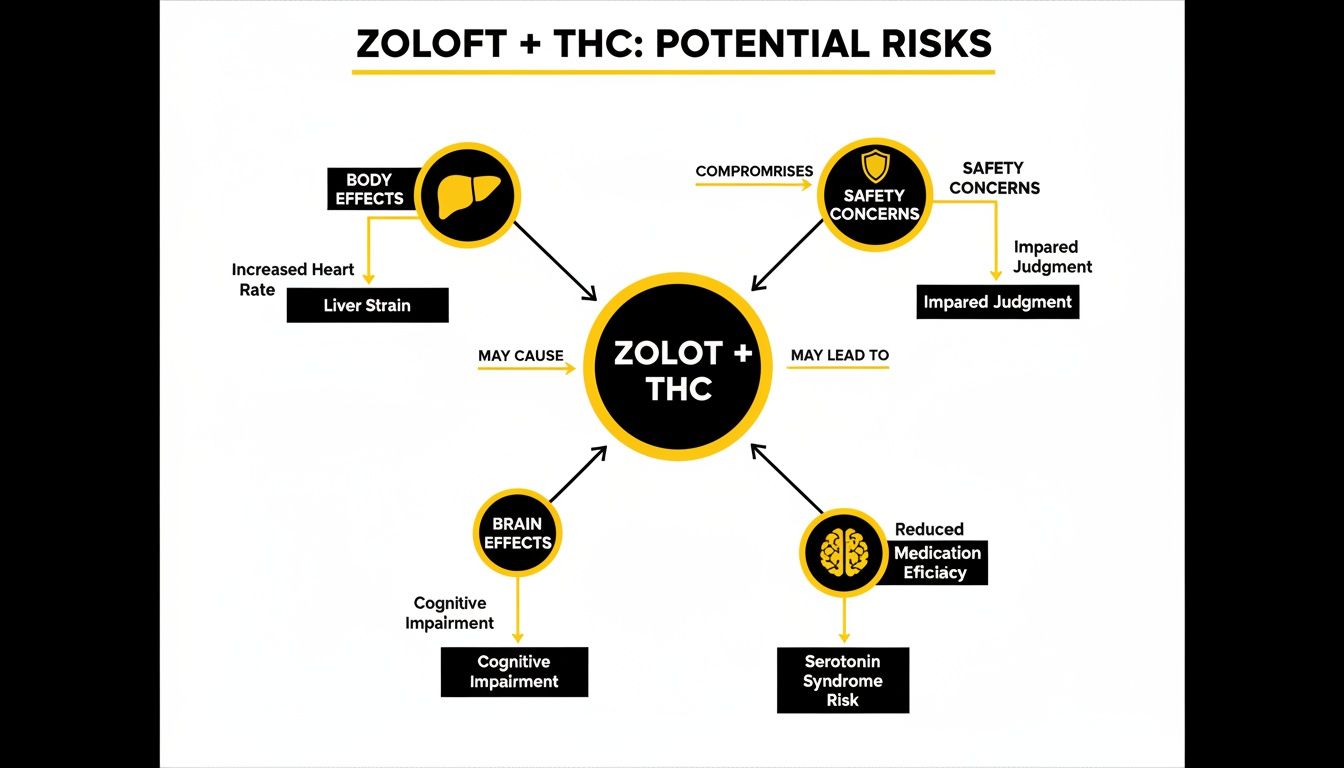
As you can see, the interaction has ripple effects across your body and brain, which is why making safety-conscious choices is so important.
From Clinical Data to Real-World Effects
This isn't just theory; we have the research to back it up. A 2021 study, for example, showed just how significant this pile-up can be. When adolescents on a daily dose of Zoloft also used THC, the total amount of Zoloft in their blood jumped by a whopping 33%. At its peak, the concentration was 26% higher. If you want to dive deeper, you can learn about the study's findings here.
So what does a 25-35% bump in Zoloft concentration actually feel like in the real world? It can mean your usual, manageable side effects suddenly become much more intense. That mild fatigue or dizziness you’re used to could feel much more disruptive.
Here’s what that could look like in practice:
- Increased Dizziness: What was once a minor lightheaded feeling could become severe enough to make daily activities feel unsafe.
- Intensified Fatigue: Normal drowsiness could escalate into overwhelming sedation, making it hard to stay alert and focused.
- Worsened Nausea: A slightly upset stomach could become much more pronounced, affecting your appetite and comfort.
- Impaired Coordination: Your motor skills might be more affected than usual, raising the risk of accidents or falls.
Essentially, combining Zoloft and THC can turn your carefully prescribed dose into a much higher, unmonitored one without you even realizing it. This is why getting a handle on this metabolic interaction is the first critical step toward making safer choices and having a truly informed conversation with your doctor about your cannabis use.
Understanding the Impact on Your Mental Health
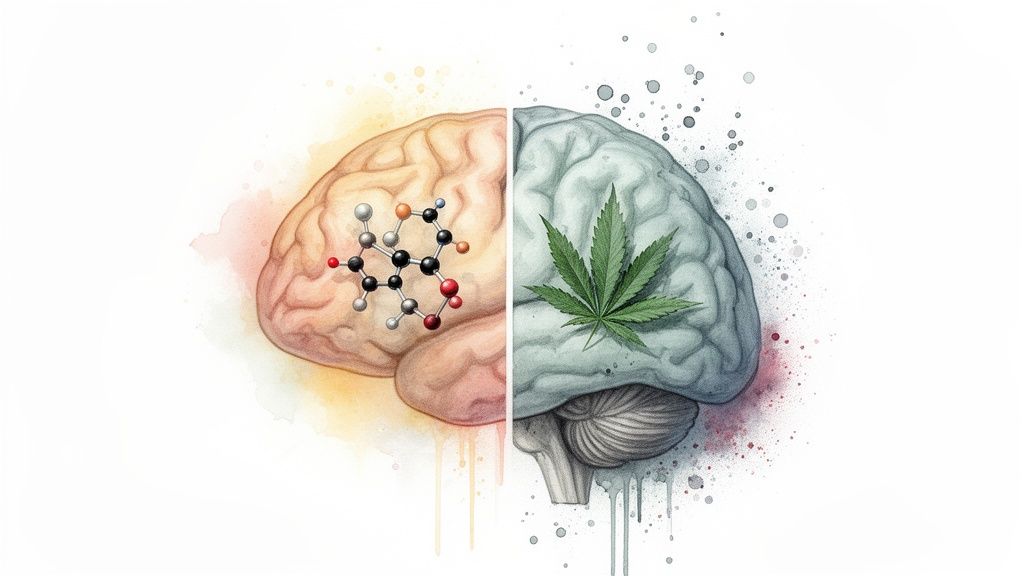
Beyond what’s happening in your liver, the real story unfolds inside your brain. Think of your brain chemistry as a finely tuned orchestra, with neurotransmitters like serotonin acting as key musicians. Zoloft is the conductor, working to make sure the serotonin section plays its part just right to keep your mood stable and positive.
Along comes THC, which is like a rogue musician jumping on stage and playing a completely different tune. It doesn’t just mess with one section; it starts influencing serotonin, dopamine, and other critical players all at once. The result? A chaotic sound that can easily disrupt the entire performance your Zoloft is trying to manage.
This chemical clash can lead to some seriously unpredictable outcomes for your mental health, often working against the very reason you started taking an antidepressant.
Blunting Zoloft’s Therapeutic Benefits
One of the biggest worries is that THC can actively undermine your medication. For many people, Zoloft is a game-changer, lifting the fog of depression or loosening the grip of anxiety by keeping serotonin levels steady and available.
But THC’s interference can blunt these therapeutic effects. Instead of feeling better, you might hit a plateau or even feel like you’re sliding backward, leaving you frustrated and wondering why your treatment isn't working like it used to.
This interference can show up in a few ways, often creating a confusing cycle where you can't tell if it's your medication, the cannabis, or your underlying condition causing you to feel off.
When you're on psychiatric medication, THC isn't just a neutral add-on for relaxation. It's an active compound that can directly interfere with your treatment, potentially masking underlying issues or just plain weakening your antidepressant's effectiveness.
The Paradox of Increased Anxiety and Paranoia
Here’s the cruel irony: while many people use cannabis to chill out, mixing it with Zoloft can do the exact opposite—especially with today’s high-potency products. This is a particularly rough outcome for anyone taking sertraline specifically for anxiety or panic disorder.
The interaction can trigger a whole host of unsettling psychological effects:
- Heightened Anxiety: Instead of feeling relaxed, you might get hit with racing thoughts, a pounding heart, and a sense of dread that’s even worse than your usual anxiety.
- Intensified Paranoia: The combo can sometimes spark feelings of suspicion or irrational fears, making everyday social situations feel threatening.
- Panic Attacks: For some, the mix can be a direct trigger for a full-blown panic attack, which is a serious risk for those with a history of panic disorder.
The strength of modern cannabis is a huge factor here. A decade ago, a strong strain might have 10-15% THC. Now, it's common to see flower testing at 20-30% THC or even higher. That extra kick makes unpredictable reactions far more likely.
If you are exploring cannabis for anxiety, understanding which products might be a better fit is key. Our guide on the best strains for anxiety can offer some direction, often pointing toward different cannabinoid and terpene profiles that are less likely to cause agitation.
Ultimately, this complex interaction is why caution is so important. Your goal with Zoloft is to find mental stability. Adding a powerful variable like THC can threaten to undo all your hard work and make your mental health journey a lot more complicated.
Recognizing Amplified Side Effects and Serotonin Syndrome
When you mix Zoloft and THC, it’s not as simple as adding one effect to another. It’s more like hooking them up to a chemical amplifier. The usual, often manageable side effects of either one can suddenly get cranked way up, turning a minor annoyance into a real problem.
This happens because that "metabolic traffic jam" we talked about leaves more Zoloft floating around in your system, just as THC adds its own effects to the mix. The result is often a much more powerful and disorienting experience than you bargained for, which can be both unpleasant and unsafe.
Common Side Effects That Get a Boost
Certain side effects are notorious for getting dialed up when Zoloft and THC are combined. What might be a slight inconvenience from one substance can feel totally overwhelming when you mix them, making it hard to go about your day safely.
Imagine you're browsing Cannavine's online menu for a Sauce Essentials vape in Ukiah and thinking about same-day delivery. If you’re also taking Zoloft for OCD, you need to know that the data screams caution. Combining THC and Zoloft often ramps up dizziness, drowsiness, and poor judgment. In fact, studies show that people using both report a nearly threefold increase in dizziness and more than a threefold jump in fatigue. Those kinds of intensified effects could easily ruin your Bay Area commute or a planned hike up the North Coast. You can learn more about these specific THC and Zoloft interactions here.
Here are the key side effects to watch for:
- Intense Drowsiness and Sedation: Both can make you sleepy, but together, the fatigue can be crushing. It might be tough just to stay awake, let alone focus on anything.
- Severe Dizziness and Poor Coordination: The lightheaded feeling can get so bad it throws off your balance and motor skills, making falls and other accidents much more likely.
- Impaired Judgment: Your decision-making can get seriously foggy, leading you to take risks you normally wouldn't. This is a huge deal when it comes to things like getting behind the wheel.
Here’s the bottom line: If you combine Zoloft and THC, you can’t trust your usual sense of sobriety or ability. Anything that requires your full attention, like driving a car or operating machinery, becomes incredibly dangerous and should be avoided completely.
Understanding Serotonin Syndrome: A Rare But Serious Risk
Beyond the more common side effects, there's a much more serious, though rare, condition called serotonin syndrome. This is a potentially life-threatening reaction that happens when you have way too much serotonin in your brain.
Think of serotonin as the volume knob for many of your body's systems. Zoloft turns that knob up to a helpful, therapeutic level. THC is also thought to play a role in serotonin signaling, though a bit more indirectly. When you combine the two, there's a small but real risk of cranking that volume dial way past the safe zone, creating a toxic overload.
This overload can throw your body's systems into chaos. While the risk is low, the potential severity means you absolutely have to know the warning signs. The overlap in how they both affect serotonin is a big reason why this combination requires such extreme caution and a conversation with your doctor.
How to Spot the Warning Signs
Serotonin syndrome can come on fast, sometimes within hours of taking substances that affect serotonin. Knowing the symptoms is your best defense. If you or someone you know is mixing Zoloft and cannabis and starts showing these signs, it's a medical emergency.
Don’t wait around to see if things get better. Seek immediate medical attention by calling 911 or heading to the nearest emergency room.
Here are the key symptoms, often grouped by how they affect you:
-
Mental and Emotional Changes:
- Feeling agitated or restless
- Severe confusion or disorientation
- Hallucinations
-
Autonomic Nervous System Instability:
- Rapid heart rate and high blood pressure
- Dilated pupils
- Heavy sweating or fever
-
Neuromuscular Symptoms:
- Muscle twitching or rigidity
- Loss of coordination
- Involuntary muscle spasms (myoclonus)
The point of listing these symptoms isn't to scare you, but to give you the knowledge to act fast and protect your health. Understanding what could happen helps you make smarter, safer choices.
A Practical Harm Reduction Approach
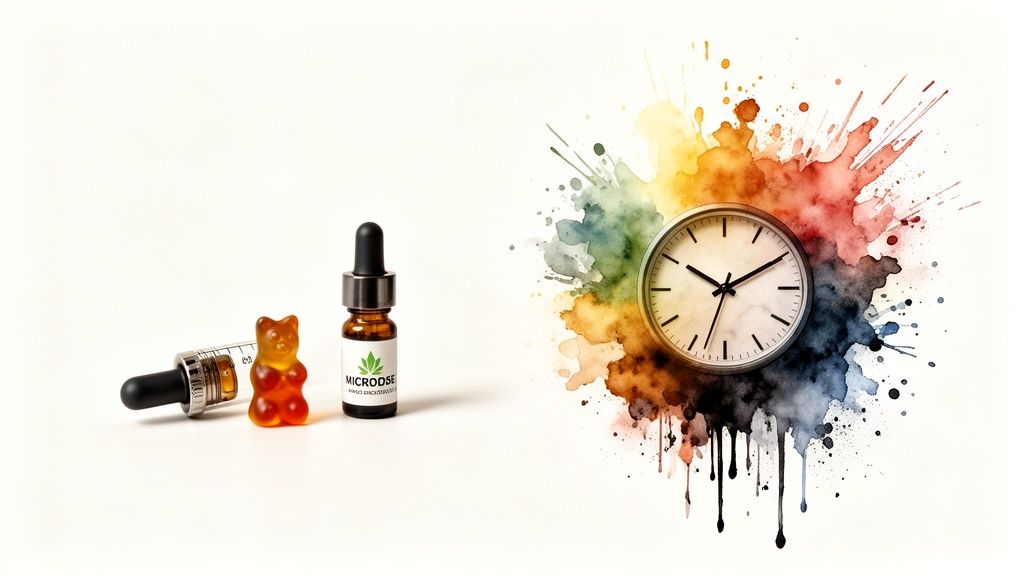
Knowing the potential interactions between Zoloft and THC is the first step toward staying safe. If you do decide to use cannabis while taking your medication, a harm reduction approach is the best way to minimize any risks. This isn't about giving a green light; it's about being smart and putting your well-being first.
The golden rule here is to start low and go slow. This isn’t just some catchy phrase we throw around—it’s the cornerstone of safe consumption, especially when you’re mixing things. Everyone’s body chemistry is different, and this method lets you carefully test the waters.
Start Low and Go Slow
Think of your first dose as a small personal experiment. The real goal is finding the absolute minimum amount you need to feel the desired effect without tipping over into the negative side effects. This is a strategy often called microdosing.
A standard microdose is generally around 2.5 mg of THC or less. Honestly, if you're new to this specific combination, starting with just 1 mg is an even smarter move. After you take that tiny amount, the next step is just as critical: wait. Don't get impatient and reach for more if you don't feel anything right away.
Your personal tolerance for THC while on Zoloft is a complete unknown. Starting with an extremely low dose and waiting at least two hours (especially with edibles) before even thinking about taking more is the safest possible way to see how this combination affects you personally.
Choose Your Product Wisely
Not all cannabis is created equal. The product you pick can make a world of difference in your experience, and when Zoloft is in the picture, high-THC products are a much bigger gamble. Instead, you'll want to focus on products that are less likely to trigger anxiety or intense psychoactive effects.
Look for products with a balanced or CBD-dominant ratio. CBD (cannabidiol) is a non-intoxicating compound in cannabis that can actually help smooth out some of THC’s rougher edges, like paranoia or anxiety.
Here’s a quick guide to help you choose:
- Go for High-CBD, Low-THC: Opt for flower or vapes with a CBD-to-THC ratio of at least 1:1. Ratios like 10:1 or 20:1 are even better bets.
- Dodge High-Potency Stuff: Steer clear of concentrates like dabs, wax, or shatter. The same goes for edibles with a ton of THC—anything over 10 mg per serving is probably way too much to start with.
- Read the Label: Don't just rely on "Indica" or "Sativa" labels. The actual numbers—the milligrams of THC and CBD—are what truly matter. Always check the lab test results.
Consider Your Consumption Method
How you consume your cannabis is another huge piece of the puzzle. Different methods have different kick-in times and durations, which directly impacts how well you can control your dose.
- Edibles for Precision: They take a while to get going, but edibles offer the most accurate dosing. A 2.5 mg gummy is always 2.5 mg—no guesswork. That predictability is a huge win. Just be patient, because the effects are delayed and last much longer. For a deeper look at timing, check out our guide on how long edibles last.
- Inhalation for Speed (With a Big Asterisk): Smoking or vaping gives you immediate feedback, making it easier to see how you're reacting in the moment. The downside? It's much tougher to measure your exact dose with each puff. If you go this route, take one small puff and wait at least 15-20 minutes to see how you feel before taking another.
By being deliberate about your product and your method, you're putting yourself in the driver's seat. A careful, cautious approach is the most responsible way to handle the complexities of mixing Zoloft and THC.
How to Talk to Your Doctor About Cannabis Use
Bringing up your cannabis use with a doctor can feel a little nerve-wracking. A lot of people worry they’ll be judged, but trust us, having this conversation is one of the most important things you can do for your health—especially if you're taking a medication like Zoloft.
This isn't about asking for permission. It's about building a partnership with your healthcare provider to keep you safe. Your doctor knows your full medical history and can give you personalized advice that no website ever could. Think of them as a key expert on your personal wellness team.
Preparing for Your Appointment
To get the most out of the conversation, it pays to show up prepared. Your doctor will need some specifics to give you real, useful guidance on how Zoloft and THC might interact. Having this info ready shows you’re taking your health seriously and makes the chat more productive.
Before you go, try to jot down a few notes on the following:
- Frequency of Use: How often are you using cannabis? Is it a daily thing, a few times a week, or just once in a while?
- Dosage Information: How much do you typically use in a sitting? Be as specific as possible, like "one 5 mg gummy" or "a couple of puffs from a vape pen."
- Product Types: What kinds of products do you prefer? Mention if you use flower, edibles, tinctures, or vapes, and include the THC/CBD content if you know it.
- Your Reasons for Use: Are you using it to relax and unwind, or are you trying to manage something specific, like chronic pain or trouble sleeping?
Having an honest, detailed conversation with your clinician is non-negotiable for anyone on prescription medication considering cannabis. Their guidance is essential for creating a safe and effective healthcare plan that accounts for all variables, including the combination of Zoloft and THC.
Key Questions to Ask Your Doctor
Remember, this is a two-way conversation. It’s your opportunity to get expert answers that apply specifically to you. Don't be shy about asking direct questions to get the clarity you need to move forward safely.
Here are a few great questions to have in your back pocket:
- Based on my current Zoloft dose, what specific risks should I be most aware of if I use THC?
- Are there any warning signs I should watch for that might point to a negative interaction?
- To minimize risks, would you recommend certain types of cannabis products, maybe those with higher CBD?
- How might cannabis affect how well my Zoloft is working for my depression or anxiety?
Your doctor’s job is to provide care, not judgment. When you approach the topic openly, you give them the power to help you stay safe and healthy.
Your Questions About Zoloft and THC, Answered
Mixing something like Zoloft with cannabis can feel like navigating a minefield. It's totally normal to have a ton of questions. We've put together some straightforward answers to the most common concerns we hear, giving you the clarity to make safer choices for your health.
Is It Ever Really Safe to Mix Zoloft and THC?
Honestly, there's no simple "yes" or "no" here. Everyone’s body is different, so how you react is incredibly personal. It all comes down to your Zoloft dosage, your own body chemistry, and the kind of cannabis product you're considering.
That said, you can absolutely take steps to be smarter and safer about it. The best move is always to talk with your doctor first. If you do decide to go ahead, the golden rule is "start low and go slow." Think about microdosing with 2.5 mg of THC or less. Opting for products with a higher CBD content can also help take the edge off THC's intensity. And it should go without saying, but never get behind the wheel after consuming. The risk isn't zero, but you can manage it with a big dose of caution.
Can I Use CBD with Zoloft Safely?
Even though CBD doesn't get you "high," it's not entirely off the hook when mixed with Zoloft. It can still interact with your medication because both are processed by the same group of enzymes in your liver (the CYP450 system).
Basically, CBD can slow down how quickly your body breaks down Zoloft. This could lead to higher levels of the antidepressant in your system than your doctor intended. While the risk is generally lower than with THC, it’s still something you need to discuss with your doctor. They can help you figure out a safe starting point and keep an eye out for any unexpected side effects.
Remember, just because a compound like CBD is non-psychoactive doesn't mean it can't mess with your prescription meds. Treat it with the same respect and professional guidance as you would THC, especially when you're on an SSRI.
What Should I Do If I Have a Bad Reaction?
If you've combined Zoloft and THC and start to feel off, how you respond depends on what you're experiencing. Knowing what to do ahead of time can make all the difference.
- For Mild Effects: If you just feel a bit more anxious, paranoid, or dizzy than you'd like, the first step is to stop consuming cannabis. Find a quiet, comfortable spot to relax, sip on some water, and focus on slow, deep breaths until the feeling subsides.
- For Severe Symptoms: This is serious. If you experience intense confusion, chest pain, have trouble breathing, or see signs of serotonin syndrome (like a high fever, stiff muscles, and agitation), get emergency medical help right away. Don't hesitate—call 911 or get to the nearest ER.
Here at Cannavine, our team is passionate about helping you understand cannabinoids and find lab-tested products that fit your needs. You can check out our curated selection of low-THC and high-CBD options online at https://trycannavine.com.