If you're new to cannabis, the best place to start is usually with strains that have a good balance of THC and CBD, or just a lower THC content in general. This helps ensure a gentle, manageable experience. That’s why you’ll often hear budtenders recommend strains like Blue Dream or Harlequin—they’re known for mild effects that won't leave you feeling overwhelmed.
Finding Your Footing in the World of Cannabis
Diving into the world of cannabis for the first time can feel like trying to learn a whole new language. With what seems like a million different strains and ways to consume them, it's easy to get confused. Think of this guide as your friendly co-pilot, here to turn that confusion into confidence and make sure your first time is a great time.
First, let's break down the key players inside the plant. Imagine them as a band creating a unique sound.
- THC (The Lead Singer): This is the famous compound that’s responsible for the "high." For beginners, a little bit goes a very long way.
- CBD (The Harmony): This is a non-intoxicating compound that smooths out THC's intensity. It also brings its own calming, therapeutic vibes to the mix.
- Terpenes (The Rhythm Section): These are the aromatic oils that give each strain its unique smell and flavor, from piney to citrusy. They also play a huge role in shaping the specific effects you’ll feel.
Setting the Stage for a Good Experience
Our goal is to give you a clear roadmap, from understanding the basics to walking into a dispensary feeling prepared. The most important rule for any newcomer is simple, but it’s everything: "start low and go slow."
This advice holds true whether you're taking a single puff from a joint or trying a tiny piece of a low-dose edible. It's the best way to guarantee a comfortable and enjoyable introduction to what cannabis has to offer.
Remember, you can always have a little more, but you can never have less. Patience is your best friend here. Giving your body plenty of time to respond is the only way to really understand your tolerance and find what works for you.
To get you pointed in the right direction, we put together a quick table summarizing a few ideal starting points for beginners.
Beginner-Friendly Cannabis Profiles at a Glance
This chart breaks down three beginner-friendly strain profiles, giving you a snapshot of their common effects and what kind of experience they typically provide. It's a simple way to see which path aligns with your goals, whether you’re looking for gentle relaxation, clear-headed relief, or a mild and happy buzz.
| Strain Profile | Typical Effects | Best For Beginners Seeking… |
|---|---|---|
| Low-THC / High-CBD | Clear-headed calm, minimal to no "high," body relaxation | Anxiety relief, pain management, or therapeutic benefits without strong psychoactive effects. |
| Balanced THC/CBD (1:1) | Gentle euphoria, mild psychoactivity, functional relaxation | A mellow introduction to THC's effects, balanced with the calming influence of CBD. |
| Low-Potency Hybrid | Uplifting mood, gentle body buzz, creative energy | A classic, mild "high" that is social and happy without being too intense or sedating. |
Think of these profiles as general starting points on your journey. Everyone's body chemistry is different, so your experience with a certain strain might be unique! The fun part is the exploration.
Understanding the Building Blocks: THC, CBD, and Terpenes
To pick the right strain, you first need to know what you're looking at. Think of a cannabis strain like a band: the final "song," or the effect you feel, is created by a few key players working together. The main ones are compounds like THC and CBD (called cannabinoids) and the aromatic oils known as terpenes.
Getting to know their roles is like learning to pick out the guitar, bass, and drums in your favorite song. Once you can do that, you can look at a product label and have a much better idea of how that strain will make you feel. It’s the difference between guessing and making a smart choice.
THC: The Lead Singer
THC (tetrahydrocannabinol) is easily the most famous compound in cannabis. It’s the lead singer of the band—the one responsible for the euphoric, psychoactive feeling people call a "high."
Think of THC as the volume knob. If you're new to this, cranking that knob up too high, too fast, can get overwhelming and uncomfortable, sometimes leading to anxiety or dizziness. This is why a good first experience almost always starts with a lower THC percentage. Most beginner-friendly strains keep the THC levels in a more modest 10-17% range.
CBD: The Harmonizer
Next up is CBD (cannabidiol). If THC is the lead singer, CBD is the band's harmonizer. It's non-intoxicating, which means it won’t get you "high" on its own. Its job is to smooth everything out, like a sound engineer making sure the final track is perfectly balanced.
CBD is really known for its therapeutic and calming properties, often used to help with anxiety, inflammation, and general discomfort. For a beginner, a strain that has a decent amount of CBD acts like a safety net. It can temper the intensity of the THC, encouraging a more relaxed and clear-headed experience. It keeps the lead singer from totally stealing the show.
If you want to dig deeper into how they're different, check out our guide on the differences between THC and CBD.
Terpenes: The Rhythm Section
Last but not least, you've got the terpenes. They're the rhythm section, providing the flavor, the aroma, and even setting the mood of the song. These aromatic compounds are what give strains their signature smells—from the zesty citrus of Limonene to the earthy pine of Pinene.
But they do a lot more than just smell nice. Terpenes work behind the scenes to steer the overall effect of a strain.
- Myrcene: Often found in relaxing, "couch-lock" strains, it has an earthy, musky aroma.
- Limonene: Just like the name sounds, it's citrusy and is often tied to uplifting, mood-boosting effects.
- Pinene: This one smells like a pine forest and is thought to help with alertness and focus.
- Linalool: With a floral, lavender-like scent, it's known for its calming, stress-relieving qualities.
This teamwork between cannabinoids and terpenes is the real secret to why different strains feel so different.
The Entourage Effect: This is the simple but powerful idea that all these compounds—THC, CBD, and terpenes—work better together than they do alone. Their interaction creates a more nuanced and complete experience that's greater than the sum of its parts.

This graphic really shows how THC drives the main effect, CBD balances it out, and terpenes add color with specific moods and flavors. Once you understand this interplay, you can start picking strains based on their entire chemical profile, not just their THC level. That's how you find the perfect strain for you.
What Do Indica, Sativa, and Hybrid Labels Really Mean?
The moment you start looking into cannabis, you'll see three words pop up everywhere: Indica, Sativa, and Hybrid. For years, these labels have been the go-to way for dispensaries and users alike to classify strains, acting as a simple shorthand to guess what kind of experience you're in for. It’s a decent starting point, but there’s a lot more to the story than just these three categories.
Think of it like sorting music into genres. If you label a song as "rock," you get a general idea—guitars, drums, maybe a driving beat. But that label doesn't tell you if you're about to hear a high-energy punk anthem or a slow, mellow acoustic ballad. They’re both technically "rock," but they create completely different moods.
Cannabis labels work the same way. They give you a hint of the vibe, but they don't capture the full, unique picture of what a strain can do.
The Traditional Understanding
The classic definitions for these categories are straightforward and easy to remember, which is why they’ve been around for so long.
-
Indica: Almost always linked with relaxing, body-heavy effects. You’ll hear the classic saying that Indica puts you "in-da-couch," making it a favorite for nighttime, chilling out after a stressful day, or helping with aches and pains.
-
Sativa: Known for its uplifting, energetic, and creative buzz. Sativas have traditionally been the choice for daytime use, getting into a creative project, or for social settings where you want to feel more alert and talkative.
-
Hybrid: Just as the name suggests, these strains are bred from both Indica and Sativa plants to get the best of both worlds. Hybrids can lean Indica-dominant, Sativa-dominant, or be a balanced 50/50 mix, offering a massive spectrum of effects.
This system gives you a basic map, but it’s based more on the physical look of the plant than its actual chemical makeup. We now know that a strain's chemical profile is a much better predictor of its effects.
A Better Way to Predict Your Experience
While the Indica/Sativa/Hybrid model is a handy starting point, it's pretty outdated. The real drivers behind your cannabis experience are compounds called cannabinoids (like THC and CBD) and terpenes (the fragrant oils that give cannabis its smell and flavor). Two different Indica strains can feel worlds apart if one is high in a relaxing terpene like myrcene while the other is full of a focusing terpene like pinene.
The key to finding a predictable and great experience is to focus on a strain's specific chemical profile, not just its Indica or Sativa label. It's like looking at an album's tracklist and liner notes instead of just glancing at the genre sticker.
For a deeper dive, you can learn more about the differences between Indica, Sativa, and Hybrid strains in our detailed guide.
How to Use This at the Dispensary
So, if the labels don't tell the whole story, what should you look for? As a beginner, the best thing you can do is shift your focus from the big, broad category to the specific details on the product label and the knowledge of your budtender.
Instead of just walking in and asking for "an Indica," try describing the feeling you're after. Are you trying to quiet your mind before a social gathering, get some relief from sore muscles after a workout, or spark a bit of creativity for a weekend project?
When you explain your goal, you give your budtender the power to recommend something based on its specific cannabinoid and terpene profile. They can guide you to a strain with low THC and a calming terpene like linalool for relaxation, or maybe a balanced THC/CBD ratio with uplifting limonene for a happy, gentle mood. This method takes the guesswork out of the equation and helps you make a smart choice tailored to you, setting you up for a great first experience.
Top Cannabis Strains Perfect for Your First Time
Okay, you've got the theory down. But knowing about cannabinoids and terpenes is one thing; seeing how they come together in an actual strain is where the magic really happens. To take the guesswork out of your first purchase, we’ve picked out a few of the best cannabis strains for beginners—all of them celebrated for being gentle, predictable, and welcoming.
These are tried-and-true options that are perfect for your first journey. For each one, we’ll look at its cannabinoid content, dominant terpenes, and the kind of experience you can generally expect. This way, you have specific names to look for when you browse the menu at Cannavine.
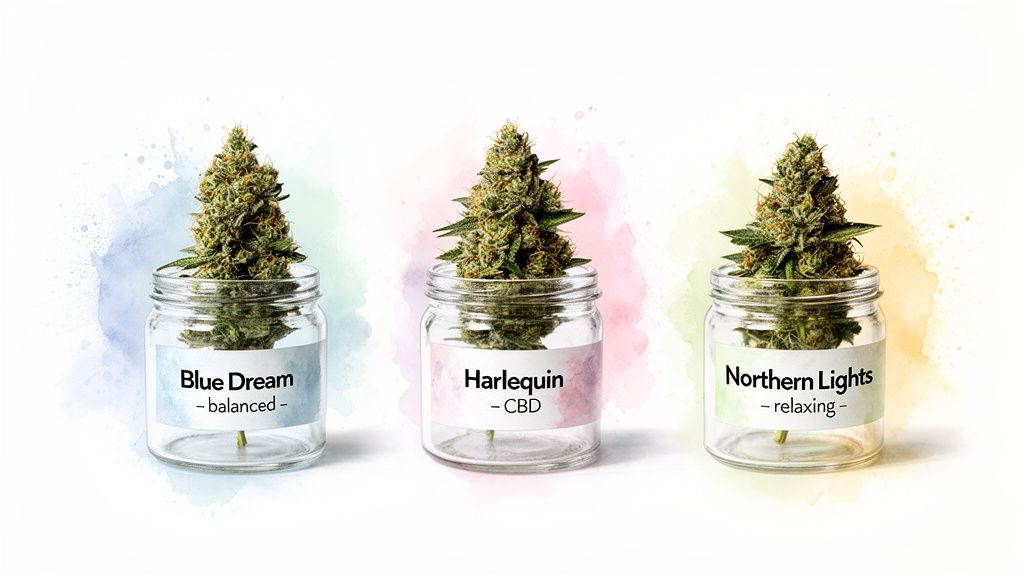
Blue Dream: The Ultimate Beginner Hybrid
If there's one strain that budtenders consistently recommend for newcomers, it's Blue Dream. This sativa-dominant hybrid is famous for its balanced effects, delivering a gentle cerebral buzz alongside a soothing feeling in the body. It’s the perfect middle-ground for someone who wants to experience a classic high without feeling anxious or glued to the couch.
Its popularity is no accident; in fact, as you can see from data on best-selling cannabis strains on Leafly.com, Blue Dream is consistently one of America's favorites. A huge part of its appeal, especially here in Northern California, is its reliable and forgiving nature. The effects typically creep in gently within 5-10 minutes, building to a clear-headed euphoria perfect for daytime activities, creative projects, or social hangouts where you want to feel relaxed but still sharp.
- Cannabinoid Profile: THC typically ranges from 17-24%, with very little CBD.
- Dominant Terpenes: Myrcene (herbal) and Pinene (pine), which contribute to its calming yet focused vibe.
- Best For: Easing stress, lifting your mood, and enjoying a happy, social buzz.
Harlequin: A Gentle CBD-Dominant Choice
For beginners more interested in cannabis's therapeutic side—and who want to avoid a strong "high"—Harlequin is an excellent choice. This sativa-dominant strain is known for its high CBD content, often featuring a 5:2 ratio of CBD to THC.
This unique chemical profile means Harlequin provides clear-headed relaxation and relief from anxiety or pain with almost no intoxication. You can go about your day feeling calm and focused, free from the heavy psychoactive effects that can sometimes feel overwhelming for a first-timer. It's an ideal entry point for anyone curious about cannabis for wellness.
Think of Harlequin as dipping your toes in the water. It lets you experience the calming, muscle-relaxing benefits of the plant without the full psychoactive plunge, making it a safe and comfortable starting point.
- Cannabinoid Profile: High CBD (around 8-15%) and low THC (around 4-7%).
- Dominant Terpenes: Myrcene (herbal), Pinene (pine), and Caryophyllene (peppery).
- Best For: Anxiety relief, pain management, and staying functional during the day.
Northern Lights: A Classic Relaxing Indica
When the goal is to just unwind, de-stress, and melt into the couch for a movie night, Northern Lights is the legendary indica that gets the job done. This strain is beloved for its deeply relaxing and tranquil effects that can soothe both the mind and body.
As a pure indica, it’s best saved for the evening when you have zero plans other than to chill out. For beginners seeking help with sleep or looking to quiet a racing mind after a long day, Northern Lights offers a peaceful, euphoric experience without the risk of paranoia that some high-THC sativas might bring on. It’s a gentle landing into deep relaxation.
- Cannabinoid Profile: THC levels are moderate, usually between 16-21%.
- Dominant Terpenes: Myrcene (herbal, earthy) and Pinene (piney).
- Best For: Insomnia, stress relief, and deep physical relaxation at night.
These three strains provide a fantastic starting point for any beginner. Whether you're looking for a balanced hybrid like Blue Dream, a CBD-rich option like Harlequin, or a classic indica like Northern Lights, you can find these reliable choices on the Cannavine menu for delivery or pickup.
Choosing Your Consumption Method as a Novice
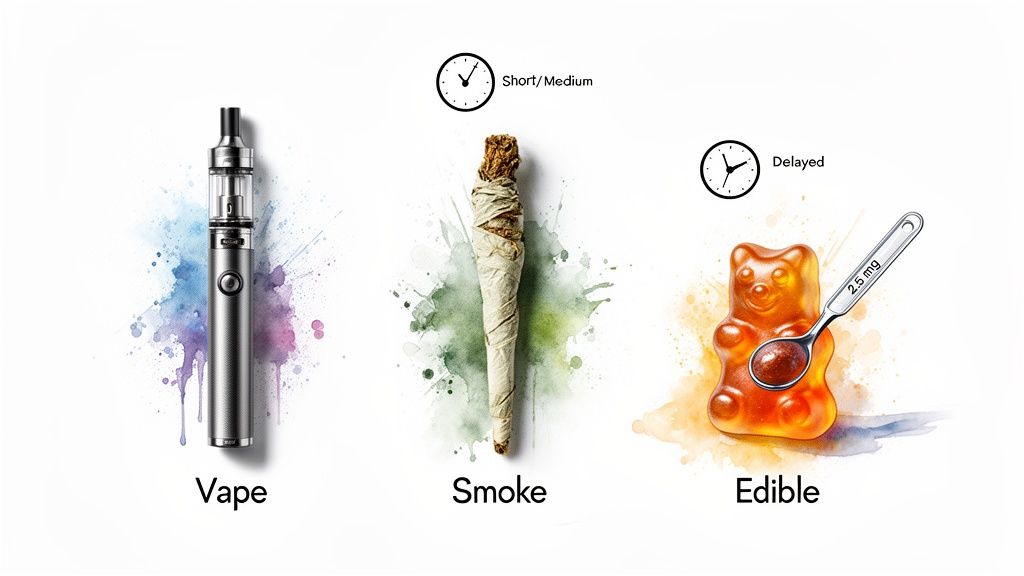
Once you've picked a beginner-friendly strain, your next decision is just as crucial: how are you going to use it? The "how" is a huge part of the equation, shaping everything from how quickly you feel the effects to how long they last. Getting this right is the key to making sure your first time is a comfortable and positive one.
For most newcomers, the journey starts with one of three paths: smoking, vaping, or edibles. Each one offers a completely different ride, and what's perfect for your friend might not be the best fit for you. Let's break down what to expect from each.
Smoking and Vaping: Fast and Controllable
There's a reason inhalation methods—like smoking a pre-roll or using a vape pen—are so popular. They work fast. You'll typically feel the effects within just a few minutes, and for a beginner, that speed is a huge advantage. It lets you check in with yourself almost immediately.
This quick feedback makes it much easier to follow the golden rule of cannabis: "start low and go slow." You can take one small puff, wait 10-15 minutes to see how you feel, and then decide if you want a little more. That level of control is your best friend when you're just starting out and helps prevent you from accidentally overdoing it.
- Smoking: This is the classic method, using flower in a pipe or joint. It delivers the strain's full, authentic flavor but involves combustion, which some people find a bit harsh on their lungs.
- Vaping: This method heats cannabis just enough to release its active compounds without actually burning it. The result is a much smoother vapor that's easier on the throat.
With both smoking and vaping, the effects don't stick around for too long, usually lasting between 1-3 hours. For a first-timer, this shorter duration can feel a lot less intimidating than an experience that takes up your whole afternoon.
Edibles: A Different Kind of Journey
Edibles, from gummies to chocolates, are in a league of their own. Because the THC has to travel through your digestive system and get processed by your liver, the whole experience is delayed and often feels much stronger than smoking or vaping.
The single most important piece of advice for anyone trying edibles is to be patient. It can take anywhere from 30 minutes to two hours to feel anything, and that long wait is where most beginners get into trouble.
It's so easy to think, "This isn't working," and reach for another piece. That's a classic rookie mistake and a fast track to an uncomfortably intense experience. Plus, the effects of edibles last a lot longer—we're talking 4-8 hours or even more. For a deeper dive, our guide explains how long you can expect edibles to last.
A Beginner’s Guide to Dosing Edibles
If you do decide to start with edibles, getting the dose right is absolutely everything. The game plan is simple: start with a tiny amount and then just wait.
-
Start with a Low Dose: Look for products that are easy to split into smaller servings. A great starting point is just 2.5mg to 5mg of THC. Since many gummies come in 10mg pieces, you’ll want to cut one in half or even into a quarter.
-
Wait Patiently: After you take your dose, set a timer. You need to wait at least two full hours to see how you feel before even thinking about taking more.
-
Create a Comfortable Setting: Since you're in it for the long haul, make sure you're in a safe, familiar place where you can relax. Clear your schedule and just chill.
By thoughtfully choosing your method and respecting how each one works, you're setting yourself up for a safe and enjoyable introduction to cannabis. Whether it's the instant feedback of a vape or the slow build of an edible, being mindful is the most important tool you have.
How to Confidently Shop at a Dispensary
Alright, you’ve done the homework on strains, cannabinoids, and how you want to enjoy your cannabis. Now for the final step: your first dispensary visit. Walking in for the first time might feel a little intimidating, but it's actually a pretty relaxed and supportive experience. Think of it less like a retail store and more like a wellness consultation.
The most important thing is to walk in with a goal. Before you even glance at a menu, just ask yourself what you're hoping to achieve. Are you looking for a better night's sleep? Maybe a creative spark for a project, or just something to help you unwind for a movie night? Knowing your desired outcome is the best tool you can bring with you.
Navigating the Menu Like a Pro
Dispensary menus, whether you're looking online or at the counter, can feel like a tidal wave of options. Don't let it overwhelm you. Most menus have handy filters that let you cut through the noise and narrow things down instantly.
Here’s a simple way to approach it:
- Filter by Category: Start with how you want to consume. Are you interested in flower, a vape, or an edible? Choosing one immediately clears a huge chunk of products you don't need to see.
- Filter by Strain Type: While you can filter by Indica, Sativa, or Hybrid, a much better approach is to focus on the chemistry. The real magic is in the cannabinoid content.
- Filter by Cannabinoids: Look for options to sort by THC or CBD levels. As a beginner, it's a great idea to look for products with THC under 20% or those with a balanced 1:1 ratio of THC to CBD. This is a solid starting point.
The Most Valuable Resource: Your Budtender
While online menus and filters are great, your most valuable asset in the dispensary is the person behind the counter: the budtender. They aren't just cashiers; they're trained guides whose job is to help you find the perfect match for what you need. Be open and honest with them.
Think of your budtender as a cannabis sommelier. You tell them the experience you’re after—the “flavor notes” of your desired mood—and they’ll recommend the perfect pairing. Don’t ever feel shy about saying, “I’m brand new to this and want something that won’t make me feel anxious.”
They can translate your goals into specific recommendations, pointing you toward a strain with the ideal terpene profile for relaxation or a low-dose edible perfect for a first-timer. Leaning on their expertise is the single fastest way to make a purchase you feel good about. With their help, your first cannabis experience can be a genuinely positive one.
Your Questions, Answered
Even after doing your homework, a few questions are bound to pop up. It happens to everyone. Here are some quick, straightforward answers to the most common concerns we hear from people who are new to cannabis.
How Much Should I Use My First Time?
There's a golden rule in cannabis, and it's the single most important piece of advice for any beginner: "start low and go slow." This isn't just a catchy phrase; it's the key to making sure you have a comfortable, positive experience as you figure out what works for you.
-
Smoking or Vaping: Take a single, small puff. Seriously, just one. Set it down and wait at least 15-20 minutes to see how it affects you before even thinking about taking another. The feeling can come on fast, but it can also build over time, so a little patience goes a long way.
-
Edibles: Start with a very small dose, usually 2.5mg of THC is a great starting point. After you eat it, you absolutely must wait at least two full hours to feel the effects. Edibles are notorious for their delayed onset, and they can be surprisingly powerful when they kick in.
What Do I Do If I Feel Too High?
It can happen, and if it does, the most important thing to remember is that the feeling is temporary and it will pass. First things first, find a safe, comfortable spot where you can just relax and ride it out.
A great trick is to stay hydrated with some water and have a simple snack. Many seasoned users also swear by smelling or chewing on black peppercorns—they contain a terpene that can help dial down THC's intensity. Having some CBD on hand is another pro-tip, as it can help mellow out the experience.
Is Cannabis Legal for Me to Use?
Here in California, any adult aged 21 and over can legally buy and use cannabis for recreational purposes from a licensed dispensary like ours. For medical patients with a valid recommendation, the age is 18 and over.
Keep in mind that you can only consume cannabis in a private residence. Using it in public is still illegal. The best way to stay safe and on the right side of the law is to always purchase from a licensed shop like Cannavine. That way, you know everything is lab-tested, safe, and fully compliant with state regulations.
Ready to take the next step with confidence? The expert budtenders at Cannavine are here to help guide you. You can check out our menu online and swing by for pickup or have it delivered right to your door.