So, what’s the deal with RSO? You’ve probably heard the name floating around, and our budtenders get asked about it all the time.
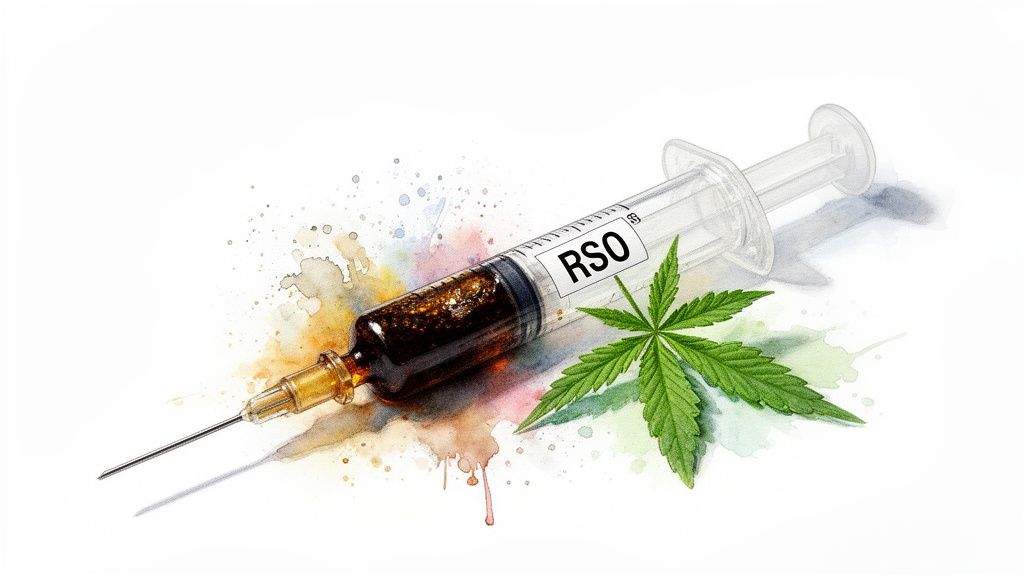
At its heart, RSO, or Rick Simpson Oil, is a seriously potent, unrefined cannabis extract. It’s famous for its super thick, almost tar-like texture and its powerful, full-spectrum effects. A good way to think about it is like a whole-plant smoothie. It’s got everything the plant has to offer—not just the flashy parts. This is very different from more refined extracts, which are more like filtered juice, only keeping certain elements.
That's the quick answer, but the story behind RSO and the science that makes it work run a lot deeper.
What Is Rick Simpson Oil
Rick Simpson Oil is way more than just another concentrate you'll find on dispensary shelves. It’s a product with a unique backstory and a fiercely loyal following, built entirely on its creation method and its intense, all-encompassing effects.
The name comes from its creator, Rick Simpson, a Canadian engineer and medical cannabis activist. Back in 2003, he developed the oil to treat his own health issues. Instead of patenting it, he shared his recipe and methods with the world for free, which led to the grassroots movement that made RSO a household name in the cannabis community. You can learn more about Rick’s story and how RSO became such a well-known extract.
A Full-Spectrum Philosophy
The magic of RSO is in its "full-spectrum" or "whole-plant" approach. Think of it like an orchestra—you don't just want to hear the violins. The rich, complex sound of a symphony comes from every single instrument playing its part. That’s the philosophy behind RSO.
The goal is to capture everything, not just the big-name cannabinoids like THC and CBD. It also includes:
- Minor Cannabinoids: Compounds like CBG and CBN that might not be stars on their own but play crucial supporting roles.
- Terpenes: These are the aromatic molecules that give cannabis its distinct smell and taste, and they also have a huge impact on the overall effect.
- Flavonoids, Lipids, and Waxes: All the other natural plant goodies that are usually stripped out during the refinement process for other extracts.
When all these compounds work together, they create something called the "entourage effect." It’s the idea that the whole is greater than the sum of its parts, leading to a much more profound and well-rounded experience than you'd get from any single compound alone.
RSO At A Glance Key Characteristics
To help paint a clearer picture of what makes RSO stand out, here’s a quick rundown of its key features.
| Characteristic | Description |
|---|---|
| Appearance | Expect a very dark, thick, and sticky oil. It's often black or a deep amber, with a consistency like molasses or tar. |
| Potency | This stuff is incredibly strong. THC levels often hit between 60% to 90%. A little bit goes a very, very long way. |
| Form | You’ll almost always find it sold in a plastic syringe (the kind without a needle) to make dosing precise and easy. |
| Flavor Profile | The taste is intense—very earthy and often bitter. That's because it still has chlorophyll and other plant matter that more filtered oils leave behind. |
This raw, unrefined power is exactly why RSO is treated with so much respect. It’s not about a fancy flavor or a pretty color; it’s all about delivering the most potent, all-encompassing effects the plant can offer.
The Story And Science Behind Rick Simpson Oil
To really get what RSO is all about, you have to go back to the beginning. This isn't some product dreamed up in a corporate boardroom—it started with one man's personal mission. That man was Rick Simpson, a Canadian engineer who found himself in a serious health battle back in the early 2000s.
After a skin cancer diagnosis, Simpson grew frustrated with the conventional treatments he was offered. He’d already found that cannabis helped him with other health problems and was inspired by studies suggesting cannabinoids might have anti-tumor properties. That's what pushed him to create his own super-concentrated, whole-plant cannabis extract right in his own home.
He applied the thick, dark oil he made to the cancerous spots on his skin. According to his own story, they were gone in a matter of days. Convinced he was onto something huge, Rick Simpson didn't try to patent or sell his formula. Instead, he shared the recipe with the world and started giving the oil away for free. This kicked off a grassroots movement that made Rick Simpson Oil a household name in cannabis circles everywhere.
The Science Of Synergy: The Entourage Effect
While the story is powerful, the science behind why RSO feels so different from other extracts is just as important. It all boils down to a concept called the entourage effect, and it's the key to understanding what makes a full-spectrum oil like RSO so special.
Think of it like an orchestra. A single violin can play a beautiful tune, but it's just one sound. Now, imagine the whole orchestra playing together—the strings, the brass, the woodwinds, the percussion. The result is a symphony. It's a richer, deeper, and more powerful experience than any one instrument could ever create by itself.
That's a perfect way to think about how RSO works.
The entourage effect is the idea that all the compounds in cannabis work better together. The combined energy of cannabinoids, terpenes, and flavonoids creates a more potent and well-rounded effect than any single compound could on its own.
Most modern cannabis distillates are like that solo violin. They isolate one cannabinoid, usually THC, to get a very specific, one-note effect. RSO, on the other hand, is the entire orchestra.
Why Whole-Plant Matters
The way Rick Simpson Oil is made is designed to capture every last compound from the cannabis plant, keeping that orchestra together. This means you’re getting more than just THC and CBD. You’re also getting:
- Minor Cannabinoids: Compounds like CBG, CBN, and THCA are all in the mix, each bringing their own unique benefits to the table.
- Terpenes: These are the aromatic molecules that give cannabis its distinct smell and taste. But they do more than that—they actually interact with cannabinoids to tweak and boost their effects.
- Flavonoids and Plant Fats: Even things like chlorophyll, which are usually stripped out of other extracts, are left in RSO. This helps maintain the full, unrefined profile of the original plant.
This dedication to keeping the entire plant profile intact is what truly defines RSO. It isn’t just about getting a high THC number; it’s about harnessing the holistic power of hundreds of compounds working as a team. This is why people often say the experience from RSO feels deeper and more complete compared to extracts that have been taken apart and pieced back together. Once you grasp this, you understand what makes RSO such a unique and respected product.
How RSO Is Made And Why It Stands Apart
The journey from a cannabis plant to that thick, dark oil in an RSO syringe is all about whole-plant extraction. Unlike other methods that try to isolate certain compounds, the goal with RSO is to capture everything the plant has to offer. This raw, unfiltered approach is exactly what gives the oil its signature dark color and powerful, full-spectrum effects.
The most common way to do this is with a solvent, usually food-grade ethanol, which washes over the plant material. Picture it like making a really potent tea; the ethanol soaks up all the good stuff—cannabinoids, terpenes, flavonoids, and even the chlorophyll—from the flowers and leaves.
This wash is often done a few times to make sure every last valuable compound is pulled from the plant. Once the plant matter is strained out, you're left with a liquid that’s a mix of the solvent and all those extracted plant compounds. What comes next is probably the most important step for ensuring a safe, high-quality product.
The Critical Purging Process
After capturing all the plant's goodness, the ethanol has to go. This is done by gently heating the mixture, which allows the solvent to evaporate and leaves behind the thick, cannabinoid-packed oil. It’s a delicate balancing act, to be sure.
You need enough heat to get rid of the solvent, but not so much that you destroy the sensitive cannabinoids and terpenes. A proper purge is non-negotiable. Any leftover solvent in the final product can be harmful to consume, which is why sticking to lab-tested RSO is the only way to guarantee purity and safety.
This straightforward but careful process results in an oil that’s a true, unadulterated reflection of the original plant. The image below helps show how keeping all these compounds together creates a more powerful result than any one of them could achieve on its own.

Think of it this way: the individual compounds in the plant are like single musical notes. When they all play together, you get a rich, complex harmony—a full orchestra instead of just a lone violin.
How RSO Compares To Other Extracts
The world of cannabis concentrates can be pretty confusing, and it's easy to mix them up. But RSO's production method and final makeup make it fundamentally different from the other popular extracts you’ll find on dispensary shelves. Each one is made with a different purpose and experience in mind.
The real difference comes down to the philosophy behind the extraction. RSO is all about a complete, unrefined capture of the entire plant profile. Many other methods are designed to isolate specific compounds for better purity, flavor, or even appearance.
Seeing these differences side-by-side really helps clarify where RSO fits in.
RSO vs Other Cannabis Extracts: A Comparative Overview
This table breaks down how RSO stacks up against other common concentrates, highlighting the key variations in how they're made, what they contain, and what they're used for.
| Extract Type | Extraction Method | Cannabinoid Profile | Typical Potency | Common Uses |
|---|---|---|---|---|
| RSO | Ethanol solvent wash, minimal refinement | Full-spectrum, including chlorophyll and waxes | 60-90% THC | Oral/topical use for potent, long-lasting effects |
| CO2 Oil | Supercritical CO2 fluid extraction | Full or broad-spectrum, refined and clean | 70-90% THC | Vaping, edibles, and tinctures |
| BHO | Butane hash oil extraction | Full-spectrum, often high in terpenes | 70-90%+ THC | Dabbing (e.g., shatter, wax) |
| Live Resin | BHO or similar, using fresh-frozen plants | Very high terpene, full-spectrum profile | 65-95% THC | Dabbing and vaping for flavor enthusiasts |
As you can see, while extracts like BHO and CO2 oil pack a punch, they're usually refined to be inhaled. RSO, on the other hand, is intentionally left raw and unfiltered, making it ideal for oral and topical use. For RSO, the inclusion of plant lipids and chlorophyll is a feature, not a bug.
Other concentrates, like live resin, go in a completely different direction by using frozen plants to preserve an even higher amount of terpenes for flavor. You can learn more about what is live resin in our detailed guide. It all just goes to show that RSO wasn't engineered for a smooth smoke or a tasty dab—it was designed to deliver the most complete essence of the cannabis plant possible.
Exploring The Uses And Reported Benefits Of RSO
Talk to anyone in the cannabis wellness community, and you'll likely hear some passionate stories about Rick Simpson Oil. Because it’s such a potent, full-spectrum extract, RSO has built a serious reputation for a wide range of uses. But it’s important to separate what people anecdotally report from what’s been scientifically proven.
Many people who use RSO are looking for powerful relief from significant discomfort or help managing persistent conditions. The high concentration of cannabinoids, especially THC, is often credited with delivering a deep physical relaxation that can ease bodily tension and soothe chronic aches.
Beyond that, users often find that RSO helps kickstart their appetite, a huge plus for anyone dealing with nausea or a general lack of desire to eat. Its deeply sedating qualities also make it a go-to for those battling sleepless nights, as a tiny dose is often enough to encourage long, restful sleep.
Navigating Anecdotal And Scientific Claims
If you dig into what people use RSO for, you’re bound to come across some incredible, often life-changing, personal testimonials. These stories are a huge part of RSO's legacy and a major reason for its popularity. People have claimed it helps with everything from severe skin issues to symptoms tied to major illnesses.
It’s crucial, however, to draw a clear line between these compelling personal stories and established medical facts. While an individual’s experience is completely valid and meaningful, it doesn’t count as clinical evidence.
The most important thing to remember is that RSO is not a medically recognized cure for any disease, including cancer. While some early lab studies on cannabinoids show promise, we need high-quality human trials before anyone can make definitive medical claims.
The scientific community is still actively researching the therapeutic potential of cannabis compounds. Until more of that research is complete, RSO should be seen as a supportive wellness product, not a medical treatment. Always talk to a healthcare professional before trying RSO or any cannabis product for a medical condition.
Understanding Product Consistency And Potency
One of the biggest challenges with RSO is the lack of standardization. Since it can be made using different strains and extraction methods, the end product can vary wildly from one batch to the next. High-potency RSO often tests with total THC concentrations anywhere from 60% to 90%, with CBD content all over the map. This inconsistency in potency and purity is a real concern. You can discover more insights about RSO's variable formulations on eodhd.com.
This variability doesn't just impact your experience; it also makes it tough to have a consistent conversation about its benefits. The specific mix of cannabinoids and terpenes in one syringe of RSO might produce totally different effects from another. For example, RSO made from a heavy indica strain will likely feel much more sedating than one made from a sativa.
This is where knowing the basics comes in handy. THC is the main psychoactive compound, but the presence of CBD can soften the experience, often toning down some of THC’s intensity. To get a better handle on how these two key players interact, check out our guide explaining the core differences between CBD and THC. At the end of the day, the diverse chemical profiles mean that everyone's RSO journey can be unique, which just reinforces the need for careful dosing and realistic expectations.
How To Dose And Use RSO Safely And Effectively
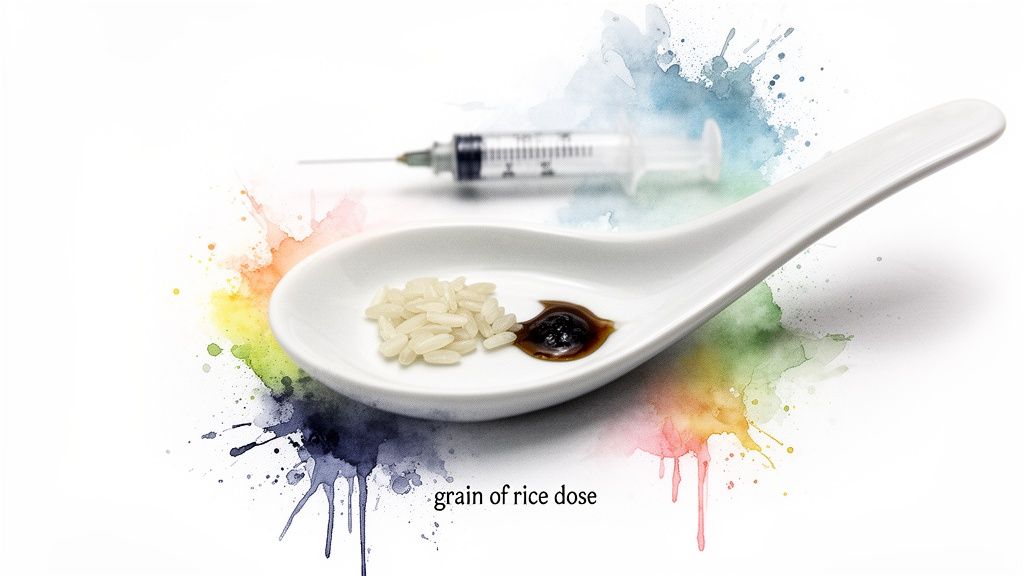
Given its incredible potency, the golden rule for RSO is simple: start low and go slow. This isn't the kind of product you just casually try out. To get the best experience, you need a healthy respect for its strength, a bit of patience, and a precise approach.
The most common starting point is a dose the size of half a grain of rice. We know, it sounds tiny. But with THC levels often soaring between 60% and 90%, that small amount packs a serious punch for anyone new to RSO. From there, the idea is to gradually find the dose that works for you without causing any overwhelming side effects.
A Widely-Used RSO Dosing Plan
While everyone's body and tolerance are different, a popular dosing regimen offers a structured, safety-first way to get started. It’s designed to help your body get used to the powerful effects over time, keeping you comfortable along the way.
This method involves slowly increasing your dose over several weeks:
- Week 1: Begin with a dose the size of half a grain of rice. Take it three times a day (morning, noon, and night), about eight hours apart.
- Weeks 2-5: Every four days, double your dose. Keep this slow and steady increase going until you reach a full gram per day. At that point, each dose will be about the size of one to two large grains of rice.
- Weeks 5-12: Stay at one gram per day, split into your three daily doses, until you’ve finished the full course (often recommended as 60 grams over 90 days).
It's really important to remember that while this protocol is shared widely, specific clinical evidence for RSO is still limited. Some studies show mixed results for high-THC extracts in treating certain symptoms, but there isn't high-quality evidence that RSO is a cure for major diseases. You can learn more about the current state of RSO research and clinical findings to get a clearer picture of where it stands.
How To Take RSO
You've got a few options for taking your dose, and each one changes how fast you'll feel it and how long it lasts. The oil is thick and sticky, so warming the syringe in your hand for a minute can make it much easier to dispense.
- Sublingual (Under the Tongue): For a quicker onset, place the oil directly under your tongue. Hold it there for 60-90 seconds before you swallow. The cannabinoids get absorbed right into your bloodstream, and you’ll typically feel the effects in 15 to 45 minutes.
- Oral (Swallowing): Mix your dose with a bit of food, like a piece of chocolate or a spoonful of peanut butter, to help with the bitter taste. When you eat it, the RSO has to go through your digestive system, so effects can take 60 to 120 minutes to kick in, but they often last much longer.
- Topical (On the Skin): RSO can be applied directly to the skin and covered with a bandage. This method is mainly used for localized issues and won’t produce any psychoactive effects.
Journaling is Your Best Friend: Keep a simple log of your dose, what time you took it, and how you felt. This is a game-changer for tracking your progress and dialing in the perfect amount for your unique body chemistry.
Ultimately, using RSO is a personal journey. By starting small, increasing your dose carefully, and listening to your body, you can find a routine that feels both comfortable and effective.
Finding Quality RSO In The California Market
Trying to find high-quality Rick Simpson Oil in California's legal market doesn't have to be a headache. Since it's a regulated environment, the game shifts from worrying about legality to focusing on safety, purity, and transparency. Once you know what to look for, you can pick out a reliable product with total confidence.
Your most powerful tool is the Certificate of Analysis (COA). This is just a fancy name for a detailed lab report from an independent, third-party lab. Every single legal cannabis product in California is required to have one, and it’s your peek behind the curtain to see exactly what’s in that RSO syringe.
How To Read A Lab Report
You can think of a COA like a nutritional label, but for cannabis. It gives you the hard data to prove the product is both potent and safe to use. When you’re looking at an RSO product, there are three key sections you should always zero in on.
These are the absolute must-checks for quality:
- Potency Analysis: This part breaks down all the cannabinoids, showing you the exact percentage of THC, CBD, and other minor players. It’s how you confirm you're actually getting the strength advertised on the box.
- Pesticide Screening: California has some of the strictest pesticide limits in the country. This test ensures the cannabis used to make the RSO was grown clean, without any nasty chemicals.
- Residual Solvent Testing: This one is crucial for RSO. Because the oil is made using a solvent like ethanol, this test proves that the final product has been properly purged and doesn’t have any unsafe solvent residues left over.
A trustworthy RSO product will always have a COA that's easy to find, confirming it passed all state-mandated tests for purity and safety. If a brand is cagey about sharing this, consider it a major red flag.
Your Budtender Is A Valuable Resource
While a COA gives you the facts and figures, don't forget about the human element. A knowledgeable budtender is an incredible resource. They’re on the front lines every day, hearing feedback from tons of customers and getting a real feel for the products they sell.
A great budtender can help you make sense of the lab results and point you toward a product that truly fits your needs and tolerance level. They can also explain the subtle differences between various RSO products, like whether they were made from indica or sativa strains, which can lead to very different experiences.
Getting comfortable with a dispensary menu is a key skill, and our guide on how to read a cannabis dispensary menu can give you a leg up before you even step inside. When you combine transparent lab testing with expert human guidance, you can feel totally secure in finding a safe and effective RSO product in the California market.
Your RSO Questions, Answered
Even after getting the basics down, it’s totally normal to have a few more questions about Rick Simpson Oil. This isn’t your average concentrate, and getting a handle on the details will help you feel much more comfortable. Here are some of the most common questions we get from customers, with straightforward answers.
What Does RSO Feel Like?
Because it’s packed with THC and the full range of plant compounds, RSO’s effects are typically very strong and deeply calming. Most people describe a heavy, full-body relaxation, serious drowsiness, and a distinct feeling of euphoria. The experience feels much more "complete" or well-rounded than what you'd get from a product with just THC.
If you have a low tolerance, the psychoactive effects can feel pretty intense. This is exactly why the golden rule is to start with a tiny dose—no bigger than a half a grain of rice—and wait to see how you feel before even thinking about taking more.
Can You Smoke or Dab RSO?
Absolutely not. You should never try to smoke, vape, or dab RSO. This oil was made specifically for oral or topical use, not for your lungs.
RSO is a raw, unrefined extract that still contains plant waxes, fats (lipids), and chlorophyll. These are things you do not want to heat up to high temperatures and inhale. Trying to smoke it would be incredibly harsh, taste awful, and could even be dangerous if any residual solvent is present.
If you prefer to inhale, stick to products that were made for it, like live resin or BHO. RSO works its magic best when eaten or applied to the skin, just as it was intended.
How Should I Store RSO?
Storing your RSO correctly is the key to keeping it potent and effective. Always keep the syringe in a cool, dark place. Heat and light are the enemies of cannabinoids and will cause them to break down over time. For longer-term storage, the refrigerator is a great choice.
Just know that the cold will make the oil super thick and tough to get out of the syringe. Before you dose, just warm it up in your hands for a minute or run it under some warm (not hot!) water. That will soften the oil just enough to easily push out a precise amount.
What Are the Potential Side Effects of RSO?
Yes, like any product with a lot of THC, RSO can have side effects. These almost always happen when someone takes too big of a dose. The usual suspects include feeling incredibly sleepy, dizzy, getting dry mouth, having trouble with coordination, and red eyes.
In higher doses, a few people might feel some temporary anxiety or paranoia. The best way to avoid any unwanted effects is to live by the "start low and go slow" mantra. And because of its powerful sedative qualities, never drive or use heavy machinery after taking RSO.
At Cannavine, our budtenders really know their stuff and are here to help you sort through our selection of lab-tested cannabis products. Whether you’re set on RSO or need some guidance on an alternative that fits your wellness goals, we can give you the info you need to choose with confidence. Explore our menu online for pickup or delivery.