The simplest way to think about the difference between THCA and THC is this: THCA is the raw, non-psychoactive compound found in fresh cannabis, while THC is what it becomes after you apply heat—and it’s responsible for the "high."
Think of THCA as raw cookie dough and THC as the warm, delicious cookie fresh out of the oven. Heat is the magic ingredient that completely transforms it.
Understanding The Core Difference
When you're looking at a fresh cannabis flower, what you're actually seeing is mostly THCA (Tetrahydrocannabinolic Acid). This is the natural, raw state of the compound in the living plant. It's a non-intoxicating precursor, which just means eating a raw nug won’t get you high.
To unlock that classic cannabis experience, you need to apply heat through a process called decarboxylation. This happens instantly when you smoke or vape, and more slowly when you bake cannabis into edibles. The heat removes a part of the molecule called a carboxyl group, changing its chemical shape.
This tiny tweak is everything. The new shape allows the molecule—now THC—to fit perfectly into our body's CB1 receptors, which is what produces the euphoric effects we associate with cannabis.
Key Takeaway: Heat is the on/off switch. Without it, THCA remains non-psychoactive. With it, you get THC and its classic effects.
This distinction is the key to understanding cannabis labels at Cannavine and picking the right product for you. Though they come from the same plant, their effects, how they're used, and even their legal standing can be completely different.
THCA vs THC At-a-Glance Comparison
To make it even clearer, let's put the main differences side-by-side. This table is a quick reference guide to help you remember the most important distinctions when you're shopping.
| Attribute | THCA (Tetrahydrocannabinolic Acid) | THC (Delta-9-Tetrahydrocannabinol) |
|---|---|---|
| Psychoactivity | Non-intoxicating; does not produce a "high." | Highly psychoactive; causes euphoria and intoxication. |
| Found In | Raw, unheated cannabis flower and concentrates. | Heated cannabis, edibles, tinctures, and vapes. |
| Activation | Inactive in its raw state until heated. | Active and ready to produce effects upon consumption. |
| Primary Use Case | Potential therapeutic benefits without impairment. | Recreational effects and potent medical relief. |
Getting a handle on these basics is the first step to becoming a more confident and informed cannabis consumer. For a deeper dive into the active compound, you can learn more about what Delta-9-THC is in our detailed guide.
Knowing the difference empowers you to read lab results and choose products that actually deliver the experience you’re looking for, whether that's therapeutic relief without the high or pure recreational enjoyment.
How Heat Unlocks Cannabis Potency
The secret to understanding the THCA vs. THC puzzle comes down to one simple, but critical, chemical reaction: decarboxylation. This process is the bridge connecting the raw, non-psychoactive cannabis plant to the classic effects many of us are looking for. It's the magic switch that flips THCA into the famous THC molecule.
At its core, decarboxylation is just a fancy word for applying heat. When you light a joint, fire up a vaporizer, or bake flower into brownies, you’re kicking off this essential transformation. The heat strips a specific part of the THCA molecule called a carboxyl group (COOH).
Think of it like a key and a lock. The raw THCA molecule, with that extra carboxyl group attached, is the wrong shape to fit into the CB1 receptors in your brain. Once heat removes that group, the molecule is reshaped into THC—creating the perfect "key" to unlock those receptors and deliver its well-known effects.
This visual breaks down the powerful, yet simple, process of turning raw THCA into active THC.
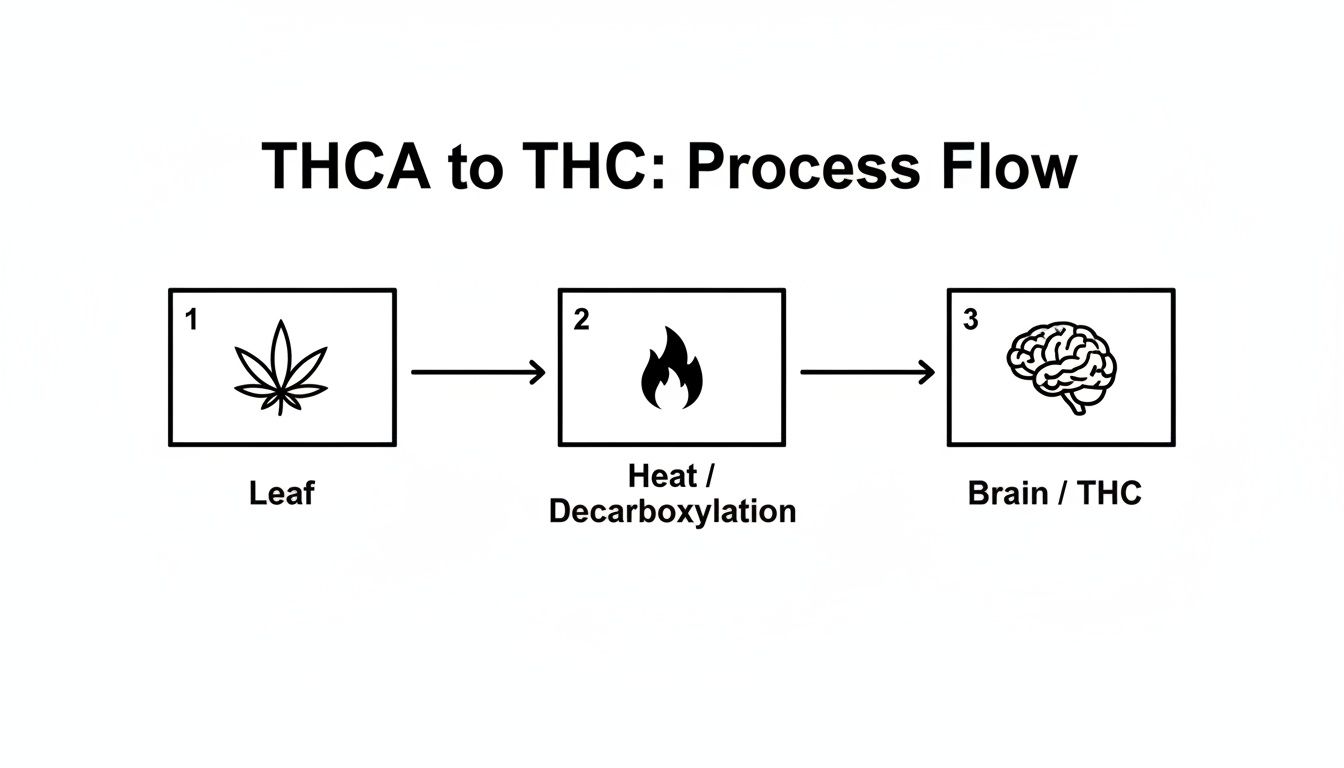
As you can see, the journey from a fresh cannabis leaf to a cerebral experience is all thanks to a little heat. It’s the one step that makes all the difference for psychoactivity.
The Science of Activation Temperatures
Converting THCA to THC isn't just about heat—it's about the right amount of heat over time. The reaction starts at fairly low temperatures but gets much more efficient as things heat up.
Generally, decarboxylation really gets going at around 220°F (105°C), which is the sweet spot for making edibles at home and can take about 30-45 minutes. Turn up the heat, and the conversion happens much, much faster.
- Smoking/Vaping: When you smoke flower or hit a vape, temperatures shoot way past 315°F (157°C). This causes an almost instantaneous decarboxylation, converting THCA into THC the moment you inhale.
- Dabbing: With concentrates, you’re dealing with even higher temperatures, which ensures a super-fast and complete conversion. If dabbing is new to you, check out our guide on how to dab cannabis concentrates.
This controlled transformation is why understanding lab reports is so important. A product label at Cannavine might show 25% THCA and only 1% THC, yet it will be highly potent once heated.
This entire process is a cornerstone of cannabis chemistry. It dictates everything from how products are regulated to how you read a potency label at Cannavine. Historically, we know the full conversion of THCA's carboxyl group happens at 157°C, though the process starts much lower.
Reading Labels for True Potency
When you’re shopping for cannabis, especially flower or concentrates, you'll see lab results listing percentages for both THCA and THC. This is where a lot of people get tripped up. They spot a low THC number and think the product isn't strong.
Not so fast. In California, licensed dispensaries like ours are required to show a "Total THC" number. This figure reveals the product's full psychoactive potential after you apply heat.
The formula looks something like this:
Total THC = (THCA % x 0.877) + THC %
That 0.877 multiplier is there to account for the weight of the carboxyl group that gets burned off during decarboxylation. By focusing on the Total THC value, you get the real story of how potent that flower or concentrate will be once you smoke it, vape it, or cook with it. This little piece of knowledge empowers you to look past the individual numbers and truly understand what you're buying.
Comparing the Effects on Mind and Body
When you’re looking at THCa vs THC, the most important thing to understand is how each one actually affects you. While they come from the same plant and have almost identical molecular structures, the experiences they deliver are night and day. It’s not a small difference—it’s the line between a potential wellness supplement and a classic psychoactive high.
The whole game changes with one key factor: psychoactivity. THC is legendary for its intoxicating effects, from the happy, relaxed feeling to a completely new way of seeing, hearing, and tasting the world around you. On the flip side, raw THCa is completely non-psychoactive. You can consume it without feeling "high" at all, which makes it a totally different kind of product.
This single difference is what sets them worlds apart. THC (delta-9-tetrahydrocannabinol) works by binding directly with the CB1 receptors in your brain, which triggers the release of dopamine and creates that classic high. This is what’s behind the altered perception, relaxation, and sometimes the less-fun effects like dry mouth or paranoia that up to 20-30% of people report.
THCa, however, just can't do that. It has an extra carboxyl group that acts like a key that doesn't quite fit the lock, preventing it from binding effectively to those CB1 receptors. So, if you consume it raw, you won't feel any euphoria. If you want to dive deeper into how this works, you can check out some great info by exploring key cannabinoid research. This fundamental difference means each compound is used for completely different reasons.
The THC Experience: A Potent Psychoactive Journey
When you light up a joint, hit a vape, or eat a gummy, the THC gets to work on your body's endocannabinoid system. The result is a whole spectrum of effects that really depends on the dose, the specific strain, and your own personal chemistry.
Common effects of THC include:
- Euphoria and Happiness: That unmistakable feeling of well-being and a lifted mood.
- Altered Perception: Senses like sight, sound, and taste can feel more intense and vibrant.
- Relaxation: A deep, soothing calm for both your mind and body.
- Increased Appetite: The famous "munchies."
But it's not always a perfect ride. Higher doses or just being more sensitive can sometimes lead to anxiety, paranoia, or feeling a bit clumsy. That's why we always say to start low and go slow, especially with products from a trusted source like Cannavine.
Real-World Scenario: Someone in Santa Rosa just finished a stressful week and wants to chill out. They might pick up a high-THC flower from Alien Labs to get that powerful, euphoric vibe perfect for sinking into the couch with a good movie.
The THCA Profile: Therapeutic Potential Without the High
Since THCa doesn’t bind with those brain receptors, it doesn't get you high. This is a huge deal for people who want the potential health benefits of cannabis without any of the mental effects. Research is still catching up, but early studies and a lot of personal stories suggest THCa has some real wellness potential.
Potential benefits associated with raw THCa include:
- Anti-Inflammatory Properties: It may help dial down inflammation from conditions like arthritis.
- Neuroprotective Qualities: Early research shows it might help protect brain cells, which is exciting for neurodegenerative diseases.
- Antiemetic Effects: It could help calm nausea and vomiting, offering potential relief for people undergoing chemotherapy.
Because it's non-intoxicating, THCa can be part of a daily routine without messing with your focus or clarity.
Real-World Scenario: A medical patient in Ukiah is dealing with joint inflammation but needs to stay sharp for work. They could blend raw cannabis leaves (which are full of THCa) into their morning smoothie or use a THCa tincture. They get the relief they need without the high that would get in the way of their job.
Ultimately, the choice between THCa and THC is all about what you’re trying to achieve. Are you looking for a powerful recreational buzz or therapeutic effects that come with a noticeable "high"? THC is your go-to. Or are you exploring wellness benefits without any mind-altering effects? Then THCa is the clear winner. Just remember this simple rule: heat determines the high. Knowing that empowers you to shop smart and find exactly what you need.
Why Your Body Responds Differently to Each Compound
The massive difference between how THCA and THC feel isn't random. It’s all about how each one interacts with your body's master regulatory network, the endocannabinoid system (ECS). Think of the ECS as a conductor, using receptors to manage everything from your mood and appetite to pain and inflammation.
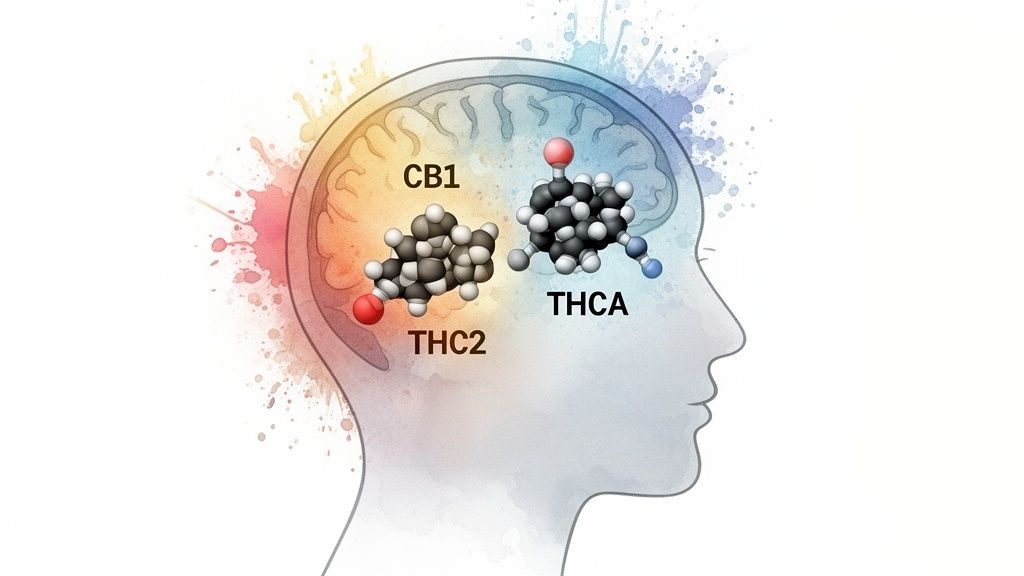
This system has specific locks—called CB1 and CB2 receptors—scattered throughout your brain and body. To get any effect, you need a key that fits perfectly into those locks. A cannabinoid's molecular shape is what determines if it can fit and "turn" the lock.
This is where the simple, yet profound, difference between THCA and THC comes into play. It really just boils down to a molecular game of lock and key.
THC: The Perfect Key for Psychoactivity
When heat turns THCA into THC, it sheds a clunky piece of its structure called a carboxyl group. That small change completely alters THC's three-dimensional shape, turning it into the perfect key for the CB1 receptors found mostly in your brain and central nervous system.
Once it's in your system, THC molecules travel to the brain and bind tightly to these CB1 receptors. This powerful connection is what kicks off the neurological effects we all know as the classic cannabis "high"—euphoria, altered perception, relaxation, and a sudden interest in snacks.
THCA: The Misfit Molecule
Raw THCA, on the other hand, keeps its extra carboxyl group. This makes the molecule much bigger and gives it a totally different shape, preventing it from fitting snugly into the CB1 receptor. It’s like trying to use your car key to open your front door; it just won't work.
Because THCA can’t effectively connect with and activate CB1 receptors, it doesn't produce any intoxicating effects. This is the simple pharmacological reason you can't get high from eating raw cannabis flower. Its shape is just incompatible with the brain's psychoactive machinery.
The scientific measure for this is binding affinity, which is just a fancy way of saying how well a compound "sticks" to a receptor. THC’s ability to latch onto CB1 receptors is vastly superior to THCA’s.
This is one of the most important distinctions in the what is THCA vs THC conversation. Research shows that THCA has a very weak grip on both CB1 and CB2 receptors compared to its activated form. To get specific, THCA has a Ki value of 630 nM for CB1 receptors, while THC's is just 3.5 nM. That means THC binds over 100 times more potently to the sites that cause a high.
This is why top-shelf California flower, often testing over 20-25% THCA, won't do anything until you light it up. You can read the full research on cannabinoid receptor binding to see the data for yourself.
Ultimately, knowing this molecular dance empowers you as a consumer. It’s not about magic; it's chemistry. Understanding why THC activates the mind while THCA doesn’t will help you read lab reports with more confidence and pick products from Cannavine that perfectly match the experience you’re looking for.
How to Choose the Right Products in California
Walking into a dispensary and looking at the menu can feel like a lot to take in, but once you understand the THCA vs. THC distinction, it gets a whole lot easier. It really all boils down to one simple question: Are you looking for a psychoactive experience, or are you more interested in the potential wellness benefits of raw cannabis, without the high?
Your answer will immediately guide you to the right products on the Cannavine shelves.
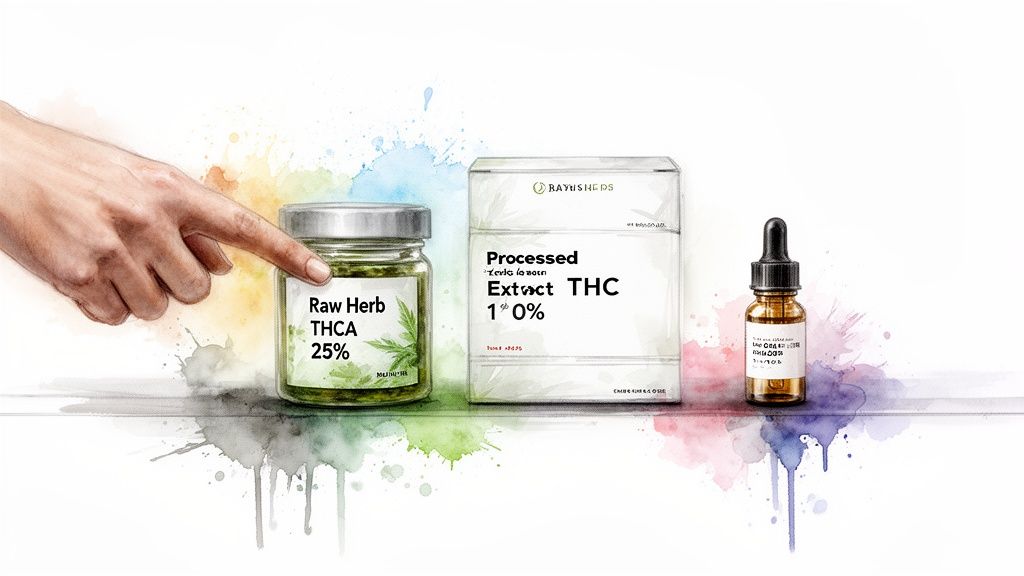
Whether you’re visiting us in Santa Rosa or Belmont, our team is here to help you find exactly what you’re looking for. Let’s break down which product categories make sense for your goals.
If You Want the Effects of THC
For anyone seeking that classic cannabis high, you'll need products where the THCA has been converted into THC. This transformation happens with heat, either when the product is made or when you use it at home.
At Cannavine, these are the go-to categories:
- Flower and Pre-Rolls: This is the most direct path. High-THCA flower from top-shelf brands like Alien Labs or Backpack Boyz is meant to be smoked or vaped. The flame or heating element does the conversion work for you, turning THCA into psychoactive THC on the spot.
- Vape Cartridges: Vapes are designed for clean, immediate conversion. A small heating coil vaporizes the oil as you inhale, delivering a potent and fast-acting THC experience. Brands like Sauce Essentials are a perfect example of convenience and quality.
- Edibles: With gummies, chocolates, and drinks, the work is already done. The cannabis oil is decarboxylated during the cooking process, so the THC is fully activated and ready for your body to metabolize, leading to powerful, long-lasting effects.
- Concentrates: Dabbable products like wax, shatter, and live resin are loaded with THCA. When you apply the high heat of a dab rig, you get a massive and nearly instantaneous conversion to THC, resulting in a very potent experience.
The common thread here is heat. It’s the essential ingredient for unlocking the psychoactive potential of THC.
If You Are Seeking the Benefits of THCA
If you’re curious about the non-intoxicating side of cannabis, you’ll want products that keep the cannabinoid in its raw, unheated THCA form. This is a less-traveled path but one that’s getting more and more attention for its wellness applications.
For a non-psychoactive experience, consider these options:
- Raw Cannabis Flower: You can simply buy fresh flower and use the buds and leaves without heating them at all. People often juice raw cannabis or blend it into smoothies to get the benefits of pure THCA.
- Tinctures: Some tinctures are specifically made to preserve raw THCA. You’ll need to read the label to confirm it hasn't been decarboxylated. These are usually taken sublingually (under the tongue).
- Topicals: Creams, balms, and salves deliver localized relief without any high. Since they are applied to the skin and aren't heated, the THCA remains in its raw state and works on a surface level.
The key to using THCA is avoiding heat. Any significant temperature will start converting it into THC, fundamentally changing the compound and its effects.
How to Read a Product Label
In California, cannabis labels have all the info you need to choose wisely. When you’re looking at a flower or concentrate label, you’ll see percentages for both THCA and THC.
Don't get thrown off if a label says something like 25% THCA and only 1% THC. For any product you plan to heat (smoke, vape, dab), the most important number is the Total THC.
This figure is calculated with the formula (THCA % x 0.877) + THC %, and it tells you the true psychoactive potential of the product after it's been heated. A higher Total THC means a stronger high.
If you plan to consume it raw, you just need to look for high THCA and very low activated THC. And remember, our budtenders at Cannavine are always happy to walk you through a lab report and point you toward the perfect product for your needs.
Choosing Your Product at Cannavine
To make it even simpler, here's a quick guide to finding what you're looking for based on your desired experience.
| Desired Experience | Best Product Categories | Example Brands at Cannavine | Consumption Method |
|---|---|---|---|
| Psychoactive High (THC) | Flower, Pre-Rolls, Vapes, Edibles, Concentrates | Alien Labs, Sauce Essentials, Backpack Boyz | Smoking, Vaping, Dabbing, Eating |
| Non-Psychoactive Wellness (THCA) | Raw Flower, Specific Tinctures, Topicals | Ask your budtender for raw product recommendations | Juicing, Smoothies, Sublingual, Topical Application |
This table should help you quickly narrow down your options when you're browsing our online menu or walking through the store. Whatever your goal, we've got something that fits.
Understanding Legality and Lab Testing in California
When you're exploring the world of cannabis, legal questions often pop up. But for us here in California, the answer is refreshingly simple. In our state's regulated adult-use and medical market, both THCA and THC are completely legal to buy and enjoy from a licensed dispensary like Cannavine. You can shop with total confidence, knowing you’re part of a safe, established system.
Unlike other states that have to deal with complicated hemp laws, California’s approach is straightforward. It doesn't matter if a product is rich in raw THCA or activated THC—it's all regulated under the same solid cannabis laws. This makes things much easier for everyone and guarantees that every product on our shelves meets the same high bar for safety and transparency.
The Role of State-Mandated Lab Testing
The real backbone of California's legal cannabis market is mandatory, third-party lab testing. This isn't just a friendly suggestion; it's a strict requirement that ensures the product you buy is exactly what the label says it is. Every single item at Cannavine goes through a full panel of tests before it even has a chance to get to you.
This tough screening process checks for two absolutely critical things:
- Potency Accuracy: Labs verify the exact percentages of cannabinoids, including both THCA and THC. This is how "Total THC" is accurately calculated, so you know the true potential of the flower or concentrate you're getting.
- Safety and Purity: Products are carefully screened for a whole list of nasty contaminants. We're talking pesticides, heavy metals, leftover solvents from extraction, and microorganisms like mold or mildew.
By demanding this level of scrutiny, California makes sure consumers are protected from sketchy products and dishonest labels. It’s the ultimate form of quality control, giving you real peace of mind with every purchase.
You might hear chatter about a federal "THCA loophole" that lets certain hemp products be sold in other states, but that's pretty much irrelevant for shoppers in California dispensaries. Here, all cannabis products are just that—cannabis. Simple. The real advantage of our legal market isn’t some loophole; it’s the guarantee of a tested, safe, and accurately labeled product.
This commitment to safety is exactly why buying from a licensed shop is so important. Products from the illicit market completely skip these vital testing steps, leaving people vulnerable to contamination and unpredictable effects. It's crucial to understand the risks, which is why we've put together a guide on how to spot and avoid problems like mildew on cannabis. When you choose a legal, tested product from Cannavine, you're choosing safety, reliability, and just a much better experience all around.
Frequently Asked Questions About THCA vs THC
Even after digging into the science, a few practical questions always pop up. Here are the answers to the most common things we hear from customers, designed to clear up any lingering confusion about THCA vs. THC so you can shop with total confidence.
Will THCA Show Up on a Drug Test?
Yes, it's extremely likely. Standard drug tests aren't sophisticated enough to tell the difference between THCA and THC. They're designed to look for THC metabolites, which your body produces after it processes either compound.
If you smoke or vape high-THCA flower, that THCA instantly becomes THC, so you will absolutely test positive. Even if you consume raw THCA, your body can still metabolize it into compounds that flag a positive result. If you’re subject to drug testing, your safest bet is to steer clear of all cannabis products.
Can You Get High From THCA?
Not if you eat it raw. In its natural state, THCA is non-psychoactive. It can’t bind to the brain's CB1 receptors, which is what produces the classic cannabis "high." So, munching on a raw cannabis bud or juicing fresh leaves won't cause any intoxicating effects.
But the second you add heat—by smoking, vaping, or cooking—that THCA immediately converts into psychoactive THC. So while raw THCA itself won't get you high, the high-THCA flower you see on our shelves is precisely what delivers the most potent THC experiences once it's lit up.
Key Insight: Think of high-THCA flower as having potential psychoactivity. Heat is the key that unlocks that potential, transforming it into the THC you know and feel.
What Is the Best Way to Consume THCA Without Heat?
For anyone curious about the wellness benefits of raw THCA without the high, keeping it cool is the name of the game. This preserves the compound in its original, non-intoxicating form.
Here are a few popular ways to do it:
- Juicing Raw Cannabis: Blending fresh, uncured cannabis leaves and flowers with fruits and veggies is a classic way to consume raw cannabinoids.
- Adding to Smoothies: For a quick and easy method, just toss raw cannabis buds into the blender with your other smoothie ingredients.
- Using THCA Tinctures: Some producers make specialized tinctures formulated to keep the THCA raw. A few drops under the tongue allows for direct absorption.
- Making a Garnish: You can finely chop raw cannabis and sprinkle it over a salad or another cool dish, just like you would with any other fresh herb.
Is THCA Legal in California?
Absolutely. Here in California, the regulated market treats both THCA and THC as completely legal for adults 21+ (or medical patients 18+) when you buy from a licensed dispensary like Cannavine.
Unlike the legal gray areas you might find in other states, California's framework is straightforward. All forms of cannabis fall under the same safe, legal system, which guarantees every product is lab-tested and properly labeled for your safety.
Ready to explore the world of cannabis with a little more confidence? At Cannavine, our friendly budtenders are always here to answer your questions and help you find the perfect lab-tested product. Check out our real-time menu for easy pickup or delivery.