Walk into any dispensary, and you’ll see a whole world of products beyond the classic flower. One of the most common you’ll encounter is BHO, short for Butane Hash Oil. At its simplest, BHO is a powerful cannabis concentrate made by using butane to pull out all the good stuff—like THC and flavorful terpenes—from the cannabis plant. What’s left is a highly concentrated oil.
Understanding BHO: The Coffee Analogy
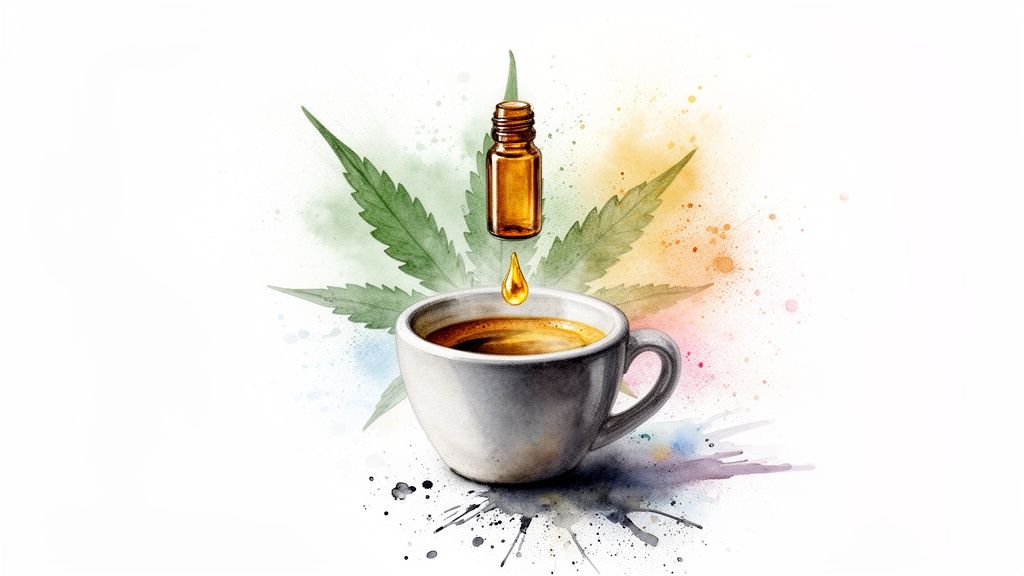
The best way to wrap your head around BHO is to think about making a really, really strong cup of coffee.
When you brew coffee, hot water runs through the grounds, acting as a solvent to pull out caffeine and flavor. The BHO extraction process is surprisingly similar, just way more scientific and potent. Instead of hot water, professional extractors use butane to "wash" over the cannabis material.
Butane is incredibly efficient at stripping the plant of its most valuable compounds: the cannabinoids (like THC and CBD) and the terpenes (the aromatic oils that give each strain its unique smell and taste). After this wash, the butane is carefully removed—a process called "purging"—leaving behind a pure, concentrated cannabis oil.
Potency Is The Key Difference
So, why go through all that trouble? The main reason people turn to BHO is its incredible potency. A top-shelf cannabis flower might test somewhere between 15-30% THC. BHO products, on the other hand, routinely clock in between 70-90% THC, with some even pushing higher.
That massive leap in concentration means you need a much smaller amount to feel the effects. It also means the experience can be significantly more intense, which is why it’s so important for both newcomers and seasoned users to understand what they’re getting into.
To help you get a clearer picture, here's a quick comparison of BHO and traditional flower.
BHO vs. Traditional Flower At A Glance
| Characteristic | Butane Hash Oil (BHO) | Traditional Cannabis Flower |
|---|---|---|
| Typical THC Potency | 70-90% or higher | 15-30% |
| Form | Oil-based concentrates (shatter, wax, budder, etc.) | Dried, cured plant buds |
| Consumption | Vaporized using a dab rig or vape pen | Smoked (pipe, joint, bong) or vaporized |
| Amount Needed | Very small amount (a "dab") | A pinch to a full bowl/joint |
This table makes it easy to see why BHO is in a category of its own. It's all about delivering a powerful dose of cannabinoids and terpenes without the extra plant material.
At its core, BHO is about isolation. The goal is to separate the most active and flavorful parts of the cannabis plant from the excess plant matter, delivering a purer and more powerful product.
The final product isn't just one thing, either. BHO is more like a family of concentrates, each with its own texture and personality. When you're browsing a menu, you might find it listed as:
- Shatter: A hard, brittle, and glass-like concentrate.
- Budder: A creamy, smooth texture that looks a bit like butter.
- Wax: An opaque, crumbly, and slightly drier consistency.
While each one feels a little different to handle, they all come from the same basic butane extraction process.
How Professional BHO Extraction Works
To really get why buying from a licensed dispensary like Cannavine is a big deal, you have to look at how BHO production has evolved. The difference between the old way and the professional way is night and day, marking a crucial shift from dangerous garage chemistry to precise, controlled science.
The early days of BHO were all about a sketchy technique called “open-blasting.” It was a DIY method where someone would pack cannabis into a tube, blast liquid butane through it outdoors, and catch the oily runoff in a dish. This practice was incredibly risky and led to countless explosions because butane is highly flammable, and there was zero ventilation. For less than $100, anyone could turn their leftover trim into dabs, but the danger was off the charts.
The Modern Standard: Closed-Loop Systems
Thankfully, the legal cannabis world operates on a completely different playing field. Today, every reputable brand uses what's known as closed-loop extraction. Imagine a high-tech, self-contained pressure cooker built specifically for cannabis. The whole process takes place inside a sealed system of stainless-steel vessels, which means no butane escapes and no contaminants get in.
This professional gear is the absolute standard for consumer safety. Inside the system, the process is clean and methodical:
- The Wash: Super-chilled liquid butane flows over the cannabis, acting like a solvent to pull out all the good stuff—cannabinoids and terpenes.
- The Collection: This butane solution, now loaded with cannabis compounds, moves into a separate chamber, leaving the useless plant material behind.
- The Purge: This is the most important step. The solution is gently warmed under a vacuum, which makes the butane evaporate. Since the system is sealed, the butane vapor is captured, cooled back down into a liquid, and saved to be used again.
This closed-loop method ensures that pretty much all of the butane is safely removed, leaving behind nothing but pure, potent cannabis concentrate. It’s how producers create the consistent products we love, like shatter, wax, and even the super-flavorful extracts we cover in our guide to what live resin is.
A closed-loop system is the gold standard for safety and quality. It transforms BHO extraction from a hazardous gamble into a controlled science, guaranteeing a final product that is both pure and potent.
The result is a clean, reliable concentrate made with professional care. When you pick up a BHO product from a trusted brand, you’re not just buying an extract—you’re buying the peace of mind that it was made in a professional system designed to keep you safe. This commitment to safety is exactly why lab-tested products from licensed shops are the only way to go.
A Guide To The Different Forms Of BHO
Butane Hash Oil isn't just a single product. It’s better to think of "BHO" as a family name for a whole lineup of cannabis concentrates, where each member has its own unique texture, consistency, and personality.
The differences between them almost always come down to how the oil is handled right after the initial extraction. This chart gives you a bird's-eye view of the basic journey from plant to oil.
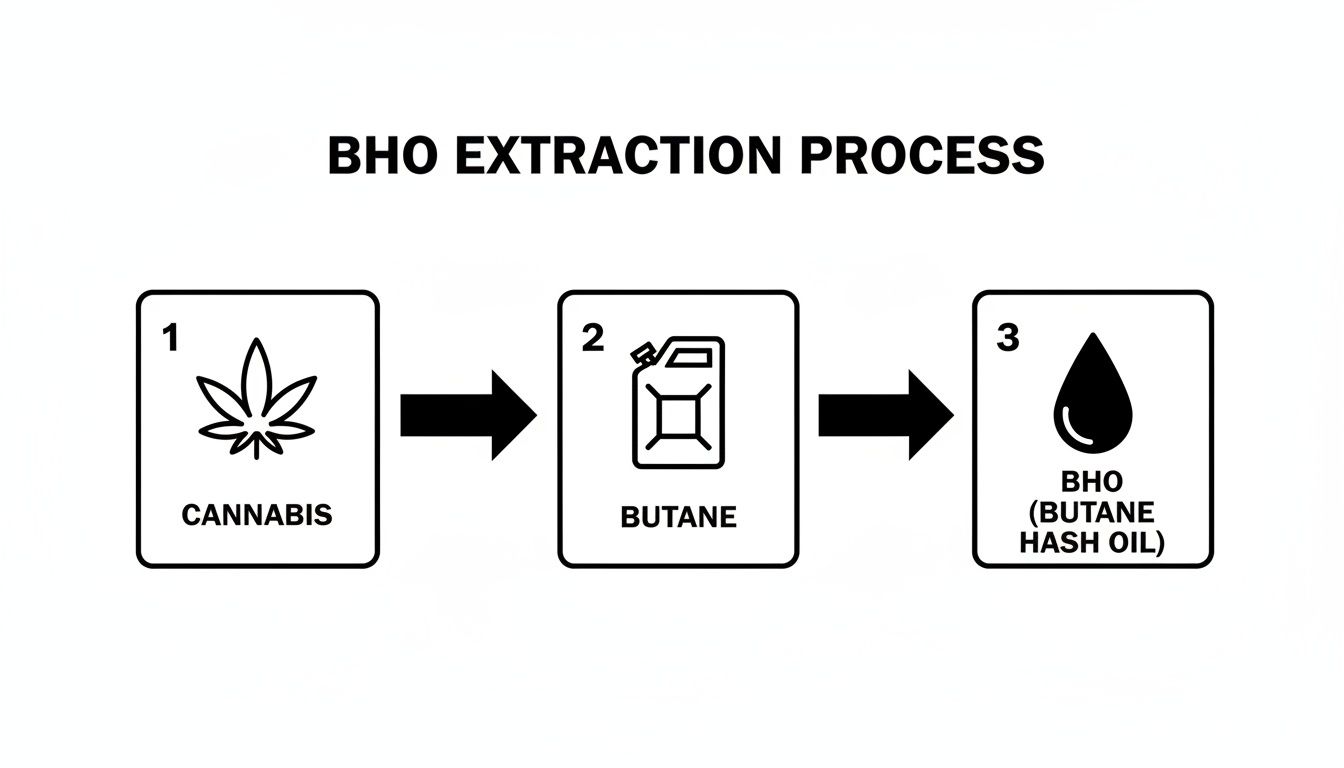
This visual simplifies a pretty complex process, but the gist is that butane is used to strip the good stuff—cannabinoids and terpenes—from the raw plant material. The potent concentrate that results is BHO. From there, it's all about the finishing touches; things like agitation, temperature, and purging techniques are what create the different forms you see on a dispensary menu.
Shatter: The Glass-Like Concentrate
Just like the name implies, shatter is a BHO concentrate famous for its brittle, glass-like texture. It’s typically see-through with a beautiful amber or golden hue. To get this incredibly stable consistency, the extracted oil is left completely undisturbed during the purging process, which lets the molecules settle into a flat, uniform sheet.
Shatter has stayed popular because it’s surprisingly easy to handle and dose. You can simply "shatter" off a small piece, making it a super straightforward option if you're using a dab rig. Its stability also means it tends to have a longer shelf life compared to its softer cousins.
Wax, Budder, And Crumble: Creamy And Crumbly Textures
If shatter is what you get when you leave the oil alone, then wax, budder, and crumble are what happen when you start messing with it. Agitating the oil by whipping it during the final purging stages incorporates air and encourages the cannabinoids to crystallize, which creates an opaque, non-translucent final product.
- Wax: This form has a soft, waxy feel that can range from slightly sticky to a bit oily.
- Budder/Badder: Whipped into a creamier texture, budder looks and feels a lot like cake batter or thick frosting.
- Crumble: Agitated at a lower temperature, crumble has a drier, honeycomb-like texture that breaks apart easily.
These softer forms are often way more aromatic than shatter. That’s because the whipping process can help hold onto some of the more volatile terpenes that might otherwise escape. They are fantastic for flavor chasers and are a breeze to scoop with a dab tool.
To make navigating these different consistencies a little easier, here's a quick cheat sheet.
Common BHO Forms And Their Characteristics
| BHO Form | Texture And Appearance | Why People Choose It |
|---|---|---|
| Shatter | Hard, brittle, and translucent like glass. Usually amber-colored. | Easy to handle, simple to dose, and has a longer shelf life. |
| Wax | Soft, opaque, and waxy. Can be sticky or a little oily. | Rich in aroma and flavor; a good middle ground for texture. |
| Budder/Badder | Creamy and smooth, much like cake batter or frosting. | Very easy to scoop and dab; often packed with flavorful terpenes. |
| Crumble | Dry, porous, and crumbly, resembling a honeycomb. | Breaks apart easily for dabbing or adding to a bowl; great flavor. |
This table should help you quickly identify what you're looking at on a menu and decide which one fits your needs best.
Live Resin: The Flavor Champion
While it is technically a BHO, live resin really stands in a category of its own. Unlike other concentrates made from dried and cured cannabis, live resin is extracted from plants that were flash-frozen right after being harvested.
This special process preserves the full spectrum of delicate terpenes that are usually lost during the drying and curing stages.
The result is an incredibly aromatic and flavorful concentrate that delivers an experience that’s as close as you can get to the living plant. Live resin often has a saucy, sugary consistency, sometimes with visible "diamonds" of THCA crystalline floating in it.
While BHO focuses on isolating compounds with a solvent, it's a completely different approach from solventless extraction methods. If you're curious about how concentrates are made without any chemicals at all, you can learn more by reading our detailed guide on what is rosin. Each method produces a unique and potent product, giving you plenty of amazing options to explore.
Understanding BHO Potency And Dosing
If there’s one thing to understand about BHO, it’s this: this stuff is strong. We’re not talking about a product that’s just a little bit more potent than your average flower. BHO is in a completely different league.
A really good batch of cannabis flower might test between 15-30% THC. BHO concentrates, on the other hand, regularly clock in between 70-90% THC, with some even pushing higher.
This incredible jump in strength is what made BHO such a game-changer when it first hit the scene. Historically, BHO stood out for its ability to produce THC levels that were unheard of. Just to put it in perspective, between 1993 and 2015, seized BHO samples hit max THC levels of 90%, while the strongest flower samples found during that same period topped out at 37.1%. If you’re interested in market trends for extracts, Precedence Research has a comprehensive report that dives deeper.
Because of this massive leap in potency, you have to adjust how you consume it. For anyone new to concentrates, the golden rule is simple but absolutely critical: start low and go slow.
The Golden Rule Of Dosing BHO
For your first time, a starting dose should be no bigger than a single grain of rice. It might look tiny, but with THC levels this high, it’s more than enough to deliver a powerful experience. Remember, you can always take more, but you can never take less.
The key to a positive experience with BHO is respect for its potency. Start with a tiny amount, wait to feel the full effects, and then decide if you want more. This patient approach prevents overconsumption and ensures you stay comfortable.
It’s also crucial to give your body time to react. The effects of a dab can take a few minutes to fully kick in, which is a little different than smoking flower. After your first inhale, wait at least 10-15 minutes before you even think about going back for a second dose.
Common Ways To Consume BHO
Thanks to its unique consistency and strength, you don’t consume BHO the same way you would flower. You won’t be packing this into a regular bowl. Instead, you’ll need special gear designed to vaporize the concentrate.
Here are the most common methods:
- Dabbing with a Dab Rig: This is the classic way to do it. You heat a "nail," usually made of quartz, with a torch. Then, you apply a tiny dab of BHO to the hot surface, which instantly turns it into vapor that you inhale through the water pipe.
- Using a Dab Pen or E-Rig: Think of these as the modern, electronic versions of a traditional rig. They use a battery-powered coil to heat the BHO, which means no torch is needed. They’re great for portability and give you better control over the temperature.
- Adding It to Flower: You can also sprinkle a small amount of BHO, like wax or crumble, right on top of a bowl of flower. This will definitely boost the potency and flavor of your hit, but it’s a less efficient way to consume the concentrate compared to dabbing.
Getting the hang of dabbing is the best way to get the most out of your BHO. For a detailed guide, check out our complete walkthrough on how to dab cannabis concentrates.
How To Shop For Safe, High-Quality BHO
Jumping into the world of BHO can feel like a lot to take in, but a few key signs can point you toward safe, top-shelf products. The good news? In California’s legal market, consumer protection is baked right into the system, giving you some powerful tools to make a smart choice.
Your number one mission should always be to confirm the product has been properly tested.
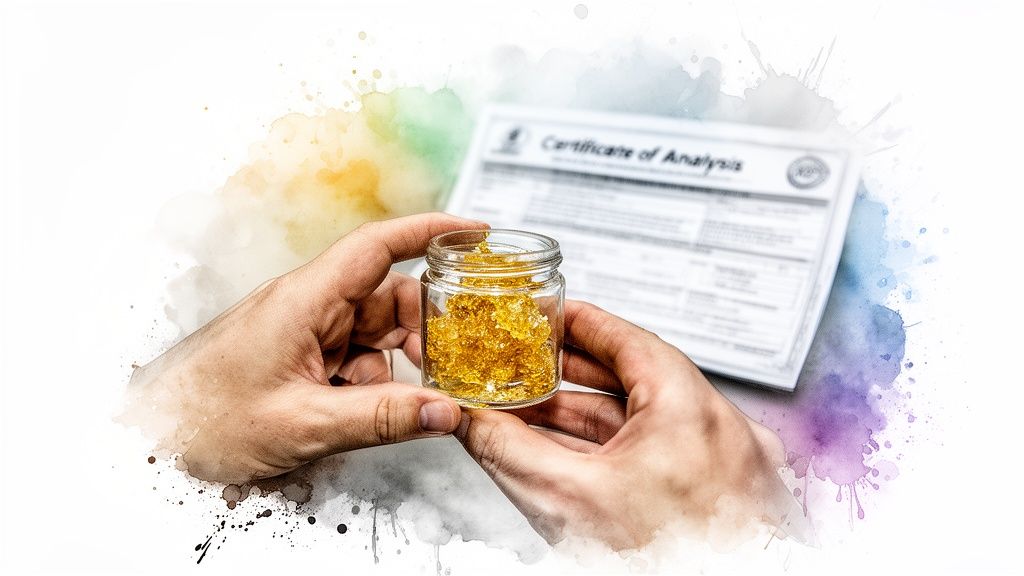
The single most important document you can look for is the Certificate of Analysis, or COA. Think of it as a detailed report card for your concentrate. This lab report comes from an independent, third-party lab and serves as proof that the BHO has passed all of California's strict, mandatory safety tests.
A COA is your guarantee that what you're buying is pure and safe. It verifies that the extract is free from all the nasty stuff that has no business being in a premium concentrate.
Decoding The Certificate Of Analysis
When you look at a COA, you’re checking for several crucial safety markers. Licensed dispensaries are required by law to have this information ready for every single product on their shelves, so don't ever feel shy about asking to see it.
Here’s what a clean COA tells you:
- No Residual Solvents: This confirms that all the butane used in the extraction process has been completely and safely removed. A passing result means you're getting pure cannabis concentrate, not leftover chemicals.
- Free From Pesticides: The lab runs a screening for a long list of pesticides to make sure the original cannabis plant was grown cleanly and responsibly.
- No Heavy Metals: This check confirms the product is free from harmful metals like lead or arsenic, which can sometimes be absorbed by the cannabis plant from the soil.
- Clear of Microbials: The report also screens for mold, mildew, and other biological contaminants, ensuring the final product is clean and safe to consume.
A valid COA isn't just a piece of paper—it's your proof of professionalism and safety. It’s what separates legitimate, lab-tested BHO from risky, unregulated products and should be the very first thing you check for.
Using Your Senses To Spot Quality
Once you've seen the lab report and know the product is safe, you can start using your own senses to judge its quality. The look and smell of a BHO product can tell you a whole lot about the skill and care that went into making it.
Color and Clarity: Great BHO usually has a beautiful, vibrant color, anywhere from a light straw yellow to a deep, rich amber. If you see dark, murky, or greenish colors, it can be a sign that too much plant material (like chlorophyll) made its way into the final product, which often leads to a harsher, more grassy taste.
Aroma: A powerful, clean aroma is another fantastic sign. When you pop open the jar, you should be hit with a pleasant wave of terpenes that reflects the original strain's profile—whether that’s piney, fruity, gassy, or earthy. If the BHO smells like chemicals or butane, that's a massive red flag and you should steer clear.
By sticking to lab-tested products from transparent brands you can trust, you can shop with total confidence. Here at Cannavine, we make sure every single concentrate on our menu meets California's strict safety standards, so you can focus on the fun part: finding the perfect BHO for you.
Common Questions About BHO
Even after diving into the science and different forms of Butane Hash Oil, it's totally normal to still have a few questions floating around. To help clear things up, we've tackled some of the most common ones we hear at the shop.
Let's get you feeling confident and in the know as you explore the world of cannabis concentrates.
Is BHO Safe To Consume?
Yes, BHO is completely safe to enjoy when it's made by professionals and bought from a licensed, legal dispensary. The horror stories you might have heard are almost always linked to sketchy, unregulated amateur operations.
Reputable producers use sophisticated closed-loop systems that are designed to safely remove every last bit of residual butane. In California, every legal cannabis product is put through a gauntlet of strict, state-required lab tests. These tests are your guarantee that the BHO is free from harmful solvents, pesticides, and other junk you don't want. To keep yourself safe, always buy from a trusted, legal source like Cannavine.
What Is The Difference Between BHO And Live Resin?
This is a fantastic question because the two are very closely related. The simple answer is that live resin is a special, super flavorful type of BHO. The real difference is all about the starting material.
- Standard BHO: Made from cannabis flower that has been dried and cured over time.
- Live Resin: Made from fresh cannabis plants that are flash-frozen right after being harvested.
That flash-freezing step is the secret sauce. It perfectly preserves the delicate terpenes—the aromatic compounds that give cannabis its flavor and smell—which are often lost during the normal drying and curing process. The end result is a concentrate with a much more vibrant and complex taste that's true to the living plant.
A good way to think about it is cooking with herbs. Standard BHO is like using dried herbs from a jar, while live resin is like using fresh herbs snipped right from the garden. Both get the job done, but the fresh version delivers a much bigger, more authentic pop of flavor.
How Should I Store My BHO Concentrates?
Proper storage is key to keeping your BHO's potency, flavor, and texture on point. The main things you want to avoid are heat, light, air, and moisture, as they all work to break down the good stuff (cannabinoids and terpenes) over time.
For short-term storage (a few days to a week), a small airtight silicone or glass container tucked away in a cool, dark spot like a drawer is perfect. If you're planning on holding onto it for a while, especially for terpene-heavy consistencies like budder or live resin, the refrigerator is your best bet. Just make sure your container is sealed up tight to keep any moisture out.
Can I Make Edibles With BHO?
You absolutely can, but there's one critical step you can't miss: decarboxylation. In its raw form, BHO is full of THCA, which is the non-psychoactive version of THC. To unlock its effects, you have to gently heat it to convert that THCA into the active THC we all know and love.
It's pretty simple: just spread the BHO in a small oven-safe dish and heat it at a low temperature (somewhere around 220-240°F) until the little bubbles stop forming. Once it's done bubbling, the oil is activated and ready to be mixed into butter or a carrier oil for your favorite recipe. Just a word of caution: BHO is potent, so be very careful with your dosing to avoid making edibles that are way too strong.
Ready to explore a curated selection of safe, lab-tested BHO concentrates? At Cannavine, we offer a wide variety of top-shelf products from California's most trusted brands. Browse our menu online for fast delivery or convenient in-store pickup.