If you're used to smoking or vaping, the edible experience is a whole different ball game. A typical journey with an edible lasts between six and eight hours, though a particularly strong dose can easily stretch that to twelve hours or even more.
Think of it this way: smoking is like an aerosol spray—fast, intense, but gone in a flash. Edibles are more like a time-release capsule, delivering a steady, predictable experience over a long period. This slow burn is exactly why so many people choose edibles for sustained relief or a chill, all-day vibe.
The Complete Timeline Of An Edible Experience
Patience is the name of the game with edibles. Unlike the almost instant feedback from smoking, edibles make you wait. But if you understand the timeline, you can plan your day, enjoy the ride safely, and avoid taking too much too soon.
The whole process, from the moment you eat it to the final, gentle fade, follows a pretty clear path through your body. Let's break down what you can expect at each stage.
From Onset To Fade Away
The edible journey has three main acts: the onset, the peak, and the comedown. Knowing what's happening and when is key to a good time.
- Onset (30 minutes – 2 hours): This is the waiting game. After you've had your treat, your body gets to work digesting it and processing the THC in your liver. You might not feel a thing for a while, and that's totally normal. Don't fall for the classic rookie mistake of thinking it's not working.
- Peak (2 – 4 hours): This is showtime. The effects will be at their strongest as the THC levels in your bloodstream hit their high point. Settle in and enjoy the main event.
- Duration (6 – 12 hours): After the peak, the effects will start to gently taper off over the next several hours. You'll likely feel the mellow, lingering vibes long after the most intense part is over.
To help you visualize this, here’s a table that breaks down the typical stages of an edible high.
Typical Edible Experience Timeline
| Stage | Time After Consumption | What to Expect |
|---|---|---|
| Ingestion | 0 minutes | You've eaten your edible. The clock starts now! |
| Onset | 30 minutes – 2 hours | You might start to feel the first subtle effects. Be patient. |
| Peak Effects | 2 – 4 hours | The high reaches its maximum intensity. This is the strongest part. |
| Comedown | 4 – 6 hours | Effects begin to gradually decrease but are still noticeable. |
| Fading Effects | 6 – 8+ hours | You'll feel the lingering, mellow effects as they slowly fade. |
This timeline is a great guide, but remember, everyone's body is different. Always start low and go slow until you know how edibles affect you personally.
The single biggest mistake newcomers make is getting impatient and taking more during the onset phase. Always, always wait at least two full hours before even thinking about a second dose. You'll thank yourself later.
This chart really drives home how the experience builds over time.
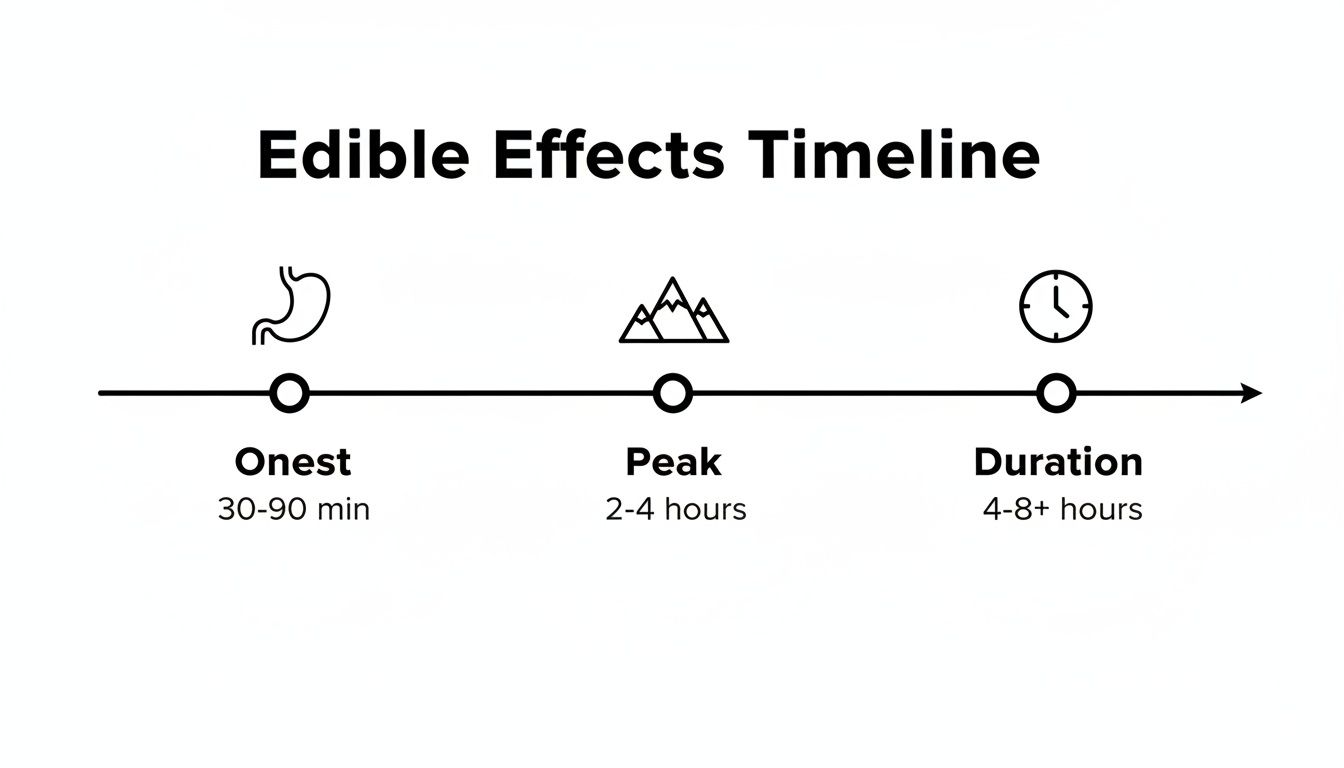
As the visual shows, you're looking at a slow and steady climb. On average, the high from edibles kicks in anywhere from 30 minutes to 2 hours, peaks around the 3-hour mark, and can last for 6 to 8 hours or more.
In fact, market analyses of user reports found that 68% experienced effects lasting beyond 6 hours, with a good number of people still feeling residual effects up to 12 hours later. It’s a marathon, not a sprint! You can dig deeper into these findings to learn more about how long edibles last.
Why Edibles Take The Scenic Route In Your Body
Ever wondered why the buzz from an edible lasts so much longer than smoking or vaping? The secret is in the unique journey THC takes through your body once you eat it.
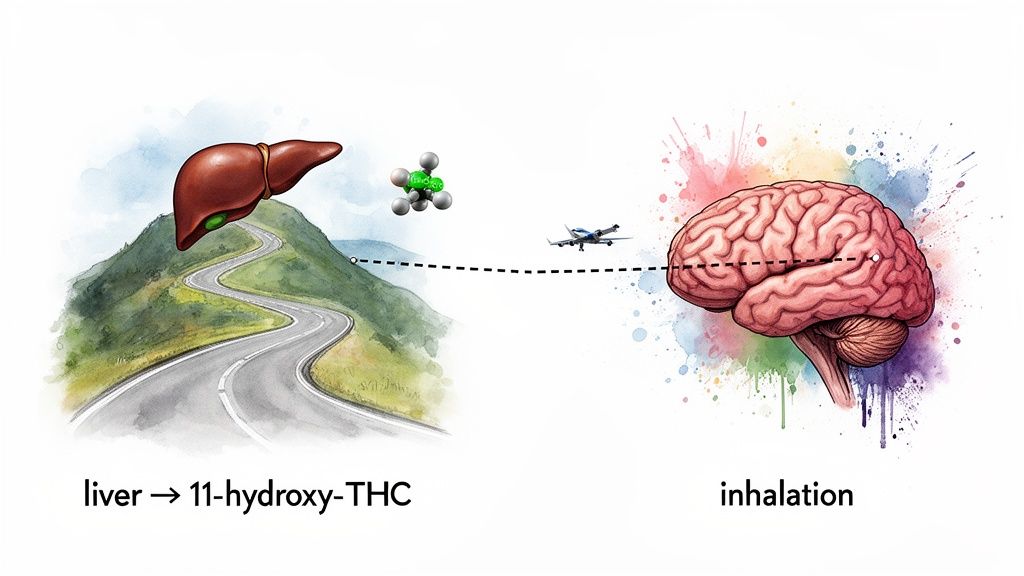
Think of it like this: inhaling cannabis is a direct flight. THC goes from your lungs straight to your bloodstream, hitting your brain in minutes. It's a fast trip, but it's also over pretty quickly, usually within a few hours.
Edibles, on the other hand, take the scenic route. And that long, winding road makes all the difference in how long the experience lasts.

The Liver's Starring Role
When you eat a gummy or a brownie, it doesn't just go straight to your head. First, it has to pass through your digestive system and make a very important stop at your liver. This process is called first-pass metabolism, and it's where the magic happens.
Your liver gets to work and converts the standard Delta-9-THC into a completely different, much more powerful compound: 11-hydroxy-THC.
This new compound isn't just more potent than what you'd inhale; it also sticks around in your system a whole lot longer. This chemical transformation is the real reason edibles feel so prolonged and, for many, more intense.
Because your body has to do all this digesting and converting, the effects take a while to show up. But once that 11-hydroxy-THC finally hits your bloodstream, it delivers the steady, long-lasting high that edibles are famous for.
Consumption Method Matters
The main takeaway here is simple: how you consume cannabis completely changes the game. It dictates how your body processes THC, which directly impacts how long you'll feel the effects.
- Inhaled THC (Smoking/Vaping): This method bypasses the liver entirely. It’s a straight shot to the brain for a quick but short-lived experience.
- Ingested THC (Edibles): This requires a trip through the digestive system and liver, where THC gets converted into a stronger, longer-lasting compound.
The conversion of THC to 11-hydroxy-THC is the single biggest reason why a 10mg edible feels profoundly different and lasts significantly longer than inhaling a similar amount. It’s a completely different metabolic pathway leading to a different kind of high.
This metabolic detour is why an edible’s effects can last anywhere from 6 to 12 hours. Data from a Nevada Cannabis Compliance Bulletin backs this up, showing that 75% of users report peak effects hitting 2-4 hours after they eat their edible, with the high typically fading after about 8 hours. The report also found that the long-lasting nature of edibles cuts how often people redose by 60% compared to vapes. If you want to dive into the numbers yourself, you can explore the official bulletin data on cannabis product shelf life.
Knowing the science helps you make smarter choices. If you need quick, temporary relief, inhaling might be your best bet. But if you’re looking for sustained, all-day effects, the scenic route offered by edibles is unbeatable.
Decoding The Factors That Shape Your Edible High
You’ll never have the exact same edible experience twice. If you ask, "how long do edibles last," the real answer isn't a single number. It’s a range, and that range is shaped by your own unique body and what you’ve been up to that day.
It’s kind of like baking a cake. You can use the same recipe every time, but small changes—like the oven running a little hot or using a different pan—can completely change the outcome.
In the same way, several personal factors can dial the intensity and duration of your high up or down. Getting a handle on these variables is the key to turning a guessing game into a predictable and enjoyable experience.
Your Body's Unique Blueprint
Your body is ground zero for any edible experience. There are three big biological factors that pretty much dictate how you’ll process cannabinoids and, in turn, how long the effects will stick around.
- Metabolism: Think of this as your body's engine speed. A faster metabolism will chew through THC more quickly, which might mean a quicker onset but a shorter high overall. If you have a slower metabolism, you might be waiting longer for things to kick in, but the effects could linger for hours.
- Body Weight and Composition: Your weight and body fat percentage also play a role in how cannabinoids get stored and released. THC is fat-soluble, which means it loves to hang out in fat cells. This can sometimes extend the experience or how long it stays in your system.
- Tolerance: This one’s straightforward. If you use cannabis often, your body gets used to it and builds a tolerance. You'll likely need a higher dose to feel the same effects, and the duration might seem shorter than it would for someone who only partakes occasionally.
What's On The Menu Matters
It might sound surprising, but what you eat—and when you eat it—can have a huge impact on your edible journey. The contents of your stomach can seriously alter both how fast an edible hits and how long it lasts.
Taking an edible on an empty stomach might feel like a shortcut to a faster high, but it often leads to a more intense, sometimes unpredictable peak. On the flip side, having a fatty meal beforehand can slow everything down, leading to a smoother, more gradual onset and potentially making the effects last longer.
This all comes down to chemistry. Cannabinoids like THC are lipophilic, which is just a fancy way of saying they bind to fats. So, pairing your edible with a fatty snack or meal can actually boost absorption, making for a less jarring and longer-lasting experience. For many, a light, non-fatty snack is the perfect middle ground for a predictable ride.
The Cannabinoid Profile
Last but not least, the chemical makeup of the edible itself is a massive factor. Not all cannabinoids are the same, and their specific ratios can completely change the character of your high. The dance between THC and other compounds, like CBD, is crucial.
If this is new territory for you, learning the difference between THC and CBD is a fantastic starting point. It’ll help you understand how these two work together.
For example, an edible with a 1:1 ratio of THC to CBD is going to feel much more balanced and less intensely psychoactive than a product that’s all THC. CBD is known for mellowing out some of THC’s more powerful effects, which can create a more comfortable and manageable high. While the strain used (indica, sativa, or hybrid) can color the feel of the experience, the main drivers of duration will always be the dose and your personal biology.
How To Find Your Ideal Dose And Avoid Overdoing It
Getting the dose right is the key to a great edible experience, but it’s easily the most intimidating part for anyone just starting out. Finding your sweet spot isn't about guesswork; it's a simple, patient process. Think of it like adding chili flakes to a new recipe—you start with a tiny pinch, taste it, and then decide if it needs more heat.
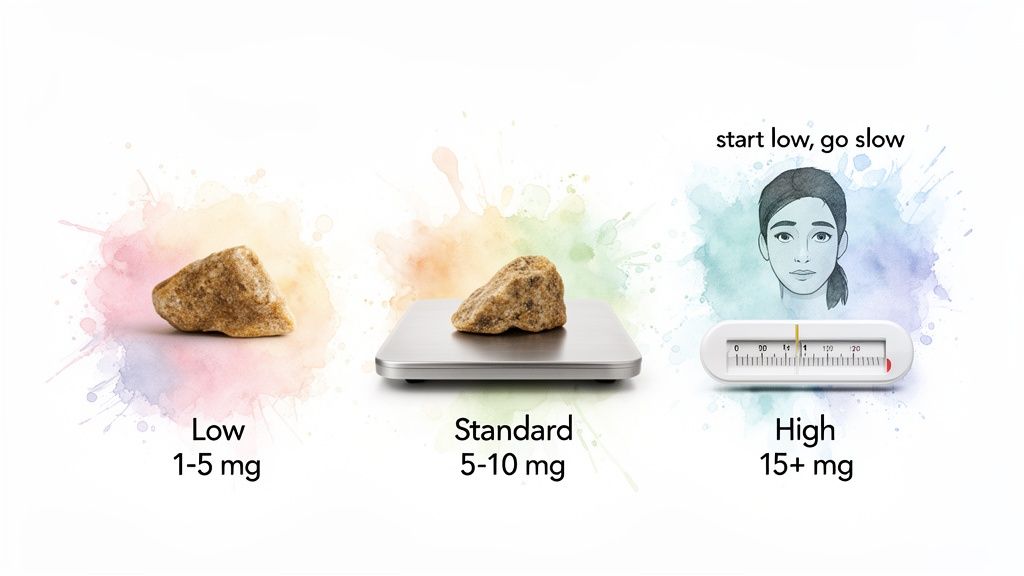
The golden rule here is universal: start low and go slow. Edibles are a marathon, not a sprint. The number one mistake people make is getting impatient and taking a second dose before the first one has even had a chance to say hello.
Understanding Edible Dosage Tiers
To build some confidence, it helps to know what different dosage levels generally feel like. Of course, everyone’s body is different, but these tiers are a pretty solid roadmap for most people.
- Low Dose (1-5 mg THC): This is the perfect place to start. Often called a "microdose," this amount usually provides mild relief from things like pain or anxiety with little to no noticeable high. You might just feel a gentle mood lift or a subtle wave of calm.
- Standard Dose (5-10 mg THC): This is where most recreational users find their happy place. It produces clear euphoric effects, a shift in perception, and a more noticeable body high. A 10 mg dose is a very common serving size you'll see in legal markets.
- High Dose (15 mg+ THC): This territory is best left to seasoned cannabis users with a high tolerance. Doses this large can produce powerful, sometimes overwhelming psychoactive effects and are more likely to bring on unwanted side effects like paranoia or anxiety.
The cannabinoids in your edible also steer the experience. Knowing the difference between indica, sativa, and hybrid effects can help you pick a product that matches the vibe you’re going for. If you want to go deeper on this, you can learn more about indica vs sativa vs hybrid in our guide.
The Two Hour Rule
Patience is your absolute best friend with edibles. Imagine you’re baking a cake; if you keep opening the oven door every five minutes to check on it, you’re just going to mess it up. The same principle applies here.
The most critical piece of advice we can give is this: wait at least two full hours after your first dose before you even think about taking more. It can easily take that long for your body to fully process the THC and for the effects to hit their peak.
Thanks to California's strict lab-testing laws, you can trust the dosage listed on products from licensed shops like Cannavine. A large poll found that the average edible high lasts about seven hours, with a surprising 15% of users reporting effects lasting over 10 hours from doses of 25 mg or more. That long duration often catches first-timers off guard, but a little bit of knowledge goes a long way.
What To Do When You've Had Too Much
Even with the best planning, sometimes an edible hits a little harder than you bargained for. If you ever find yourself feeling too high, the first thing to remember is this: the feeling is temporary. It will pass. Your only job is to stay calm and not panic.
Think of it like getting on a rollercoaster that turned out to be way more intense than you expected. You can’t hop off mid-ride, but you can focus on your breathing, hold on tight, and trust that it will eventually pull back into the station. The goal is simply to make yourself as safe and comfortable as possible until the effects fade on their own.
Grounding Yourself When You Feel Overwhelmed
When feelings of anxiety or paranoia creep in, a few simple actions can work wonders. You’re not trying to fight the high, but rather to gently steer your mind and body back to a calmer place.
Here are a few practical steps you can take right away:
- Find a Safe Space: Head to a quiet, familiar room where you feel totally secure. Dim the lights, grab a cozy blanket, and settle into your favorite spot on the couch or bed.
- Stay Hydrated: Sip on some water. It helps with the classic dry mouth and gives you a simple, repetitive task to focus on. Steer clear of caffeine or alcohol, as they can ramp up anxiety.
- Distract Yourself: Throw on your favorite comfort movie, some chill music, or a TV show you've seen a million times. A familiar distraction is a great way to redirect your thoughts away from the intensity of the experience.
Remember, no one has ever suffered a fatal overdose from cannabis. Even if the experience is unpleasant, you aren't in any physical danger. The feeling will fade.
Using CBD And Other Natural Aids
Interestingly enough, another part of the cannabis plant might be able to help. Anecdotal reports—and a growing body of evidence—suggest that CBD (cannabidiol) may help soften some of THC’s more intense, anxiety-producing effects. If you have a CBD tincture or some gummies lying around, taking a dose could help even things out.
Some people also swear by sniffing or chewing on a few black peppercorns. It might sound strange, but it's an old folk remedy that has some science to it—peppercorns contain a terpene called caryophyllene that can promote a sense of calm.
Ultimately, the best plan is just to rest and ride it out. While these situations are rare, knowing how to handle them is empowering. Some highly concentrated products, like RSO, require even more careful dosing; you can learn more by exploring our guide on what RSO is and how it differs from other edibles.
Frequently Asked Questions About Edibles
Even after diving into the details, it's natural to have a few more questions pop up. We get it. Here are some quick, straightforward answers to the things we're asked most often about edibles.
Do Edibles Feel Stronger Than Smoking?
For most people, the answer is a definite yes. It's all about how your body processes the THC. When you eat cannabis, your liver gets involved and converts THC into a much more powerful compound called 11-hydroxy-THC.
This new molecule is a powerhouse. It crosses the blood-brain barrier with ease, which is why it often leads to a more intense and significantly longer-lasting high compared to inhaling a similar amount of THC.
How Long Will THC From An Edible Stay In My System?
This is the big question, especially for anyone who might face a drug test. While the effects of an edible wear off after several hours, the THC metabolites can hang around in your system for a lot longer. The exact timeline really depends on how often you consume, your personal metabolism, and your body composition.
Here are some general detection windows to keep in mind:
- Urine: 3-30 days after use
- Saliva: Up to 72 hours after use
- Hair: Up to 90 days after use
It's crucial to remember that the psychoactive high is very different from the detection window. If you're a frequent user, you can expect those metabolites to be detectable for a much longer period.
Are Dispensary Edibles Safer Than Homemade Ones?
Absolutely, and it's not even close. The biggest difference is consistency. Lab-tested edibles from a licensed dispensary like Cannavine guarantee what's on the label is what's in the package. A 10 mg gummy will contain 10 mg of THC.
With homemade treats, you're rolling the dice. It's incredibly difficult to distribute THC evenly, often resulting in "hot spots" with a way-too-potent dose. This makes for an unpredictable experience and really ramps up the risk of an uncomfortable, overly intense high.
Buying from a trusted, licensed source gives you something priceless: peace of mind. Lab testing doesn't just verify the dose; it also ensures the product is clean and free from nasty contaminants like pesticides or residual solvents.
Ready to explore a curated selection of safe, accurately dosed edibles? The friendly budtenders at Cannavine can help you find the perfect product for your needs. Browse our live menu and place your order for pickup or delivery at https://trycannavine.com.