When you hear about "alternative herbal health services," what probably comes to mind are complete systems of care that use plants to help your body heal itself. It’s less about taking a single pill for one problem and more like hiring a personal trainer for your internal systems. The goal is to build real, long-term strength and resilience from the inside out.
Demystifying the World of Herbal Wellness
At its heart, the philosophy behind herbal wellness is about treating the whole person, not just a list of symptoms. This approach looks at your lifestyle, diet, stress levels, and even your emotional state as interconnected pieces of your overall health. It’s all about restoring balance rather than just hitting the mute button on the alarms your body is sending.
This way of thinking is really catching on. More and more people are looking for natural, proactive ways to manage their health instead of just reacting to problems as they pop up. You can see this shift in the market's massive growth.
A Global Shift Towards Natural Care
The global herbal medicine market has exploded, valued at a jaw-dropping USD 251.24 billion in 2025. Here in North America, the market hit USD 35.2 billion, with the U.S. alone making up about USD 22.2 billion of that. This boom is driven by a huge interest in dietary supplements and health practices that mix traditional wisdom with modern science. You can read the full research on the herbal medicine market to dig into the trends.
This isn't about ditching conventional medicine. It’s about expanding your wellness toolkit, giving you more options to feel connected to your health and the natural world.
A lot of people exploring these services are already familiar with the benefits of other plants, like cannabis. Getting the basics of herbalism can give you great context for how different plant compounds work together. For anyone curious about the specifics of cannabis, our guide explaining the differences between CBD vs. THC is a perfect starting point. This holistic view shows us that nature offers a whole spectrum of allies for our health, from a calming cup of chamomile tea to a targeted cannabis tincture.
Exploring the Major Herbal Traditions
When you start looking into alternative herbal health, you find yourself wading into a rich history of different traditions. Each one has its own unique philosophy for what wellness looks like. The common thread? They don't just chase symptoms. Instead, these ancient systems see the body as a whole, interconnected system and use plants to bring it back into harmony and build strength from the inside out.
Think of each tradition as a different map for navigating your health. They all offer a distinct path, relying on time-tested plant allies to help you on your journey. What you're really tapping into is thousands of years of human wisdom and observation.
Western Herbalism and Naturopathy
Here in North America, Western Herbalism is probably the tradition you've heard the most about. It's focused on using plants, often as single extracts or in simple blends, to target specific health issues. A herbalist might suggest milk thistle to give your liver some love or echinacea to fire up your immune system.
Naturopathy is a bit broader and actually uses herbalism as one of its main tools. A naturopathic doctor (ND) takes a holistic approach, looking at your diet, lifestyle, and environment in addition to recommending herbal remedies. They're like a health detective, using plants as just one piece of a much larger wellness puzzle.
"The core idea is that the body has an inherent ability to heal itself. Herbal traditions provide the tools to support and amplify that natural process, encouraging balance rather than forcing a specific outcome."
Traditional Chinese Medicine (TCM)
Traditional Chinese Medicine (TCM) is a seriously sophisticated system built around the concept of Qi (pronounced "chee"), which is your vital life force. In TCM, good health means your Qi is balanced and flowing freely through the body's energy channels. When that flow gets blocked or out of whack, illness can pop up.
TCM practitioners use herbs to get that balance back. They classify plants by their energetic properties, like "warming" or "cooling." A great example is ginger—it's considered a warming herb used to fight "cold" conditions like an upset stomach by getting your circulation going and energizing your Qi.
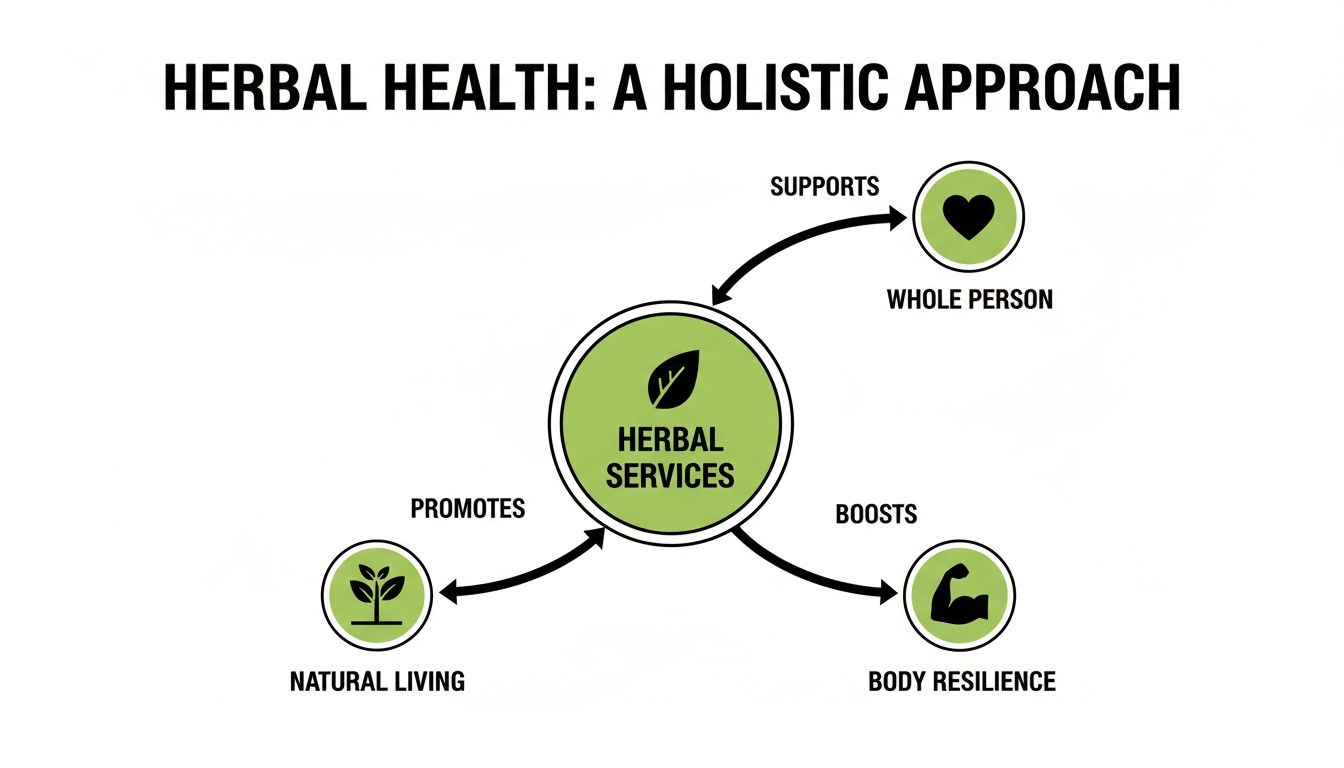
As you can see, all these different philosophies point toward the same goal: supporting the whole person. Whether it's through whole-person care or promoting natural living, it’s all about boosting your body's own resilience.
Ayurveda and Aromatherapy
Coming out of India over 3,000 years ago, Ayurveda is one of the world's oldest holistic healing systems. It's centered on the belief that your health hinges on a delicate balance between your mind, body, and spirit. This balance is defined by three life energies, or doshas: Vata, Pitta, and Kapha.
An Ayurvedic practitioner will figure out your dominant dosha and then recommend specific herbs, foods, and lifestyle changes to keep you in equilibrium. For instance, ashwagandha is often used to calm down excess Vata energy, which is tied to feelings of anxiety and restlessness.
Finally, there’s Aromatherapy. This practice uses the essential oils from plants to support both physical and mental well-being. It's often associated with just relaxation (think lavender for sleep), but its uses are huge—from using peppermint oil to sharpen your focus to so much more.
Comparing Popular Herbal Health Modalities
To help you get a clearer picture, here's a quick breakdown of how these major traditions stack up against each other. Each one offers a unique lens for viewing wellness, with its own set of go-to herbs and applications.
| Modality | Core Philosophy | Example Herbs | Common Applications |
|---|---|---|---|
| Western Herbalism | Using specific plants to address targeted health concerns and support bodily functions. | Echinacea, Milk Thistle, St. John's Wort | Immune support, digestive health, mood balance, sleep issues. |
| Naturopathy | A holistic system using herbs, diet, and lifestyle to support the body's self-healing ability. | Turmeric, Ginger, Valerian | Chronic conditions, preventive care, overall wellness planning. |
| TCM | Balancing the body's vital life force (Qi) through energetically classified herbs. | Ginseng, Goji Berry, Astragalus | Energy levels, stress, hormonal balance, digestive function. |
| Ayurveda | Balancing the three life energies (doshas) through herbs, diet, and lifestyle practices. | Ashwagandha, Turmeric, Triphala | Stress reduction, detoxification, digestive health, mental clarity. |
| Aromatherapy | Using aromatic essential oils to influence physical, emotional, and mental well-being. | Lavender, Peppermint, Eucalyptus | Relaxation, mood enhancement, focus, respiratory support. |
These diverse approaches aren't just niche interests anymore—they're gaining huge traction worldwide. Consumer demand for natural remedies pushed the herbal medicinal products market to an incredible USD 230.9 billion in 2025, and it’s expected to hit USD 469.6 billion by 2035. You can discover more insights about the global herbal market to see just how big this shift toward natural wellness has become.
How to Find Safe and High-Quality Herbal Products
Diving into the world of herbal supplements can feel a bit like the wild west, especially when you realize the quality can swing dramatically from one brand to the next. Unlike the cannabis market where strict lab testing is the law, the herbal industry is mostly self-policed. That means it’s up to you, the consumer, to put on your detective hat and find the brands that choose to hold themselves to a higher standard.
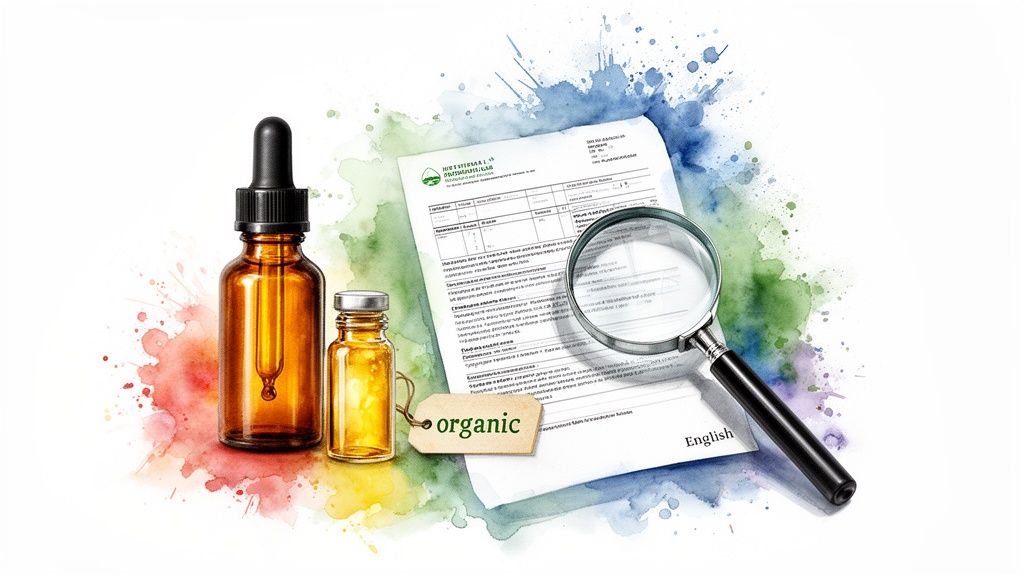
The absolute most important thing to look for is proof of third-party lab testing. This is non-negotiable. It means an independent lab, with no financial stake in the product, has double-checked that what's on the label is actually what's in the bottle. This process confirms both the purity and the potency of the herbs.
If you shop for cannabis in Northern California, this should sound familiar. Just like you'd check a Certificate of Analysis (COA) for your favorite flower or edible, you should be looking for the same kind of proof for your herbal supplements. A good lab report will show that the product is clean and free of nasty stuff like heavy metals, pesticides, and mold, while also confirming the strength of the active compounds.
Decoding Quality on the Label
Beyond the lab reports, the product label itself can tell you a lot about its quality. Certain words are clues that a company is committed to better sourcing and processing, which makes a huge difference in how well the final product works.
- Organic Certification: Seeing that USDA Organic seal means the herbs were grown without synthetic pesticides or fertilizers. It’s one of the strongest signs you're getting a clean, responsibly farmed product.
- Wildcrafted: This term means the plants were harvested right from their natural habitat. When it's done sustainably, this can result in some seriously potent herbs. Just make sure you choose brands that care about ethical harvesting so wild plant populations aren't harmed.
- Full-Spectrum vs. Isolate: This is another concept familiar from the cannabis world. Herbal products can be full-spectrum, containing all the plant’s natural goodies, or isolates, which single out just one active compound. Understanding the differences between full-spectrum and broad-spectrum products can help you pick the right product for your own wellness goals.
Putting It All Together for Confident Shopping
Whether you’re buying a simple box of chamomile tea or a complex tincture, transparency is key. A reputable company that provides alternative herbal health services or products won’t hide their quality information—they’ll be proud of it.
The best brands are proud of their sourcing and testing. They will often feature lab results directly on their website or provide them upon request. If a company is secretive about its testing or sourcing, consider it a major red flag.
Here's your quick checklist for buying safe herbal products:
- Verify Third-Party Lab Testing: Always look for a COA or lab report.
- Check for Certifications: Prioritize USDA Organic or other well-known seals.
- Read the Ingredient List: Make sure there aren't any weird fillers, binders, or artificial additives.
- Research the Brand's Reputation: Check out reviews and see what other people and practitioners are saying.
By keeping these things in mind, you can confidently pick high-quality herbal products that are both safe and effective, making sure they become trusted allies on your wellness journey.
Choosing the Right Herbal Practitioner for You
Finding an expert to guide you on your wellness journey is just as important as picking the right herb itself. You shouldn't think of a practitioner as just someone who hands you remedies. Instead, picture them as a skilled guide who helps you read your body’s unique map. The right partnership can make all the difference in hitting your health goals.
Kicking off this process means finding someone whose philosophy clicks with yours. Are you looking for a naturopath who will dig into your entire lifestyle, or a clinical herbalist focused on specific plant-based protocols? Knowing what you want from alternative herbal health services is the first step toward finding a provider who really gets you.

Key Questions for Your First Consultation
Think of your first consultation as a two-way interview. It’s your chance to get a feel for their expertise, how they communicate, and whether you feel comfortable and actually heard. Show up with a few questions ready to go so you can better understand their approach and qualifications.
Here are a few essential things to ask any potential practitioner:
- What kind of training and certifications do you have? You want to look for professionals who have put in the time at accredited institutions.
- What’s your philosophy of care? This helps you figure out if their approach—whether it's rooted in TCM, Ayurveda, or Western herbalism—lines up with what you believe about health.
- How do you work with conventional medical doctors? A good practitioner will always encourage open communication with your whole healthcare team.
- Can you give me an example of how you've helped someone with goals like mine? This gives you real insight into their hands-on experience and how they solve problems.
A solid practitioner will welcome these questions and give you straight answers.
Finding a Collaborative Partner
At the end of the day, the best practitioner is someone who acts as a partner. They should listen carefully to your story, respect your decisions about your health, and empower you with knowledge. This isn't about getting a one-size-fits-all plan; it's about building a wellness strategy together that feels right for you.
A great herbalist or naturopath doesn’t just tell you what to do; they teach you how to listen to your own body. The goal is to build your confidence and intuition so you can become an active participant in your own healing process.
Always trust your gut. The relationship you build with your provider is the foundation for your success. Look for someone who is not only knowledgeable but also compassionate and supportive—someone who makes you feel empowered on your path to holistic health.
Safely Integrating Herbal Wellness with Cannabis
For a lot of people diving into herbal health, cannabis is already a familiar friend. It makes sense, then, to wonder how it plays with other therapeutic plants. Combining cannabis with other herbs isn't about just throwing things together; it’s about creating a specific, synergistic effect to elevate your wellness journey. Think of it like a chef building a sauce—the right blend of ingredients creates something far more delicious and complex than any one herb on its own.
This idea is sometimes called herbal stacking or creating a plant-based entourage effect. The goal is to match the properties of the herbs with what you want to achieve, giving you a truly customized approach to feeling good.
Crafting Your Experience with Herbal Synergy
A great place to start is with the general effects of different cannabis strains. We know that Sativa strains often feel uplifting and energizing, while Indicas are famous for their relaxing, body-heavy effects. You can use other herbs to either boost these qualities or bring a little more balance to the experience.
Here are a few ways this synergy can work in the real world:
- For Enhanced Relaxation: If you use an indica to wind down at night, try pairing it with calming herbs like lavender or chamomile. A warm cup of chamomile tea about an hour before you use your cannabis can really set the stage for a peaceful night.
- For Sharpened Focus: Using a sativa to get creative or buckle down on a project? An invigorating herb like peppermint or rosemary can help sharpen that mental edge. A few drops of peppermint essential oil in a diffuser can help create an environment that’s primed for concentration.
- For Mood Support: Adaptogenic herbs like lemon balm and holy basil (tulsi) are well-known for their stress-busting qualities. When you pair them with a balanced hybrid strain, they can help smooth out the experience and promote a more stable, positive vibe.
Safety First: Why Professional Guidance Is a Must
While blending botanicals can be incredibly rewarding, it’s not something to jump into without doing your homework. Just as herbs can interact with each other, they can also have powerful interactions with cannabis and—most importantly—with any prescription medications you're taking. This is where getting professional advice is absolutely key.
The most critical step you can take is to consult with a qualified clinical herbalist, naturopath, or a knowledgeable healthcare provider. They can look at your entire health profile, including your medications, to make sure you’re not heading into risky territory.
This is especially true for medications that affect your mood or brain chemistry. For instance, the way cannabinoids and common antidepressants interact is complex and needs to be managed carefully. To get a better handle on these nuances, check out our detailed article on how Zoloft and THC interact for some essential safety insights.
Always remember: safety comes first. Start with a tiny dose of any new herb, pay close attention to how your body feels, and never be afraid to ask an expert. By taking a responsible and informed approach, you can safely explore the incredible connections between cannabis and the wider world of herbal wellness.
Where to Go From Here
Alright, you've made it through the crash course on herbal wellness. You now have a solid map of the major traditions, know why safety and quality are non-negotiable, and have some ideas on how to weave herbs into your life. Now what?
The great thing is, you don’t have to dive into the deep end. Think of it more like dipping your toes in. Start simple—maybe brew a cup of calming chamomile tea before hitting the sack or grab a professionally blended tincture for stress from a local apothecary you trust. The idea is just to start, pay attention, and see what you notice.
Your First Steps Into Herbal Wellness
Getting started is all about listening to your own body and finding the plants that click with you. There's no secret handshake or one right way to do it, but here are a few easy entry points:
- Try a Single-Herb Tea: Pick one herb for one simple goal. Think peppermint for digestion or lavender to unwind. See how it makes you feel.
- Talk to a Local Pro: Head to a health food store, apothecary, or even a dispensary with a knowledgeable herbalist on staff. Pick their brain and get a few personalized pointers.
- Hit the Books: Want to go deeper? Grab a book from a well-respected herbalist to build your own knowledge base and get more confident.
Just remember that alternative herbal health services aren't meant to kick your doctor to the curb. Instead, they're a powerful teammate in your overall well-being. It’s a way to take a more active role in your own health and reconnect with the natural world around you.
At the end of the day, your wellness path is yours alone. It’s a personal journey of finding what brings you balance and vitality. With the knowledge you have now, you’re more than ready to explore the world of herbal support with a little wisdom and a lot more confidence.
Your Questions, Answered
Diving into the world of herbal health can bring up a lot of questions, especially around safety and what to expect. That’s totally normal. Getting clear answers is the first step to feeling confident about your wellness choices.
Are Herbal Remedies Regulated By The FDA?
This is a big one. In the eyes of the FDA, herbal products are treated as dietary supplements, not drugs. This means they don't go through the same rigorous testing and approval process that prescription medications do.
That difference is exactly why it's so critical to choose brands that take quality seriously. Look for companies that voluntarily send their products out for third-party lab testing. This ensures you're getting something that's pure, potent, and free from nasty contaminants.
Can I Use Herbal Services If I Take Prescription Medication?
You absolutely have to talk to your doctor before mixing herbs with your prescriptions. It's not something to guess about. Some herbs can seriously interact with medications, either making them less effective or causing some pretty rough side effects.
For example, St. John's Wort is a classic case. It's well-known for messing with a ton of common prescriptions, including antidepressants and birth control. Your safety comes first, so always get professional medical advice to avoid risky combinations.
How Do I Know Which Herbal Service Is Right For Me?
Finding the right fit really comes down to your personal health goals and what kind of approach feels right to you. There's no one-size-fits-all answer.
Here’s a quick breakdown to get you started:
- Looking for a total lifestyle overhaul? If you want a complete system that looks at diet, habits, and your whole being, Naturopathy or Ayurveda could be a great match.
- Curious about energetic balance? If you're drawn to the idea of balancing your body's life force or "qi," Traditional Chinese Medicine (TCM) might be the path for you.
- Need targeted plant-based support? For help with a specific issue using the power of plants, talking to a clinical herbalist is an excellent place to start.
The best way forward is to do a little reading on each one and maybe even book a consultation. See which philosophy resonates with you and your unique needs.
Ready to explore a curated selection of lab-tested cannabis and CBD products to complement your wellness routine? Visit Cannavine to browse our Northern California dispensary menus online for pickup or delivery. Shop Now at Cannavine.