When you’re looking for the best cannabis strains for anxiety, the first thing to realize is that not all cannabis is created equal. The real secret is finding products with the right cocktail of compounds like CBD and THC, which can work together to bring on a sense of calm instead of making your stress worse. This guide is your roadmap to making choices you can feel confident and clear about.
How Cannabis Can Help You Manage Anxiety
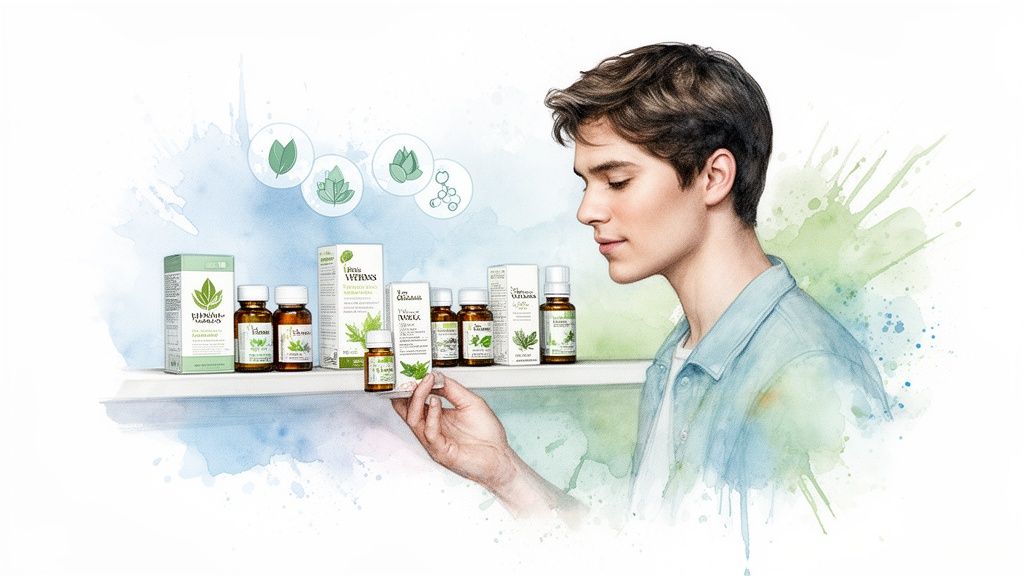
Staring down a dispensary wall packed with products can be overwhelming, especially when you’re already feeling on edge. But here’s the good news: you don’t have to guess. Finding relief isn’t about stumbling upon some magical "strain" but about understanding what's actually inside the plant.
Think of it like cooking. The final dish all comes down to the ingredients you use and how much of each you put in. In the same way, a cannabis product’s effects are dictated by its specific chemical recipe—its unique mix of cannabinoids and aromatic compounds called terpenes.
Moving Beyond the Myths
For a long time, the cannabis world operated on overly simple—and often misleading—categories. You’ve probably heard the old saying: "Indica is for relaxing, and Sativa is for energy." While there's a tiny bit of truth to that history, it's a seriously outdated way to think about cannabis. We now know that how a plant looks doesn't reliably tell you how it will make you feel.
Instead, the real clues for anxiety relief are hiding in the lab-tested data for each product. This is where you'll find the information that actually matters.
- Cannabinoids: These are the main active compounds, like THC and CBD. They’re the ones that interact with your body’s internal systems to help regulate things like mood and stress.
- Terpenes: These are the aromatic oils responsible for cannabis's distinct smells and flavors. But they do more than that; they play a huge role in shaping your experience, helping to steer it toward feeling calm or more uplifted.
By focusing on these specific compounds, you go from playing a guessing game to using a targeted strategy. It puts the power back in your hands to pick cannabis strains for anxiety that are chemically aligned with your goal of finding some peace and quiet.
This guide will break all of this down, helping you understand how these components work together. We’ll translate the science into practical, easy-to-digest concepts. By the end, you’ll have the knowledge to walk into a dispensary like Cannavine, look at a product label, and choose something that genuinely supports your well-being.
Why Indica vs Sativa Is an Outdated Myth
For years, the cannabis world has run on a simple rule: Indicas are for chilling out, and Sativas are for getting a creative, energetic buzz. If you've ever looked for cannabis to help with anxiety, someone has probably told you to "just stick with an Indica." But what if that advice is basically useless?
This whole classification system is based on how the plants look. Indicas tend to be short, bushy little things, while Sativas grow tall and lanky. While that's great information for a grower, it's a terrible way to predict how a strain will actually make you feel.
Think about it like this: choosing a strain just because it says "Indica" or "Sativa" is like picking out a tea just because the box says 'green' or 'black.' You're ignoring all the important stuff—the specific herbs, the caffeine level, and the flavors that actually determine how it will taste and affect you. A calming mint green tea and a high-energy matcha green tea are worlds apart, even though they're both "green tea."
The Real Source of a Strain's Effects
So, if the plant’s shape doesn't matter, what does? The real answer is in its unique chemical fingerprint. Every single strain has a distinct profile of active compounds that all work together to create its specific effects. This chemical symphony is what really decides if a product will calm you down or rev you up.
The two most important groups of compounds you need to know are:
- Cannabinoids: These are the main chemical drivers, with THC and CBD being the most famous. The ratio between them is a huge factor in managing anxiety.
- Terpenes: These are the aromatic oils that give cannabis its incredible range of smells and flavors—from pine and citrus to earthy lavender. More than just aroma, they work with cannabinoids to steer the experience.
This teamwork between all the compounds in the plant is called the entourage effect. It’s the idea that the whole is greater than the sum of its parts. The combined dance of cannabinoids and terpenes creates a much more nuanced and predictable outcome than any single compound ever could on its own.
Shifting Focus to Chemical Profiles
Getting this concept is the key to finding reliable and effective relief. Instead of walking into a dispensary and asking for an "Indica," a much smarter question is, "Can you show me a strain with a balanced THC-to-CBD ratio that's also high in the terpene Linalool?" This simple change shifts the conversation from an old myth to a modern, science-backed approach.
This is exactly why looking at a product's lab-tested Certificate of Analysis (CoA) is so important. That document gives you the exact chemical breakdown, showing you the real recipe behind the strain's effects. For a deeper dive, check out our guide on the differences between Indica, Sativa, and Hybrid strains.
The data often blows the old assumptions out of the water. For example, a major Canadian study found that while many users preferred Indica-leaning strains for anxiety, a high-THC Sativa called Luminarium (with 25-28% THC and 0% CBD) was also incredibly effective for improving both anxiety and depression. That's a huge curveball to the old way of thinking and proves it’s the chemical profile—not the Indica/Sativa label—that matters.
By finally leaving the Indica vs. Sativa myth behind, you empower yourself to make much smarter choices. You can start picking products based on their actual ingredients, leading to a far more reliable and positive experience on your journey to finding calm.
Understanding THC vs. CBD for Anxiety Relief
Now that we’ve put the whole Indica versus Sativa debate on the back burner, we can get to what really matters for anxiety relief: the specific compounds inside the plant. The two superstars of the cannabis world are THC (Tetrahydrocannabinol) and CBD (Cannabidiol).
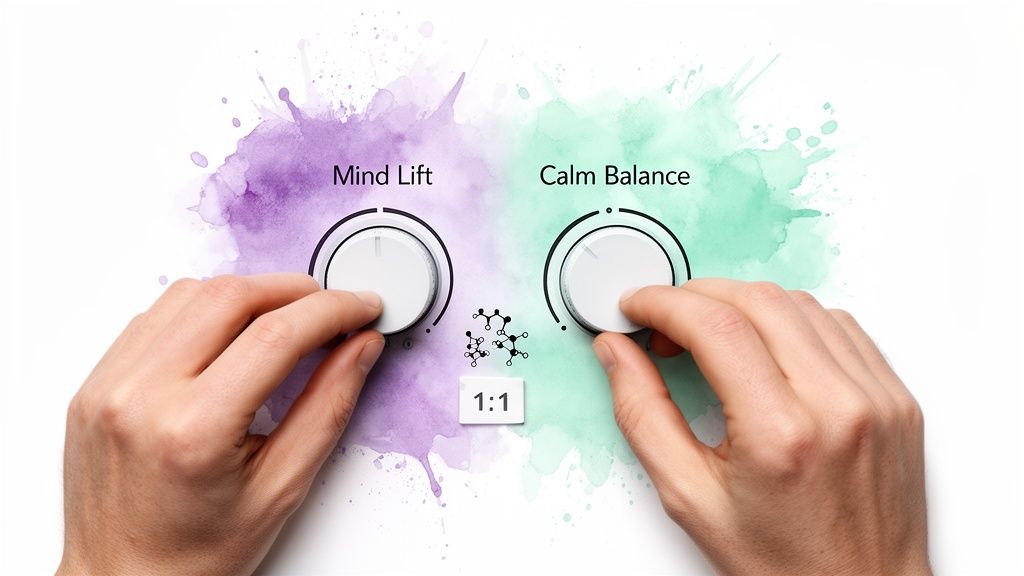
Think of them as two knobs on a control panel for your mind. Each one plays a unique role, and learning how to tune them is the secret to finding a product that genuinely helps with anxiety. Once you get the hang of it, you’ll be able to glance at a product label and make a pretty solid guess about how it’s going to make you feel.
THC: The Double-Edged Sword
THC is the main psychoactive compound in cannabis—it’s what’s responsible for the classic “high.” But when it comes to anxiety, its effects can be complicated and are all about the dose.
A little bit of THC can feel like turning down the volume on anxious thoughts, bringing on a gentle sense of ease and relaxation. For quieting a mind that just won't stop racing, it can be a game-changer.
Go overboard, though, and THC can do the exact opposite. Too much can send the brain's fear center into overdrive, cranking up the anxiety and leading to paranoia or a pounding heart. This is why a lot of first-timers who try a high-THC product end up feeling more anxious, not less.
This "double-edged sword" effect has a name: it's a biphasic effect. At low doses, THC can be anxiolytic (anxiety-reducing), but at high doses, it can become anxiogenic (anxiety-inducing). This is precisely why the mantra “start low and go slow” is so important, especially if you're new to using cannabis for wellness.
You can take a deeper dive into how these two compounds stack up in our article on the key differences between CBD vs THC.
CBD: The Master Regulator
Unlike THC, CBD is completely non-psychoactive. It won't get you high at all. Instead, it’s best to think of it as a master regulator working behind the scenes, helping to create a sense of balance and calm throughout your body.
CBD interacts with serotonin receptors—much like some traditional anti-anxiety meds—and helps put the brakes on our "fight-or-flight" response. When it's paired with THC, its main job is to act as a buffer, softening THC’s more intense effects.
When CBD is present in a meaningful amount, it can directly counteract the potential for THC to cause anxiety. This is why products with a good amount of CBD are a much safer and more predictable starting point for anyone looking for relief.
The research backs this up. One study found that while THC's impact on anxiety was all over the place depending on the dose, CBD seemed to lower anxiety at all doses tested. In fact, the group using CBD-dominant products reported the biggest drop in anxiety, feeling less tension and paranoia with almost no impairment.
Ready to see how they compare side-by-side? This table breaks it down simply.
THC vs CBD: A Quick Guide for Anxiety
| Feature | THC (Tetrahydrocannabinol) | CBD (Cannabidiol) |
|---|---|---|
| Psychoactivity | Yes, causes the "high" | No, non-intoxicating |
| Effect on Anxiety | Dose-dependent: Low doses can be calming; high doses can increase anxiety | Generally calming: Reduces anxiety at most doses tested |
| Primary Role | Provides euphoria, relaxation, pain relief | Promotes balance, reduces inflammation, counteracts THC's side effects |
| Potential Side Effects | Paranoia, increased heart rate, dry mouth | Minimal; potential for mild drowsiness at high doses |
| Best For | Experienced users, managing pain or sleep alongside anxiety (in low doses) | Beginners, daytime use, anyone sensitive to THC's effects |
Ultimately, understanding this table helps you choose the right tool for the job.
Finding Your Ideal Cannabinoid Ratio
The real magic happens when you start looking at the ratio of CBD to THC in a product. This number is often the single most important clue to how it will affect your anxiety. Here are the common profiles you’ll run into here at Cannavine.
-
CBD-Dominant (e.g., 20:1 CBD to THC): This is your go-to for strong anxiety relief with little to no high. It's a fantastic choice for daytime use or for anyone who knows they're sensitive to THC's psychoactive side.
-
Balanced (e.g., 1:1 CBD to THC): Many people find this to be the sweet spot for anxiety. A 1:1 ratio gives you the best of both worlds—the CBD acts as a "babysitter" for the THC, preventing paranoia while still allowing for a gentle mood boost and deep relaxation.
-
THC-Dominant (with caution): These products have very little CBD to round out the THC. While some people find them effective, especially for sleep, they carry the biggest risk of spiking your anxiety if you're not careful with the dose.
By focusing on the chemical makeup of a product instead of just a strain name, you can make much more informed choices. This targeted approach is the most reliable way to find cannabis that brings you calm and clarity, not more stress.
How Terpenes Influence Your Experience
If cannabinoids are the engine of the cannabis plant, terpenes are the steering wheel. These are the fragrant oils that give each strain its unique smell and taste, from the zesty punch of citrus to the grounding scent of a pine forest. But they do a lot more than just smell nice.
Think of it like aromatherapy. There's a reason the scent of lavender is so relaxing—it’s loaded with a terpene called Linalool, which has scientifically recognized calming properties. Cannabis works in the exact same way, using its diverse palette of terpenes to shape and direct your experience.
These compounds work together with cannabinoids like THC and CBD in what's known as the entourage effect. Essentially, terpenes can amplify, soften, or change what the cannabinoids do, steering the high towards a specific outcome. Learning to spot them on a lab report is the single best way to consistently pick the right cannabis for anxiety.
The All-Star Terpenes for Anxiety Relief
While cannabis has over 100 different terpenes, a handful of them are superstars when it comes to fighting stress and bringing on a sense of calm. If you focus on strains rich in these specific compounds, you’ll have a much better shot at finding real relief.
Here are the four key players to look for:
-
Myrcene: This is the most common terpene in cannabis today. It has a musky, earthy scent you’d also find in mangoes and thyme. Myrcene is famous for its powerful sedative and muscle-relaxing effects, which makes it perfect for quieting a racing mind or easing the physical tension that comes with anxiety. It's the terpene most responsible for that classic, calming "Indica" vibe.
-
Linalool: With its soft, floral scent of lavender, Linalool is a powerhouse for mental peace. It's known for its strong anti-anxiety, anti-depressant, and sedative qualities. If your anxiety shows up as looping thoughts or a sense of panic, strains high in Linalool can help soothe your nervous system and bring on a feeling of serenity without knocking you out completely.
Think of terpenes as the plant's essential oils. Just as you might diffuse lavender oil to unwind after a stressful day, choosing a cannabis strain high in Linalool can provide a similar, targeted sense of serenity from within.
Terpenes for Mood and Stress Reduction
Beyond just calming you down, other terpenes work to lift your spirits and directly tackle stress signals in your body. This offers a more holistic approach to managing anxiety.
Limonene is one of the most exciting terpenes for this job. You'll recognize it by its bright, zesty citrus aroma. It's a well-known mood elevator, and research suggests it can boost serotonin and dopamine levels in the brain. This helps fight off the depressive feelings that so often go hand-in-hand with chronic anxiety. You can take a deeper dive into how this terpene works in our guide exploring the effects of Limonene.
Another critical terpene is Beta-Caryophyllene. It has a distinct spicy, peppery scent, like black pepper or cloves. What makes Beta-Caryophyllene so special is its ability to bind directly to our body’s CB2 cannabinoid receptors—just like a cannabinoid. This unique interaction helps slash inflammation and provides a powerful stress-relieving effect without any high.
Putting It All Together at the Dispensary
So, how do you actually use this info? Next time you visit us at Cannavine, instead of just asking for an "Indica," try a new approach. Ask your budtender, "Can you show me something with high levels of Myrcene and Linalool?" or "I'm looking for a strain with Limonene and Beta-Caryophyllene for daytime relief."
This one simple change turns shopping from a guessing game into a targeted strategy. By looking at a product's lab report (also called a Certificate of Analysis), you can see its exact terpene profile and make a truly informed choice. Matching these aromatic profiles to what you want to feel is the most reliable path to finding consistent and effective anxiety relief.
Choosing the Right Product at the Dispensary
Okay, knowing the science behind cannabinoids and terpenes is great, but putting that knowledge to work on the dispensary floor? That’s where the magic happens. This is your practical guide to walking into Cannavine and making a smart choice that actually lines up with what you’re trying to achieve.
The very first decision you’ll face is how you want to consume your cannabis. This choice is just as critical as the strain itself because it controls how quickly you’ll feel the effects and how long they’ll stick around—two factors that are everything when managing anxiety.
Selecting Your Consumption Method
Every product type delivers a different experience. The key is to understand the trade-offs between how fast it kicks in and how long it lasts. This helps you match the product to your specific needs, whether that’s fast relief from a panic attack or a steady sense of calm to get you through the day.
Here's how the most common methods stack up.
Choosing Your Cannabis Consumption Method
Picking the right product is all about timing. Are you dealing with sudden, intense anxiety, or do you need something that provides a gentle, background calm for hours on end? The table below breaks down what you can expect from each option.
| Method | Onset Time | Duration | Best For |
|---|---|---|---|
| Inhalation (Flower/Vape) | 1-5 Minutes | 1-3 Hours | Immediate relief from acute anxiety, panic attacks, or sudden stress. |
| Sublingual (Tincture) | 15-45 Minutes | 4-6 Hours | Predictable, sustained calm that’s faster than edibles. Great for daily use. |
| Ingestion (Edible) | 30-120 Minutes | 6-8+ Hours | All-day anxiety management or ensuring a full night of restful sleep. |
| Topical (Lotion/Balm) | Varies | Varies | Localized physical tension or inflammation. Will not affect mental symptoms. |
Think of it like this: inhalation is your emergency brake, tinctures are your cruise control, and edibles are your long-haul road trip fuel. Each one has its place.
This little decision tree can help you figure out which path makes the most sense for your goals, whether that’s deep relaxation, a gentle sense of calm, or a bit of a mood boost.
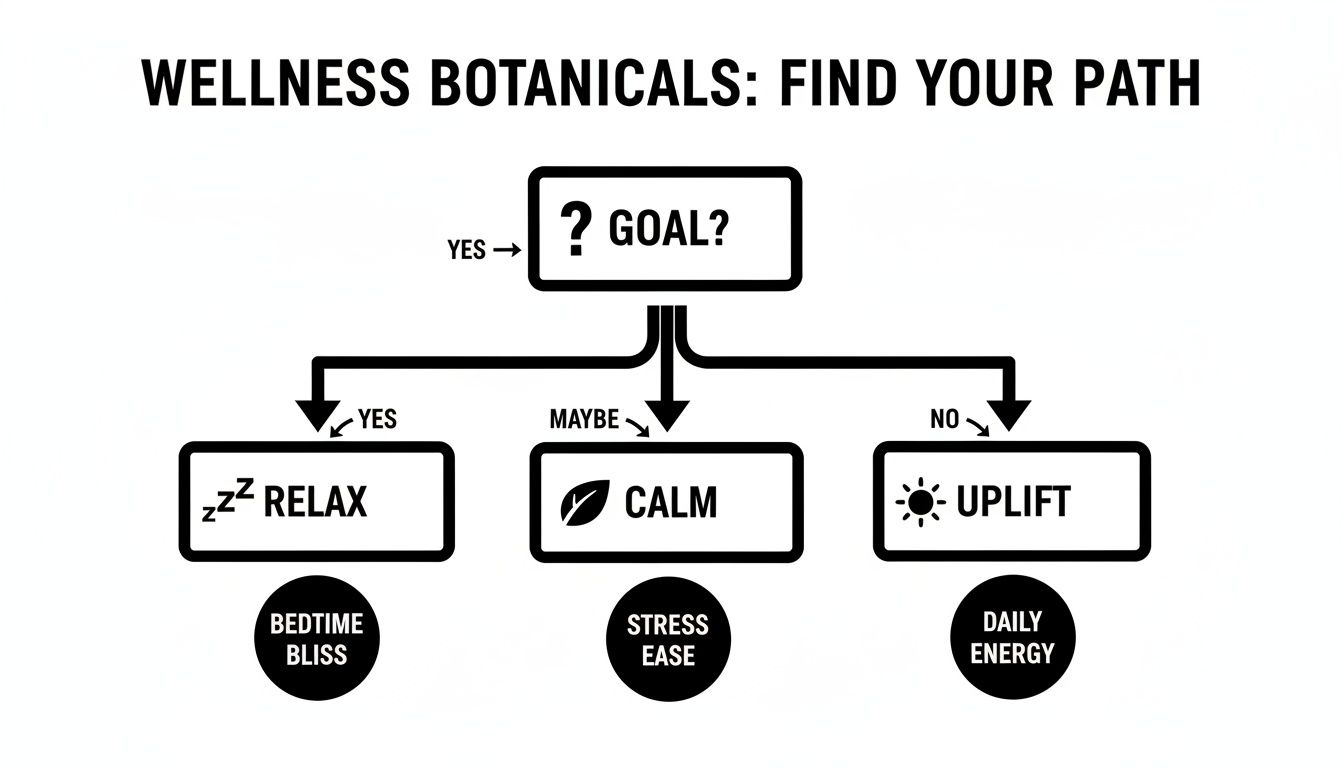
The flowchart makes it easy by connecting your desired outcome—Relax, Calm, or Uplift—to a clear path, helping you narrow down your search from the get-go.
How to Talk to Your Budtender
Now that you have a consumption method in mind, it’s time to get specific. The secret to a great conversation with your Cannavine budtender is to go beyond vague questions and ask for what you really want based on the plant’s chemical profile.
Instead of asking, "What's good for anxiety?" try this: "Can you recommend a 1:1 vape cartridge that's high in Linalool?" or "I'm looking for a low-dose edible with a relaxing terpene profile, like Myrcene."
That simple shift changes the entire conversation. It shows you’ve done your homework and lets the budtender give you a truly personalized recommendation based on the lab tests of the products they have in stock. This is how you find the most effective cannabis strains for anxiety.
Real-World Examples and Bay Area Shopping Tips
Shopping for cannabis in the Bay Area at a place like Cannavine is a straightforward and welcoming experience. Whether you're a medical patient (18+) or an adult-use customer (21+), our team is here to help. Just remember to bring your valid government-issued ID.
And it works. Patient surveys consistently show high satisfaction, with an average effectiveness rating of 8.03 out of 10 for managing anxiety with cannabis. One study even found that specific strains clearly outperformed others; Bubba Kush was a top pick for 20.1% of users. The analysis revealed that both THC and a terpene called trans-nerolidol were significantly tied to stronger anti-anxiety effects. You can dig into the full research published in Frontiers in Neuroscience if you want to geek out on the details.
This data just hammers home our main point: focus on the chemical profile, not just a catchy name. A strain name can be inconsistent from one grower to another, but the lab results don’t lie. High levels of beneficial terpenes and the right cannabinoid ratio are your most reliable signs of a product that will work for you.
Common Questions About Cannabis and Anxiety
It’s only natural to have questions when you’re thinking about using cannabis for anxiety. We get it. This section is here to give you clear, straightforward answers to the things people ask us most often, helping you feel confident and prepared.
How Do I Find the Right Dose for My Anxiety?
This is probably the most important part of the whole process, and the rule is simple: start low and go slow. Finding your perfect dose is a personal journey. The idea is to gradually increase your intake until you find the sweet spot—that is, the smallest amount that gives you relief without any unwanted effects.
If you're inhaling, like with flower or a vape pen, just take one small puff. Seriously, that's it. Then, give yourself a solid 15-20 minutes to see how you really feel before you even think about taking another. The effects hit fast, which makes it easier to judge your reaction.
For edibles or tinctures, you have to be patient. These can take anywhere from 30 minutes to two hours to fully kick in. A smart starting point is a tiny dose, like 2.5mg of THC or even less.
The goal isn't to get overwhelmingly high. You're looking for the minimum effective dose that quiets those anxious thoughts and brings on a feeling of calm. A simple journal tracking what you used, how much you took, and how it made you feel is an incredibly helpful tool here.
Can Cannabis Make My Anxiety Worse?
Yes, it absolutely can. This is actually a pretty common experience, especially for people who jump right into products that are packed with THC but have little or no CBD. For some, too much THC can send the brain’s fear center into overdrive, leading to racing thoughts, paranoia, and a pounding heart—exactly what you’re trying to get away from.
This is precisely why we almost always recommend CBD-dominant products or balanced 1:1 ratios for anyone starting out. The CBD acts like a chaperone for THC, smoothing out its intense effects.
Your setting and your mindset—what's often called "set and setting"—are also huge factors. Using cannabis when you're already in a comfortable, safe place and feeling relatively relaxed can make all the difference. If you ever do feel a spike in anxiety after consuming, just stop. Find a quiet spot, take some deep breaths, and remind yourself that the feeling is temporary and will pass.
Is It Safe to Use Cannabis with Anxiety Medications?
This is a big one, and the answer needs to come from your doctor—not a budtender, not an article on the internet. It is incredibly important that you talk to a healthcare professional before you mix cannabis with any prescription medication, especially things like sedatives, antidepressants, or blood thinners.
Cannabis, and CBD in particular, can mess with the liver enzymes that process a lot of common drugs. This can change the concentration of your medication in your blood, either making it less effective or cranking up the risk of side effects. Having an open and honest conversation with your doctor is the only way to stay safe and make sure your entire treatment plan works together.
What Is the Difference Between Medical and Recreational Cannabis?
Honestly, when you look at the products themselves, there’s often no difference at all. In California, both medical and recreational cannabis have to pass the exact same strict lab tests for quality and safety. The real distinction is just a legal and administrative one.
Here’s how it breaks down for shoppers in California:
- Medical Cannabis: You need to be 18 or older with a valid doctor's recommendation. The main perks are that medical patients can sometimes be exempt from certain taxes and are allowed higher possession limits.
- Recreational (Adult-Use) Cannabis: Anyone 21 or older with a valid government ID can purchase. It's as simple as that.
Here at Cannavine, our approach is the same for everyone who walks through our doors. We offer the same expert guidance and the same premium, lab-tested products to all our customers, whether you're a medical patient looking for specific relief or a recreational user curious about cannabis for your well-being.
Ready to explore a curated selection of products that may help with your anxiety? The expert budtenders at Cannavine are here to guide you toward the right cannabinoid ratios and terpene profiles for your needs. Browse our menu online for pickup or delivery at https://trycannavine.com.