So, can cannabis mess with your antibiotics? The short answer is yes. The interaction mostly goes down in your liver, where a specific crew of enzymes called the CYP450 system is in charge of processing medications. Cannabis, especially CBD, can really slow this system down, which might cause antibiotic levels to build up and raise your risk of side effects.
The Straightforward Answer on Cannabis and Antibiotics
When you're sick enough to need antibiotics, the last thing you want is something getting in the way of your recovery. So, figuring out if cannabis and antibiotics mix is a big deal. The "how" is just as important as the "yes," because it’s not about one substance simply canceling out the other. It’s more like a behind-the-scenes competition for resources inside your body.
Picture your liver as a super busy kitchen and the CYP450 enzymes as the chefs. These chefs are responsible for breaking down (or metabolizing) both the antibiotics you're taking and the cannabinoids from your cannabis. When you use cannabis, particularly edibles, the cannabinoids can hog all the chefs' attention. This distraction can play out in a couple of ways:
- Slower Medication Processing: With the chefs busy, your antibiotic isn't broken down as quickly as it should be. This can cause its concentration in your bloodstream to climb, cranking up side effects like nausea, dizziness, or an upset stomach.
- Reduced Medication Effectiveness: On the flip side, some interactions could actually speed up the metabolism. This clears the drug from your system too fast, meaning it might not stick around long enough to properly fight off the infection.
Surprising Synergy Against Superbugs
But here's a fascinating twist—the relationship isn't all bad. A game-changing 2019 study found that CBD could actually give certain antibiotics a major boost against tough superbugs.
Researchers discovered that CBD helped make several Gram-negative bacteria, like E. coli, more vulnerable to antibiotics. It seems to work by disrupting the bacteria's ability to communicate and spread resistance. This kind of teamwork suggests a future where cannabis compounds could work alongside traditional treatments, maybe even allowing for lower antibiotic doses and helping us tackle the global crisis of antibiotic resistance. You can learn more about these promising antibacterial findings and how they might influence future medicine. But—and this is a big but—it’s crucial to remember this research is still in its infancy.
The key takeaway is this: while cannabis shows some serious potential in lab settings to help fight bacteria, the way it messes with your metabolism can still create unpredictable and risky situations with your prescribed antibiotics. Always play it safe and listen to your doctor.
To make things even clearer, let's break down the most important points you need to remember.
Key Takeaways on Cannabis and Antibiotic Interaction
| Key Point | What This Means For You |
|---|---|
| Liver Metabolism is Key | Your liver processes both cannabis and antibiotics using the same enzymes (CYP450). This overlap is the main source of potential interactions. |
| Increased Side Effects | Cannabis can slow down how your body breaks down antibiotics, leading to higher drug levels and a greater chance of side effects like nausea or dizziness. |
| Potential for Reduced Efficacy | In some cases, the interaction could speed up drug breakdown, making your antibiotic less effective at fighting the infection. |
| CBD is a Major Player | CBD is a potent inhibitor of CYP450 enzymes, so CBD-rich products are more likely to cause significant interactions than THC-dominant ones. |
| Research is Still Early | While lab studies on cannabis fighting "superbugs" are exciting, they don't apply to home use. Don't try to self-medicate an infection. |
| Always Talk to a Pro | Your doctor or pharmacist needs the full picture. Be open about your cannabis use so they can give you the safest advice. |
Ultimately, mixing cannabis and antibiotics isn't a simple yes or no. The risk depends on the specific antibiotic, the type of cannabis product you use, your dosage, and your own unique body chemistry. Safety first, always.
How Your Liver Manages Medications and Cannabis
To really get why mixing cannabis and antibiotics can be a dicey proposition, it helps to picture your liver as a super-smart sorting station for everything you put into your body. It's the main filter that processes drugs, food, and, yes, cannabinoids. The heavy lifting is done by a specialized crew of enzymes.
This crew is called the cytochrome P450 (CYP450) system. Think of these enzymes as workers on a very precise assembly line. When you take an antibiotic, these workers are in charge of breaking it down at just the right speed so your body gets the correct dose.
The CYP450 System: A Busy Intersection
Normally, this process runs like a well-oiled machine. But when you introduce cannabis, it's like throwing a bunch of new, distracting items onto that same assembly line. Cannabinoids, especially CBD, start competing for the attention of the exact same CYP450 workers that are supposed to be handling your medication.
This creates a serious traffic jam, and the interaction can play out in a couple of ways:
- Enzyme Inhibition (Slowing Down): This is what usually happens. Cannabis compounds essentially hog the CYP450 enzymes, keeping them from doing their main job. The result? Your antibiotic doesn't get broken down as fast, and its concentration can build up in your bloodstream to potentially unsafe levels.
- Enzyme Induction (Speeding Up): While less common, some compounds can actually kick the enzymes into overdrive. This clears the antibiotic out of your system way too quickly, meaning it might not stick around long enough or at a high enough level to actually knock out the infection.
This diagram helps visualize how cannabis and antibiotics can bottleneck in your liver's metabolic pathway.
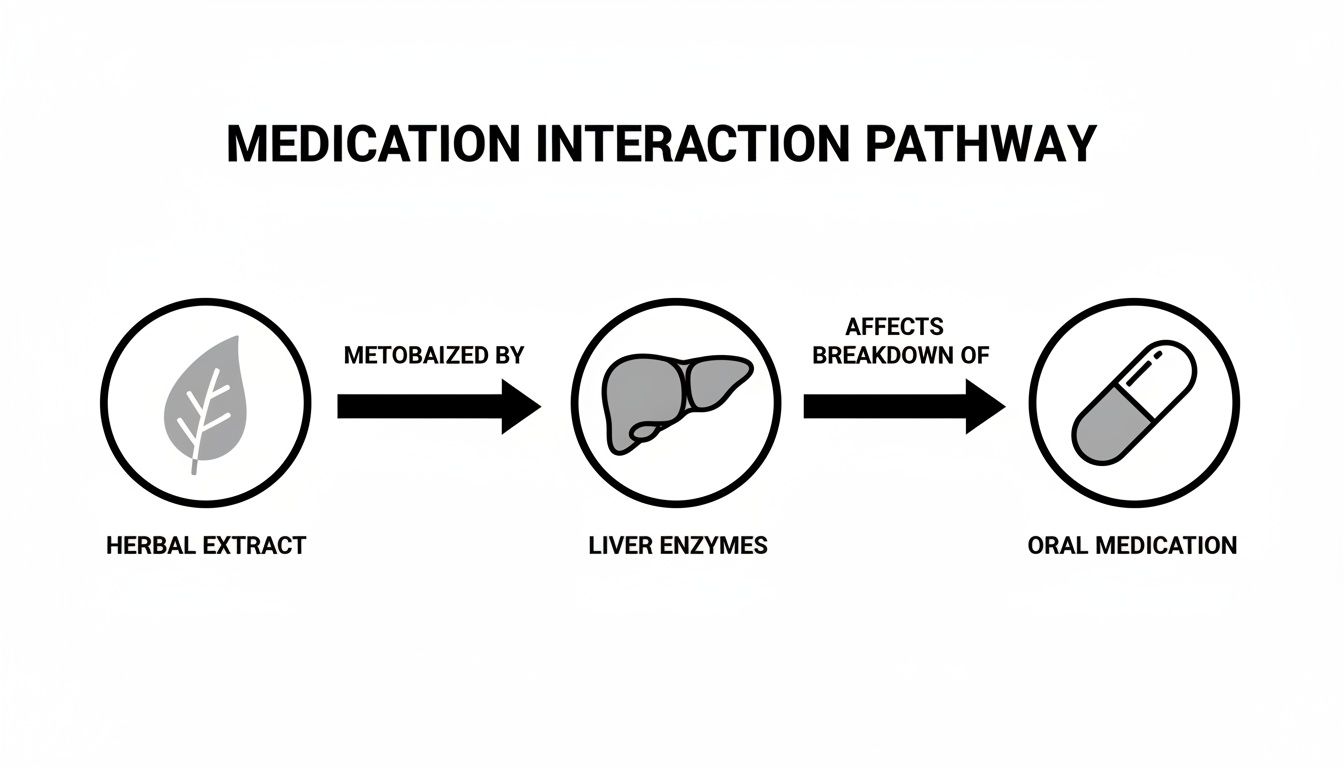
As you can see, both substances are vying for the same liver enzymes, which is where the potential for altered medication effects comes from.
CBD vs. THC in Liver Metabolism
It's easy to assume that because THC is the compound that gets you "high," it must be the main one to worry about. But the research actually points in the other direction: CBD is a more potent inhibitor of the CYP450 enzymes than THC is.
This means that high-CBD products, which many people reach for because they seem "safer" or non-intoxicating, could actually pose a bigger risk for interacting with certain medications. If you want to get into the weeds on this topic, our guide on the distinctions between CBD and THC has a lot more detail.
The real issue isn't just about using cannabis and taking an antibiotic at the exact same moment. The metabolic byproducts of cannabinoids can hang around in your system for days, constantly influencing how your liver is processing other drugs.
Because they linger for so long, simply trying to space out your cannabis use from your antibiotic dose won't cut it. The interference is happening on a continuous biological level as long as your liver is working to process both.
Common Antibiotics That May Interact With Cannabis
Knowing an interaction can happen is one thing, but knowing which specific drugs are involved is much more helpful. While we can't possibly list every single antibiotic out there, we can zoom in on the major classes known to rely on those same CYP450 liver enzymes that cannabis messes with.
Being able to spot these medication types helps you figure out if a chat with your doctor is especially important. The risk isn't the same for every antibiotic; some use totally different pathways to get processed. But a few of the most widely prescribed ones are definitely competing for the same enzymes.
Macrolide Antibiotics
This class is a real workhorse for treating common bacterial infections. If you've ever been sent home with a prescription for a nasty bout of bronchitis, a sinus infection that just won't quit, or certain skin infections, you've likely taken a macrolide.
Because they're processed by the same CYP450 enzymes that cannabis can slow down, there's a real potential for an interaction here. If their metabolism gets sluggish, you could end up with higher levels of the drug in your system. This might ramp up side effects like nausea or an upset stomach.
Keep an eye out for these common macrolides:
- Erythromycin
- Clarithromycin (Biaxin)
- Azithromycin (Zithromax or the famous "Z-Pak")
Fluoroquinolone Antibiotics
This is another powerful group, often reserved for more serious stuff like pneumonia or complicated urinary tract infections (UTIs). Unsurprisingly, their metabolism also involves the CYP450 system, creating another potential traffic jam with cannabis.
Any interference here is a bigger deal because these drugs are often the last line of defense when other options haven't worked. Making sure they work exactly as planned is critical for getting you back on your feet.
Common examples of fluoroquinolones include:
- Ciprofloxacin (Cipro)
- Levofloxacin (Levaquin)
What This Means For You
Seeing your medication on this list doesn't automatically mean you're in for a bad time. How big of a deal an interaction is depends on a bunch of factors—the specific drug, your cannabis dose, how you consume it, and your own unique body chemistry. It’s why there's no simple yes-or-no answer to the question.
To make this a bit clearer, here's a quick-glance table of some common antibiotics and their potential for interaction.
Common Antibiotics and Potential for Cannabis Interaction
This table highlights specific antibiotics known to be metabolized by CYP450 enzymes and thus have a higher potential for interaction with cannabis.
| Antibiotic Class | Common Examples | Potential Interaction Risk |
|---|---|---|
| Macrolides | Erythromycin, Clarithromycin, Azithromycin | Moderate to High |
| Fluoroquinolones | Ciprofloxacin, Levofloxacin | Moderate |
| Tetracyclines | Doxycycline, Minocycline | Low to Moderate |
| Penicillins | Amoxicillin, Penicillin | Very Low |
| Cephalosporins | Cephalexin (Keflex) | Very Low |
This table is just a guide, not a substitute for professional medical advice. The "Very Low" risk categories generally use different metabolic pathways, making a significant interaction with cannabis less likely.
The most important takeaway here is to simply be aware of the potential for an interaction. This knowledge gives you the power to ask the right questions and have an open, honest conversation with your doctor or pharmacist.
At the end of the day, your healthcare provider is the only one who can give you advice tailored to you. They can weigh the specific risks based on your health and your prescription, helping you make the safest choice for your recovery. Don't ever hesitate to bring up your cannabis use—your health is what matters most.
Understanding the Risks of This Interaction
So, what actually happens to you when your liver’s metabolic assembly line gets clogged up? The consequences of mixing cannabis and antibiotics can range from merely annoying to genuinely dangerous, depending on which way the interference goes. Think of it as a two-sided coin—neither outcome is great for your recovery.
The most frequent issue is a metabolic slowdown. When cannabis hogs all the attention from your liver enzymes, the antibiotic you’re taking doesn't get processed correctly. This can lead to the drug’s concentration in your bloodstream creeping up higher than it should, almost like taking too high of a dose by accident.
When Antibiotic Levels Get Too High
Imagine your doctor prescribed a dose designed to be a steady, effective stream flowing through your system. Now, picture that stream backing up and turning into a flood. When a cannabis interaction slows down your metabolism, it can crank up the medication's side effects, making you feel a lot worse while you're trying to get better.
You might start to experience:
- Intensified Nausea and Stomach Upset: Already common side effects can become much more severe.
- Increased Dizziness or Brain Fog: This can make it tough to get through your day.
- Heightened Risk of Serious Adverse Effects: For some drugs, dangerously high levels can lead to bigger problems like heart rhythm issues.
This isn’t unique to antibiotics. We see similar patterns with other medications, too. For instance, our guide on Zoloft and THC gets into how cannabis can also mess with antidepressant metabolism, creating a similar set of risks.
When Antibiotic Levels Get Too Low
Now for the flip side. Though it’s less common, some interactions can actually speed up your metabolism. It’s like punching holes in a bucket—the antibiotic gets flushed out of your body way too fast, before it's had a chance to do its job.
The biggest danger here is treatment failure. If the antibiotic concentration in your blood dips below the effective level, it simply won't be strong enough to wipe out the bacteria causing your infection.
Not only does this mean you could stay sick longer, but it also feeds into a much bigger public health crisis: antibiotic resistance. When bacteria get hit with low, non-lethal doses of an antibiotic, the toughest ones survive and multiply. This creates superbugs that are much harder to treat down the road.
At the end of the day, the whole point of taking antibiotics is to get better as quickly and safely as possible. Knowing how cannabis can throw a wrench in the works is key to making sure your treatment actually works without causing extra side effects or bigger health problems.
How Consumption Methods Change the Equation
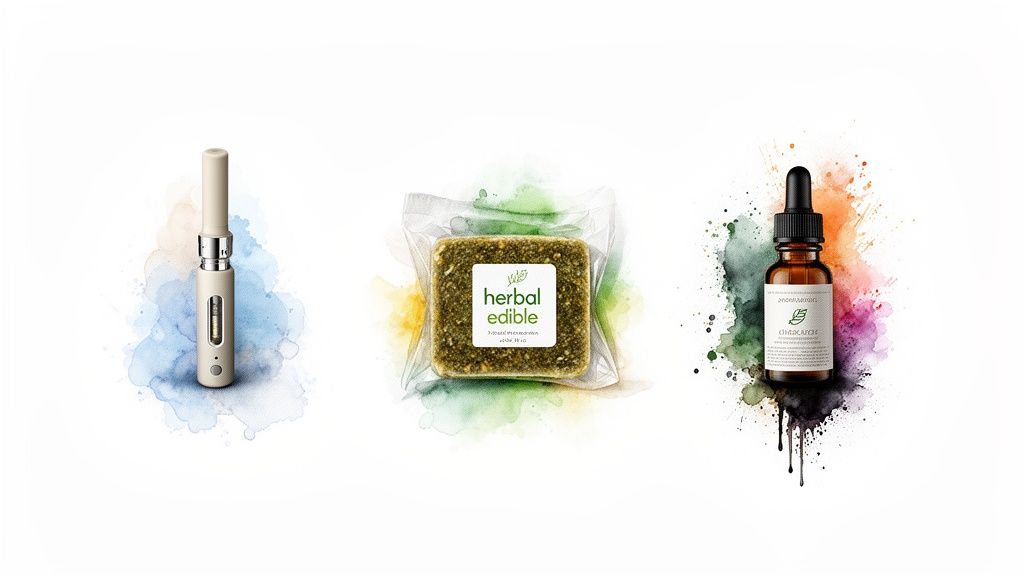
When you're on antibiotics, does it matter if you smoke, vape, or eat an edible? The answer is a definite yes. While all of these methods get cannabinoids into your system, the path they take makes a huge difference in the potential for a drug interaction.
If you smoke or vape, cannabinoids hit your bloodstream fast, right through your lungs. This route mostly bypasses the liver at first, which means you feel the effects quicker, but it creates less of a metabolic traffic jam.
Edibles, however, are a completely different ballgame.
The First-Pass Effect Explained
When you eat an edible, it takes a tour through your digestive system and heads straight for the liver before it gets into your general circulation. This trip is known as the “first-pass effect,” or first-pass metabolism.
Think of it this way: inhaled cannabis is like taking a quiet side street that leads directly to your bloodstream. An edible is like merging onto the main highway that runs right through the liver’s busiest processing plant.
Because the liver gets hit with such a concentrated dose of cannabinoids from an edible, its ability to also process your antibiotic can get seriously bogged down. This makes edibles the consumption method with the highest risk of causing a meaningful interaction.
Timeline and Intensity of Interaction
The way you use cannabis also changes the timing and length of any potential interaction.
- Inhaled Cannabis (Smoking/Vaping): The effects come on fast, and while the metabolic impact is there, it's usually less sustained. The cannabinoids get processed quickly without hitting the liver with that same initial force.
- Oral Cannabis (Edibles/Tinctures): The interaction takes longer to start but can stick around for a lot longer. As your body breaks down the edible over hours, it creates a prolonged traffic jam for those liver enzymes. If you want to get into the nitty-gritty, you can learn more about how long edibles last and why their metabolism is so different.
This long-lasting interference is what makes edibles a particular concern when you're taking antibiotics. The extended impact means your medication could be metabolized improperly for a much larger window of time, bumping up the risk of side effects or making the antibiotic less effective. Being smart about your product choice is crucial for minimizing this potential conflict.
Navigating The Conversation With Your Doctor
Knowing the science behind cannabis and antibiotics is a great start, but the single most important thing you can do is talk to a healthcare professional. An open, honest chat with your doctor or pharmacist is the surest way to guarantee your safety and a quick recovery.
It's common to feel hesitant about bringing up cannabis, but remember: your healthcare team is there to help, not to judge. Their only goal is to make sure your treatment is both safe and effective. Being upfront gives them the full picture so they can give you the best possible advice.
When you bring it up, you don't need to be a medical expert. The idea is just to get clear, personalized guidance for your specific situation.
Simple Questions To Ask
Walking in with a few direct questions can make the conversation feel a lot less intimidating and way more productive. It shows you’re being proactive about your own health.
Try asking some of these:
- "Does this specific antibiotic get processed by the CYP450 liver enzymes?"
- "Looking at my health and this prescription, is it safe for me to continue using cannabis?"
- "Are there any specific side effects I should look out for if I combine them?"
These questions cut right to the chase and help your doctor see exactly what you’re worried about. They can then evaluate the antibiotic you're on and give you advice that’s actually tailored to you.
The best medical advice is always personalized. A pharmacist can also be a fantastic, accessible resource for questions about how cannabis and other medications interact, especially regarding specific drug metabolism pathways.
Practical Safety Tips for Your Treatment
If your doctor gives you the all-clear to continue using cannabis, it’s still smart to be cautious. Your body is already working overtime to fight an infection, so it's a good idea to keep things as simple as possible.
A few practical tips can make a huge difference:
- Start Low and Go Slow: Use a much smaller dose than you normally would. This eases the potential load on your liver enzymes and dials back the risk of exaggerated side effects.
- Keep a Simple Journal: Jot down when you take your antibiotic, when you use cannabis, and any weird symptoms you notice. This log can help you and your doctor catch a bad interaction before it becomes a real problem.
- Prioritize Recovery: When in doubt, the safest bet is always to just press pause on cannabis use until you've finished your antibiotics and you're feeling back to 100%.
Frequently Asked Questions About Cannabis and Antibiotics
Mixing cannabis with any prescription can feel like navigating a minefield. To wrap things up, here are some straight answers to the questions we hear most often about cannabis and antibiotics.
Are CBD-Only Products Safer With Antibiotics?
Not necessarily, and this is a common misconception that can be risky. It turns out that CBD is a more powerful inhibitor of those CYP450 liver enzymes than THC is.
This means CBD-only products—like your favorite tincture, gummy, or even topical—could actually slow down your antibiotic's metabolism even more than a THC product. You should always assume an interaction is possible and chat with your doctor, even if you’re only using non-intoxicating CBD.
How Long Should I Wait Between Doses?
Unfortunately, there's no magic number here. The problem isn't about timing your doses a few hours apart; it's about a continuous process happening in your liver as it tries to break down both substances.
The byproducts from cannabis can hang around in your system for hours, sometimes even days, influencing how your liver enzymes are working the whole time.
Because the effect on your metabolism is ongoing, simply spacing out your antibiotic and cannabis use is unlikely to prevent the interaction. The most cautious approach is to pause cannabis during your entire treatment course unless your doctor has advised otherwise.
What if I Mixed Them and Feel Unwell?
First, don't panic. But if you start experiencing any severe or scary side effects—like extreme dizziness, a racing heart, severe nausea, or confusion—it's important to contact your doctor or seek medical attention right away.
When you do, be open about your cannabis use. That information is crucial for them to give you the right care. For milder side effects, stop using cannabis immediately, keep an eye on how you feel, and be sure to tell your doctor about it later. Your safety always comes first.
At Cannavine, our goal is to give you the knowledge to make safe, informed choices. Whether you're a long-time medical patient or a curious adult-use customer, our team is here to help you find lab-tested, reliable products. Check out our curated menu and see what your options are at https://trycannavine.com.