For as long as most of us can remember, the cannabis world has operated on a simple rule of thumb: indicas are for relaxing ("in-da-couch"), while sativas deliver an uplifting, energetic buzz. But if you've been around the block, you know it's rarely that simple. This old-school binary just doesn't hold up anymore.
Why The Indica vs Sativa Model Is Outdated
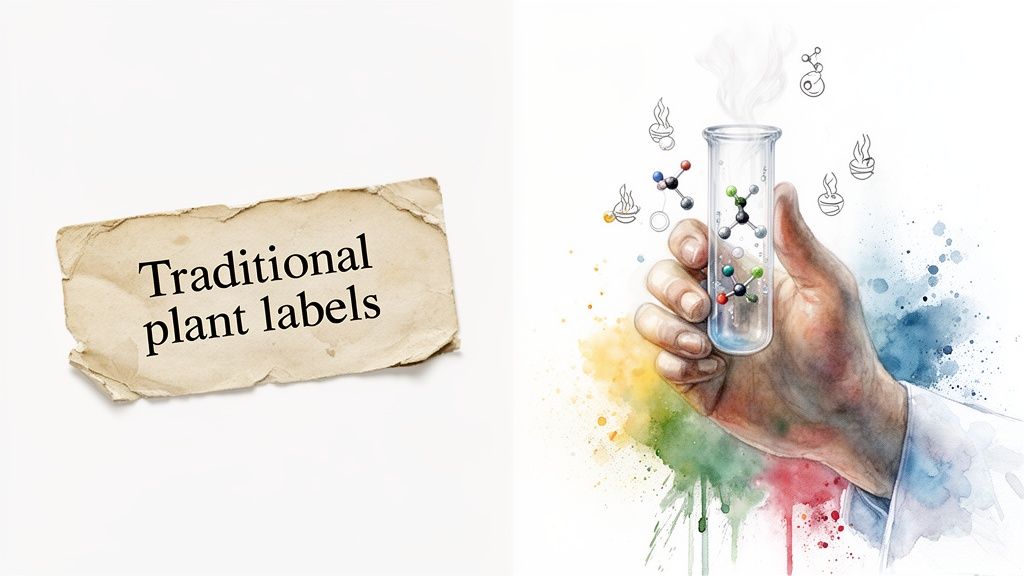
For decades, we’ve all relied on these labels to navigate dispensary menus. Need to chill out after a long day? Grab an indica. Got a creative project and need a spark? A sativa was the clear go-to. It was a useful shorthand.
While these terms once pointed to real differences in plant structure and where they grew, modern science shows they're not great at predicting how a strain will actually make you feel. The real drivers behind your experience aren't a plant's family tree, but its unique chemical fingerprint—its specific blend of cannabinoids and, crucially, terpenes.
Terpenes are the aromatic oils that give cannabis and other plants their distinct smells, like the citrusy burst of a lemon or the calming scent of lavender. But they do more than just provide flavor and aroma; they work in tandem with cannabinoids like THC and CBD to steer the effects.
A strain's terpene profile—not its indica or sativa label—is the most reliable indicator of how it will make you feel. A genetically indica strain rich in the uplifting terpene limonene can feel energizing, while a sativa high in the sedative terpene myrcene might leave you feeling sleepy.
This shift in understanding is huge. It empowers you to look past the marketing labels and get to the heart of what works for you. Still, the old terms are popular and deeply embedded in cannabis culture. In fact, the cannabis sativa segment recently captured the largest market share at 46.7%, a testament to its popularity for both fun and wellness.
The main takeaway here is to start thinking beyond the label and look at the chemistry. By focusing on lab-tested cannabinoid and terpene content, you can make smarter, more personalized choices. We’ll dive deeper into this as we compare indica vs. sativa vs. hybrid effects.
Tracing The Botanical Roots Of Cannabis

To really get what "indica" and "sativa" mean today, you have to go back in time. Long before lab reports and dispensaries, these were simply terms used by botanists to describe how a cannabis plant looked and where it grew. They were all about geography and botany, not the kind of high you'd get.
The story of Cannabis indica starts in the rough, dry climate of the Hindu Kush mountains. This brutal region, covering parts of Afghanistan and Pakistan, pushed the plant to adapt just to survive. The result? A plant that's typically short, dense, and bushy, with wide, dark green leaves.
This squat structure was a clever survival tactic. The shorter flowering time was perfect for the area's brief growing seasons, and its thick build helped it stand up to the cold and wind. These physical traits are the true, original definition of an "indica."
The Equatorial Origins Of Sativa
Now, let's head to a completely different part of the world. Cannabis sativa grew up in the hot, humid, sun-soaked regions near the equator. In places like Colombia, Mexico, and Southeast Asia, the plant faced a whole other set of challenges. It didn't need to race against the cold or bundle up for warmth.
Instead, Cannabis sativa adapted by growing tall and lanky, sometimes stretching over 12 feet high. Its leaves are characteristically long and thin, with a brighter green color. This open structure was ideal for its home turf, letting air flow through to prevent mold in the humidity while reaching for sunlight in dense, competitive jungles.
It's crucial to remember that these original labels were based purely on morphology—the plant's physical shape and structure. "Indica" and "sativa" told you what a plant looked like and its native climate, not how it would make you feel.
This backstory is key to understanding why the simple indica vs. sativa model just doesn't hold up anymore. Decades of cross-breeding mean a plant's genetics are far more complicated than its appearance. A plant might look like a classic indica but deliver the energetic effects people usually associate with sativas.
So, while the history is fascinating, a strain's botanical roots are no longer a reliable map for predicting your experience. What really matters is the plant's unique chemical profile of cannabinoids and terpenes.
How Cannabinoids And Terpenes Shape Your Experience
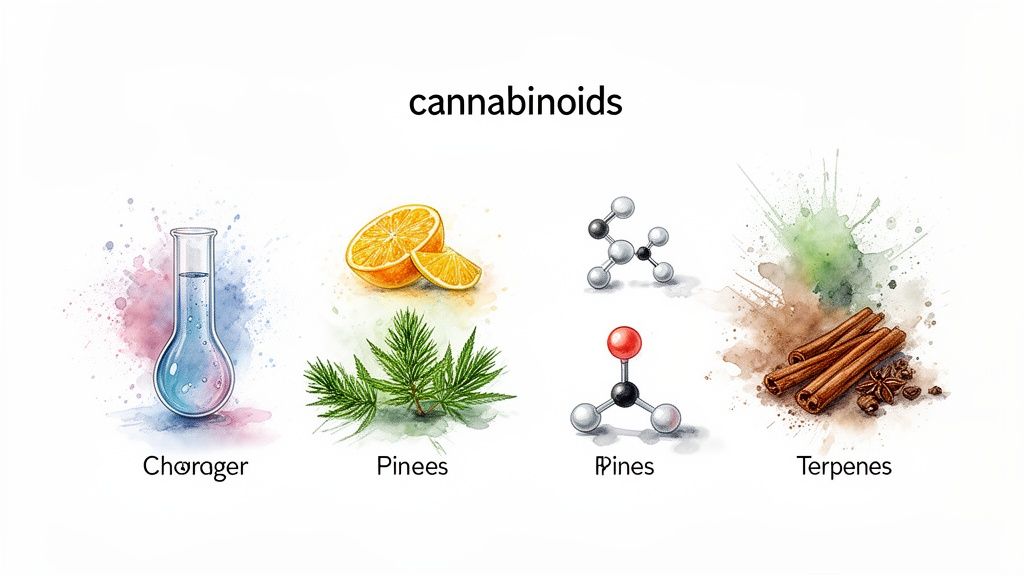
While a strain’s genetics give us hints about how it might look or grow, its chemical profile is where the real story is. Think of a cannabis plant like a complex recipe: the cannabinoids are the main ingredients, but the terpenes are the collection of spices that give the final dish its unique character and flavor.
The two main cannabinoids you'll hear about are THC (tetrahydrocannabinol) and CBD (cannabidiol). THC is the compound famous for producing the psychoactive “high,” while CBD is non-intoxicating and celebrated for its therapeutic potential, like easing anxiety or inflammation.
How a product will make you feel often comes down to the ratio of these two compounds. A strain high in THC with very little CBD will probably deliver a potent, euphoric experience. On the other hand, a product with a more balanced blend of THC and CBD typically offers a much milder, more manageable high.
Terpenes: The Aromatic Directors
This is where the real nuance behind the indica vs. sativa debate comes in. Terpenes are the fragrant essential oils found in cannabis and many other plants—they’re what give pine trees, lemons, and lavender their signature scents. But they do a lot more than just smell good; they actively guide and modify the effects of cannabinoids.
This teamwork between cannabinoids and terpenes is known as the “entourage effect.” Essentially, terpenes work with THC and CBD to steer the overall experience. This is why some strains labeled sativa can feel surprisingly relaxing, and some indicas can feel unexpectedly uplifting. The terpene profile is the ultimate predictor of your experience.
For example, a strain rich in myrcene—a terpene with an earthy, musky scent—is far more likely to produce those classic sedative effects people associate with indicas. In contrast, a strain high in limonene, which smells like bright citrus, tends to boost your mood and help with stress. You can dive deeper into how limonene terpene effects can shape your cannabis journey in our detailed guide.
Understanding the dominant terpenes in a strain is like having a cheat sheet for its effects. It moves you beyond the simple indica/sativa labels and toward a more precise, personalized selection process.
It's interesting to see how these preferences play out in the market. Indica strains currently make up nearly 60% of the North American market, mainly because their potent cannabinoid profiles are popular for medical uses like migraine relief. This is backed up by usage data, where indica’s adoption rate for chronic pain is 65%, compared to sativa’s 45% for mood disorders.
Common Terpenes And Their Potential Effects
To get better at predicting how a strain will make you feel, it helps to know the key players. Here's a quick look at some of the most common terpenes you'll see on lab reports here at Cannavine, along with their signature scents and the effects they're known for.
| Terpene | Aroma Profile | Potential Effects |
|---|---|---|
| Myrcene | Earthy, musky, and slightly fruity like mangoes. | Often associated with relaxing and sedating effects, potentially enhancing THC's psychoactivity. |
| Limonene | Strong citrus notes of lemon and orange. | Known for its potential to elevate mood, reduce stress, and provide an uplifting feeling. |
| Pinene | Sharp, fresh scent of pine needles and rosemary. | Believed to promote alertness, memory retention, and counteract some of THC's foggy effects. |
| Caryophyllene | Spicy and peppery, like cloves or black pepper. | The only terpene that also acts as a cannabinoid, potentially offering anti-inflammatory benefits. |
| Linalool | Floral and sweet, reminiscent of lavender. | Valued for its calming and anxiety-reducing properties, often found in relaxing strains. |
Getting familiar with this handful of terpenes is a huge step toward becoming an expert at picking the perfect product for any occasion.
Understanding The Reality Of Modern Hybrid Strains
Back in the day, the original landrace strains of indica and sativa were pure, geographically isolated varieties of the cannabis plant. But today’s market is a whole different ball game. Decades of intentional cross-breeding have completely blurred the lines, which means finding a "pure" indica or sativa at a dispensary is pretty much impossible.
Truth is, virtually every strain you'll find on our shelves is a hybrid. Growers create these plants by crossing indica and sativa parents to get specific, desirable traits in the final product. The goal is often to combine the best of both worlds—like pairing a sativa’s uplifting buzz with an indica's quicker flowering time.
Why The Dominant Label Matters
This is exactly why you see terms like “indica-dominant” or “sativa-dominant” on product labels. This doesn't mean the plant is pure, but that it leans more heavily toward one side of its genetic family tree. This lineage can sometimes give clues about how the plant looks or grows.
A sativa-dominant hybrid might grow tall with skinny leaves, while an indica-dominant one could be short and bushy. But here's the key takeaway: this label is not a reliable way to predict how the strain will actually make you feel.
The real experience of a hybrid comes down to a unique cocktail of its parent genetics, mixed with its specific cannabinoid and terpene profile. The difference between indica sativa becomes less about two distinct teams and more about a huge spectrum of possibilities created through careful cultivation.
Just look at the global cannabis cultivation market, which is projected to hit nearly $3 trillion by 2034. Within that market, Cannabis indica holds a dominant share, often because it's bred for higher CBD content, making it a go-to for relaxation. Meanwhile, Cannabis sativa is the fastest-growing segment, thanks to the demand for its energizing effects. This entire dynamic is driven by breeders creating specialized hybrids that nail these specific consumer desires. You can dig deeper into these cannabis cultivation market trends on Precedence Research.
Ultimately, the best way to shop is to think of every product as its own unique hybrid. Instead of getting hung up on finding a pure indica or sativa, your best bet is to look at the specific chemical makeup of each individual strain to find the effects you're really after.
How To Choose The Right Cannabis Product For You
Walking into a dispensary and looking at a menu can feel like a lot to take in. But once you know what you're looking for, you can see past the simple indica vs. sativa labels. The real secret is to stop focusing on a strain's family tree and start looking at its specific chemical profile.
First things first: what's your goal?
Are you hoping to unwind after a long day and get a solid night's sleep? Or maybe you need a spark of creativity for a project you're working on. Knowing what you want to achieve is the most critical piece of the puzzle.
Decode The Lab Report
Your best friend in the dispensary is the product's lab report, which you can usually pull up with a QR code on the package. This Certificate of Analysis (COA) gives you the exact chemical breakdown, taking all the guesswork out of the equation.
Here’s what you should zero in on:
- Cannabinoid Content: Look at the percentages of THC and CBD. A product with high THC and low CBD is going to be potent and psychoactive. Something with a more balanced ratio will likely offer a milder, more therapeutic experience.
- Terpene Profile: Check out the top two or three most dominant terpenes. A strain high in myrcene, for instance, is probably going to be relaxing. One that’s rich in limonene or pinene? That’s more likely to be uplifting and help you focus.
This data-first approach lets you make a choice based on science, not just a marketing term. It’s the only way to really understand the true difference between indica sativa effects when everything is a hybrid anyway.
Match The Product To The Occasion
The type of product you pick is just as important as the strain inside it. Different ways of consuming cannabis lead to vastly different experiences when it comes to how fast it hits, how long it lasts, and how intense it feels.
Think about these common situations:
- For quick relief or a social buzz: Anything you inhale, like flower or vapes, is a great choice. The effects kick in within minutes, so you can easily manage your dose, but they usually fade within 1-3 hours.
- For long-lasting, body-focused effects: Edibles and tinctures are perfect for this. They can take 30-90 minutes to start working, but they provide steady effects for 4-8 hours or even longer. This makes them ideal for managing pain all day or sleeping through the night.
- For localized relief without a high: Topicals are designed to be applied right on the skin. They target muscle soreness or inflammation in a specific spot and are non-psychoactive.
The chart below shows how today's hybrids are the result of generations of cross-breeding, starting from original landrace strains.
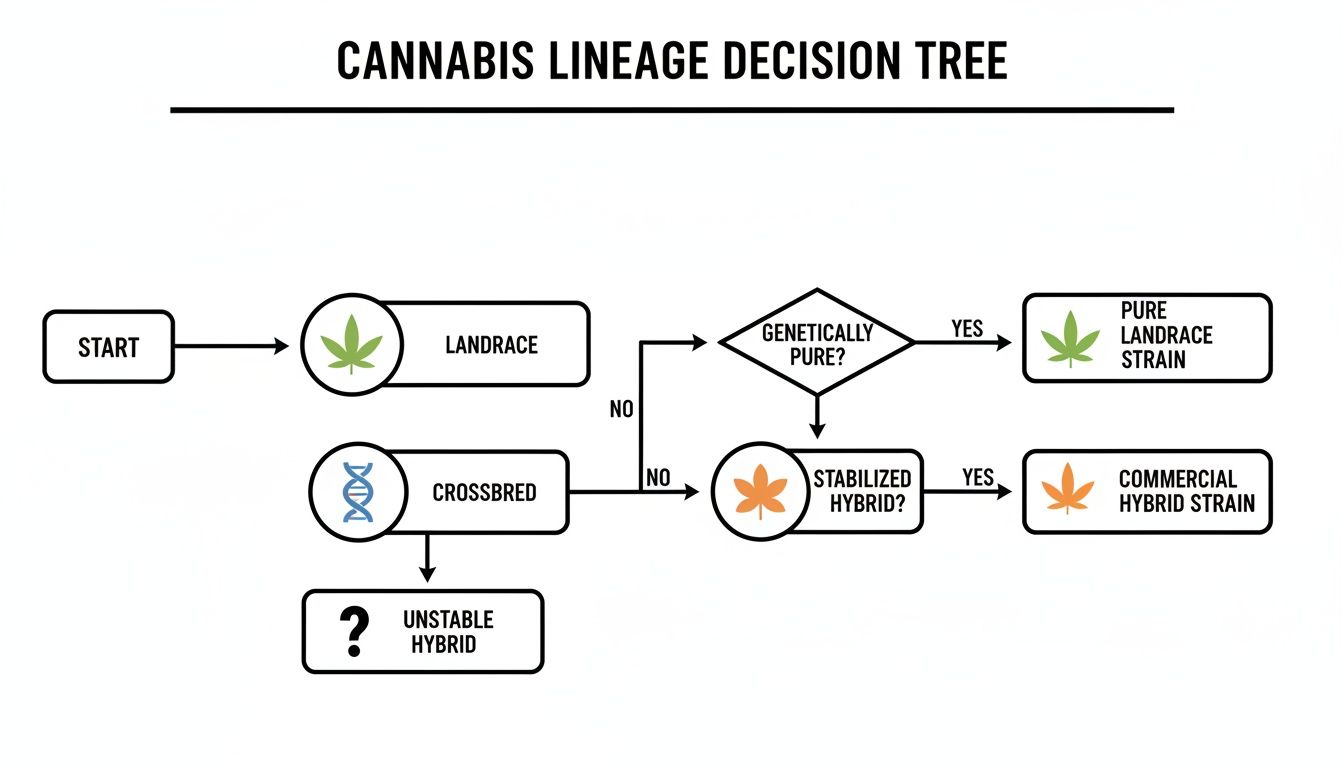
As you can see, just about everything on the shelf today is a hybrid, which is why its unique chemical profile is what truly matters.
If you're ever unsure, just ask your budtender. Try to be specific. Instead of just asking for "a sativa," say something like, "I'm looking for something that will help me focus without making me anxious. What do you have with pinene and a moderate amount of THC?"
Asking targeted questions like this helps them point you to the perfect product much more effectively. By focusing on cannabinoids, terpenes, and what you want to accomplish, you can confidently find the right strain for you every time you visit Cannavine.
Answering Your Indica and Sativa Questions
Even with all the science, some of the old questions about indica vs. sativa still pop up. That’s totally understandable. Let’s clear up some of the most common things we hear from customers at Cannavine, so you can walk in and choose your products like a pro.
Can a Sativa Strain Make Me Tired?
You bet it can. The classic idea of sativas being purely energetic is one of the biggest myths out there. A strain's real effects come down to its chemical profile, not the label on the jar.
If a strain labeled "sativa" happens to be packed with a relaxing terpene like myrcene, it can definitely leave you feeling sleepy. This is a perfect example of why the lab report is your best friend. The genetics give you a hint, but the chemistry gives you the whole story.
The most important thing to remember is that "indica" and "sativa" are loose suggestions, not strict rules. Your experience will always come down to the unique blend of cannabinoids and terpenes in the product you’re holding.
Is Indica Better for Medical Use than Sativa?
Not necessarily. There's really no one-size-fits-all answer here. The "best" strain for any medical need depends completely on your specific condition and what you're trying to achieve.
For example, indica-dominant strains are often the first choice for people dealing with chronic pain or insomnia, thanks to their reputation for sedation. On the other hand, a sativa-dominant strain might be a game-changer for someone battling depression or fatigue, providing that much-needed mood lift and mental spark. It's all about matching the right compounds to your symptoms, regardless of the plant's family tree.
So, Do the Indica and Sativa Labels Still Matter at All?
They have some value, but you should treat them as a very general starting point, not a guaranteed forecast of the effects. An "indica-dominant" label might hint at a genetic tendency toward relaxation and a certain look, but it's never a promise.
Think of the labels as vague signposts pointing you in a general direction. The lab-tested chemical profile? That’s the detailed map that will get you exactly where you want to go.
How Do I Find the Terpene Profile on a Product?
Any reputable dispensary, like Cannavine, makes this information super easy to find. It’s all about transparency. You can usually find the terpene breakdown in a few spots:
- On the Packaging: Look for a QR code. A quick scan with your phone will usually pull up a full lab report, also known as a Certificate of Analysis (COA).
- The Certificate of Analysis (COA): This is the holy grail. It’s a detailed report breaking down the exact percentages of every cannabinoid and terpene in that specific batch.
- Ask a Budtender: Our team is here for this exact reason. We love talking terps and can walk you through any lab report, explain what the dominant compounds do, and help you connect the dots to find a product that fits your goals perfectly.
Using the COA empowers you to make choices based on hard data, not just old-school labels. It’s the surest way to find the right experience, every single time.
Ready to put all this knowledge into practice? At Cannavine, our expert team is always here to help you navigate our curated menu of fully lab-tested products. You can explore our menu online and find the perfect match for your needs with easy pickup or delivery.