The secret to keeping your edibles fresh and potent isn't complicated. It all boils down to three simple rules you need to master: keep them cool, dark, and sealed. Light, air, and heat are the arch-enemies of cannabis, actively breaking down the cannabinoids and terpenes that give your edibles their magic. Getting storage right protects your wallet and guarantees a consistent, safe experience every single time.
The Three Pillars of Proper Edible Storage
When you pick up an edible from a dispensary, you're buying a carefully crafted product. From flavor and texture to its specific effect, a lot of work went into it. But all that can be undone surprisingly fast with poor storage.
The active compounds in cannabis, like THC and CBD, are more fragile than you might think. When they're exposed to the elements, they start to degrade. This doesn't just mean a weaker high; it can also ruin the taste and texture, turning a delicious treat into a stale, disappointing dud.
Think of it like any other high-quality food. You wouldn't leave a fancy chocolate bar on a sunny dashboard or a fresh-baked brownie out on the counter overnight. The same exact logic applies to edibles, but with the added stake of preserving their potency.
The Science of Freshness
The core rules of proper edible storage are all based on simple chemistry. Let's get to know the three main culprits that will ruin your stash:
- Heat: Warmth speeds up the natural breakdown of cannabinoids. Most importantly, heat will slowly convert THC into CBN, a different cannabinoid known more for making you sleepy than for any psychoactive effects. An edible left in a hot car won't just melt into a puddle; it might also deliver a groggy, couch-locking experience you didn't sign up for.
- Light: Direct UV light is one of the quickest ways to destroy THC. A famous study from way back in the 1970s found that light was the #1 factor in cannabinoid degradation. This is why you'll see most cannabis products sold in dark or opaque packaging—it’s the first and most important line of defense.
- Air: Oxygen is the enemy of freshness. It causes oxidation, the same process that makes food go stale and, you guessed it, diminishes the potency of cannabis. When an edible is left out, it's not just getting hard and tasteless; it's actively losing its effectiveness. An airtight seal is absolutely non-negotiable.
By controlling these three elements—heat, light, and air—you’re taking control of your edible's shelf life and effectiveness. For most products, a cool, dark pantry and a good airtight container are all you really need to protect both the flavor and the potency.
This foundation applies across the board, whether you're dealing with gummies, chocolates, or tinctures. While the specific methods might vary slightly for each type of edible, these three pillars never change.
It's a principle that starts long before the edible is even made. Growers are meticulous about managing environmental factors to preserve the plant's quality. If you're curious about how this process starts, you can learn more about the importance of environment when you dry and cure cannabis in our detailed guide.
A Guide to Storing Every Type of Cannabis Edible
Not all edibles are created equal, and how you store them makes all the difference. A chocolate bar needs a different approach than a gummy, and that brownie you’re saving has its own set of rules entirely. Getting these details right is the secret to protecting the flavor, texture, and potency you paid good money for.
Let's break down the best practices for the most popular edibles you'll find on dispensary shelves.
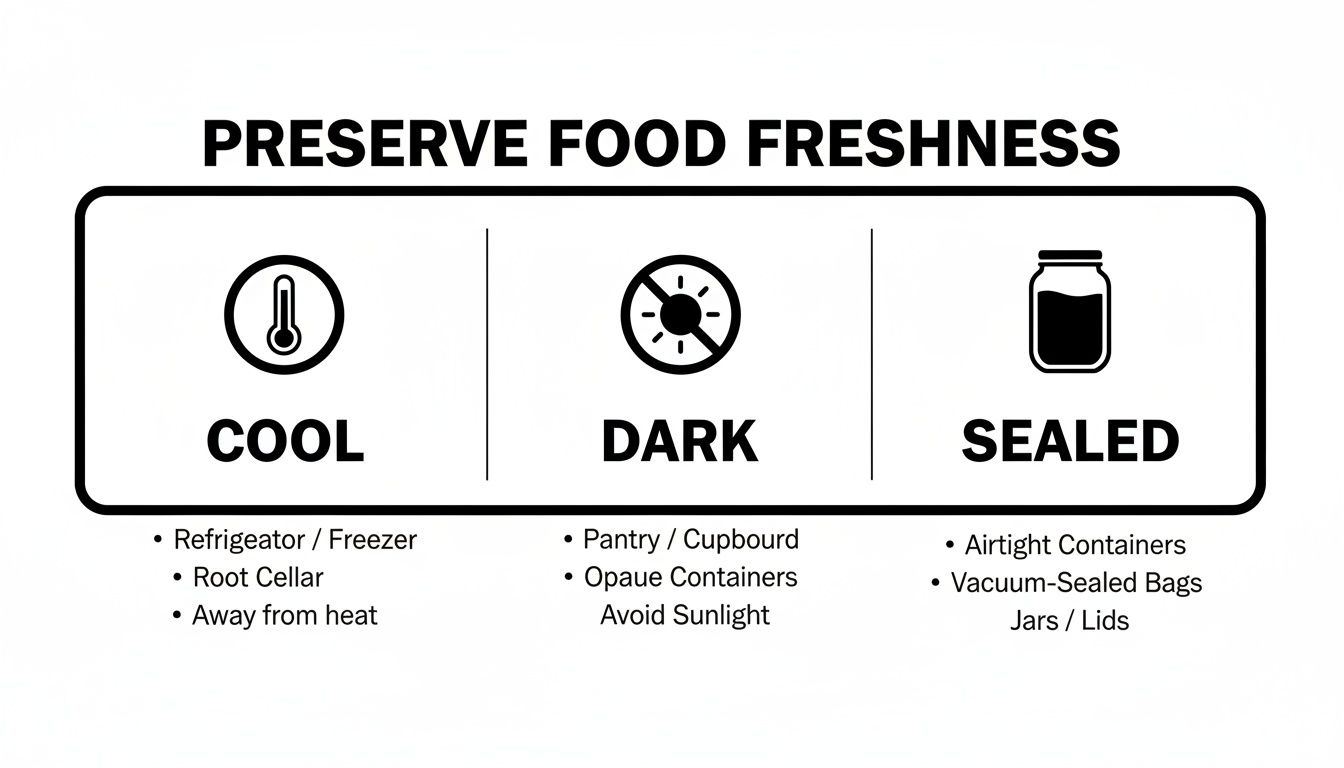
If you can master these three core principles—cool temperatures, no light, and an airtight seal—you're already 90% of the way to keeping any edible fresh.
Edible Storage At a Glance
Feeling a bit overwhelmed? No worries. Use this quick reference table to find the best storage method for your favorite types of edibles to maintain their quality.
| Edible Type | Best Location | Container Type | Typical Shelf Life (Unopened) |
|---|---|---|---|
| Gummies & Hard Candies | Pantry, cabinet | Original packaging, airtight glass/silicone | 6-12 months |
| Chocolates & Caramels | Cool, dark cabinet | Original wrapper, airtight container | 12-18 months |
| Baked Goods | Counter (short-term), freezer (long-term) | Airtight container, plastic wrap + freezer bag | 1-3 months (in freezer) |
| Tinctures & Beverages | Pantry, cabinet (tinctures), fridge (open drinks) | Original dark glass bottle, resealable cap | Up to 2 years (tinctures) |
This table gives you a great starting point, but let’s dive into the specifics for each category to really dial in your storage game.
Gummies and Hard Candies
Good news—gummies and hard candies are probably the most low-maintenance edibles out there. Thanks to their simple, sugar-based makeup, they are incredibly stable.
Your best bet is to just keep them in their original, resealable packaging. If you’ve already tossed it, an airtight glass or silicone container is the next best thing. Just find a cool, dark spot like a pantry or a bedroom cabinet, and you're golden. Normal room temperature is totally fine for these.
The biggest mistake people make with gummies is sticking them in the fridge. All that condensation makes them sticky, overly hard, or worse, melts them into one giant, unusable candy blob. Unless your house is sweltering, the pantry is always the better choice.
Chocolates and Caramels
Chocolate, on the other hand, is a bit more sensitive. It absolutely hates temperature swings, which can cause that weird, chalky white film known as "chocolate bloom." While it's harmless, it definitely ruins the vibe. This happens when the cocoa butter or sugar separates from the rest of the bar.
The perfect home for your chocolate is a cool, dark place with a very consistent temperature. Think of a wine cellar or a low kitchen cabinet far away from the oven. The fridge should be a last resort. If you have no other choice, seal the chocolate in an airtight container first to shield it from moisture and any weird fridge smells.
Baked Goods like Cookies and Brownies
Baked goods have the shortest shelf life, hands down. With ingredients like butter, eggs, and flour, they're prime candidates for going stale or, even worse, growing mold.
If you plan on eating them within a few days, an airtight container on the kitchen counter will do the trick. For anything longer than that, the freezer is your best friend.
- To freeze: I like to wrap individual portions tightly in plastic wrap first. Then, I’ll pop them all into a freezer-safe bag or container. This little extra step prevents freezer burn and makes it super easy to grab just one dose when you need it.
- To thaw: Just leave it out on the counter. It should be ready to go in about 30-60 minutes.
Tinctures and Beverages
Liquid edibles like tinctures and infused drinks are pretty stable, but they'll last longer with the right care. You'll notice most tinctures come in dark glass bottles—that's on purpose, to protect the cannabinoids from degrading in the light.
Always store tinctures upright in a cool, dark place. Once you've opened a cannabis beverage, treat it like any other drink: keep it in the fridge and finish it within a few days. And always, always screw the cap back on tight to keep it from going flat or oxidizing.
When stored correctly, some edibles can last a surprisingly long time. Unopened gummies are usually good for 6-12 months, while unopened chocolates can maintain their quality for up to 18 months. For a deeper dive, check out some more great tips on edible shelf life on shopharborside.com.
Choosing the Best Containers and Storage Spots
Okay, so you get the basic rules: keep it cool, dark, and sealed. But knowing that and actually doing it right are two different things. The container you pick and where you stash it in your house are the final, crucial pieces of the puzzle for keeping your edibles fresh and potent.
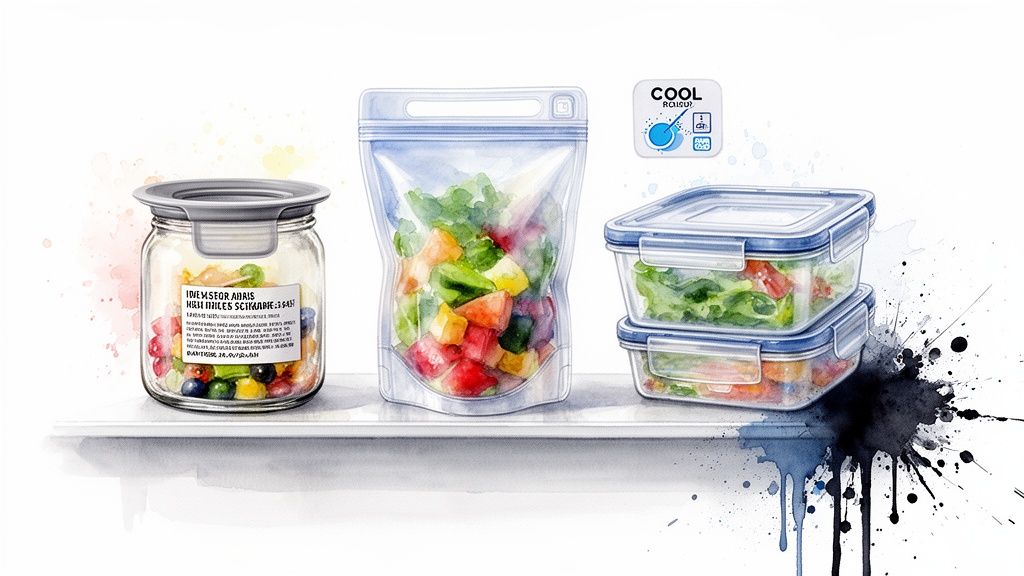
Your first line of defense is usually the original packaging from the dispensary. It’s designed to be light-resistant and is often resealable. But let's be real—once you break that seal or if the bag is flimsy, it’s time for an upgrade.
An airtight seal is an absolute must. It’s the only way you’re going to block out the oxygen and humidity that kill potency and turn your treats into a stale, sad mess.
Selecting the Right Container
Not all containers are up to the task. The material you choose makes a huge difference in how long your edibles will last. Here’s a quick rundown of your best bets:
- Glass Jars: These are the gold standard, period. Glass is non-porous, so it won’t soak up or spit out any weird flavors or smells. Your edibles will taste exactly like they’re supposed to. Pro tip: go for opaque or dark-colored glass to block out damaging light.
- Silicone Containers: A fantastic, tough option, especially for stickier stuff like caramels or some gummies. They’re flexible, a breeze to clean, and create a solid seal. Just remember they don't offer the same light protection as dark glass.
- High-Quality Plastic: If you go this route, make sure it’s BPA-free, food-grade plastic. While they're convenient and light, plastic can sometimes hold onto the potent smell of your edibles. Think of them as a good backup, but glass is still king for long-term storage.
The most important feature is the quality of the seal itself. A weak lid renders even the best container useless. Test the seal before you trust it with your premium edibles.
The Great Debate: Fridge vs Freezer
One of the questions we hear all the time is whether to refrigerate or freeze edibles. The answer really depends on what kind of edible you have and how long you plan to keep it. Using the wrong kind of cold can ruin the texture and taste just as fast as heat.
For most things like gummies and chocolates, the refrigerator is actually a bad choice. It's a humid environment, which leads to condensation. That can make your gummies sticky and cause that weird white film (called "bloom") on your chocolate. The fridge is really only for opened cannabis drinks or perishable baked goods you plan on eating within a week.
The freezer, on the other hand, is your best friend for long-term storage, especially for baked goods. Tightly wrap individual cookies or brownies, pop them in a freezer-safe bag, and you can keep them fresh for months. While freezing won’t hurt the cannabinoids, it can mess with the texture of gummies and chocolates, so save it for items you're not planning to eat anytime soon. For a deeper dive, our guide on storing weed lays out some core principles that are just as true for edibles.
At the end of the day, for most of your stash—from gummies to unopened chocolates—the best spot is a simple cabinet or pantry. Just find a place that’s away from heat sources like your stove or dishwasher and out of direct sunlight. A bedroom closet or a low kitchen cupboard are perfect examples of the stable, boring environments your edibles love.
Responsible Storage for Homes with Kids and Pets
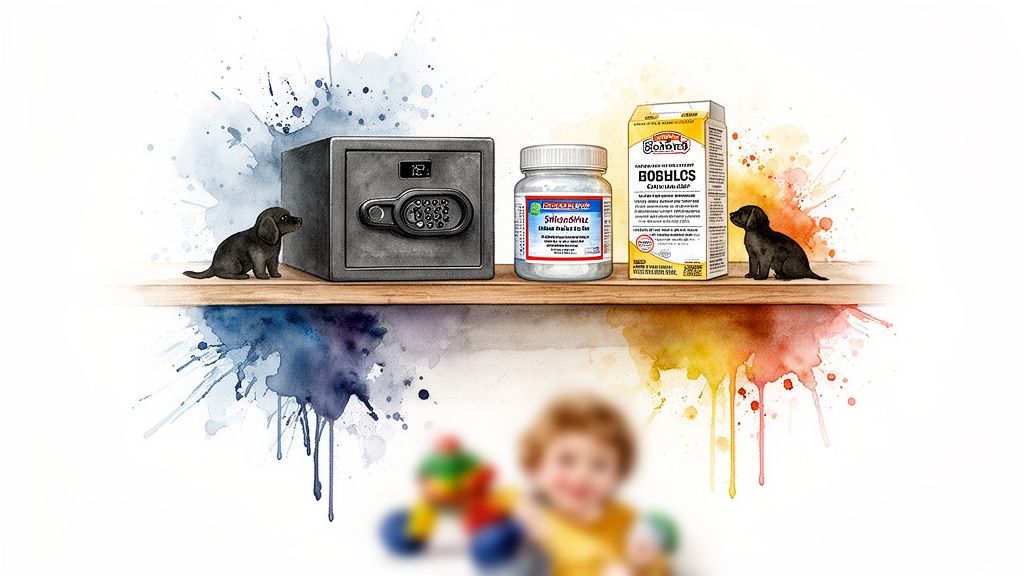
Knowing how to properly store your edibles is about more than just keeping them fresh. It's a huge part of being a responsible cannabis consumer, especially if you have children or pets at home. The number one rule is preventing accidental ingestion, which means being proactive and going beyond just stashing them on a high shelf.
Let's be real—many edibles look exactly like regular candy, cookies, or drinks. That makes them incredibly tempting to a curious child or a nosy pet. A single moment of carelessness can turn into a very serious situation, so it’s critical to treat your cannabis products with the same caution you would for prescription medication.
Secure and Out of Sight Storage
The gold standard for safety is simple: keep your edibles locked away. Hiding them isn't enough; they need to be physically inaccessible. This creates a few crucial layers of protection between your stash and anyone who shouldn't get near it.
Here are a few practical ways to do this:
- Lockable Containers: Small lockboxes, smell-proof bags with built-in combination locks, or even a small personal safe are all fantastic investments. They're affordable, they work, and they keep everything contained in one secure spot.
- Locked Cabinets or Drawers: Dedicate a specific cabinet in the kitchen, a drawer in your office, or a spot in your bedroom that you can lock with a key. This keeps everything secure while fitting into your normal home setup.
- Child-Resistant Packaging: Always, always keep edibles in their original, child-resistant packaging. This is your first line of defense and also has all the important dosage and ingredient information right on it.
Unfortunately, far too many people aren't taking these steps. Research shows a pretty big gap in cannabis safety practices. One study found that only 44.8% of users stored their products both locked and hidden. That same study pointed out that most people get their storage advice from friends and family, not from professionals. You can read more about these cannabis storage findings on PMC.
Label Everything and Avoid Repackaging
Never take edibles out of their original package and toss them into a regular Ziploc bag or a cookie jar. This is one of the easiest ways for a dangerous mix-up to happen. If you absolutely have to transfer them, make sure the new container is clearly labeled and also child-resistant.
For any homemade edibles, always label them with what’s inside, the potency, and the date you made them. A simple sticker that says "CONTAINS THC – DO NOT EAT" could prevent a serious accident.
This diligence isn’t just for protecting kids and pets. It also protects other adults in your house who might unknowingly grab a brownie from the pantry. By making safe storage a non-negotiable habit, you can enjoy your products with total peace of mind, knowing your home is safe for everyone.
How to Know When Your Edibles Have Gone Bad
Even if you’ve followed all the best storage practices, edibles simply don’t last forever. They are food, after all. Knowing the warning signs that your edible has gone bad is just as critical as knowing how to store it in the first place. This isn't just about getting the effects you paid for—it's about basic safety.
Luckily, you already have the best tools for the job: your own senses. Before you even think about popping that brownie you found in the back of the fridge, give it a quick but thorough inspection. A simple look, smell, and touch test will tell you pretty much everything you need to know.
Trust Your Senses
The most serious red flags are usually the easiest to spot. When you’re checking out an edible that’s been sitting around for a while, keep an eye out for these tell-tale signs of spoilage:
- Visible Mold: This one is a total dealbreaker. If you see any fuzzy spots—white, green, or black—toss it out immediately. This is especially common on baked goods. Mold can carry nasty bacteria and mycotoxins that can make you seriously sick.
- Rancid or Musty Smell: Your nose knows what's up. Edibles should smell like what they are: chocolaty, fruity, or sweet. If you get a whiff of something sour, musty, or just plain off, that's a clear signal the fats or oils in the product have gone bad.
- Weird Discoloration: Beyond obvious mold, any strange changes in color are a bad sign. If your once bright red gummy now looks dull and faded, or your chocolate bar has a strange greenish tint, it's better to be cautious and just get a new one.
A common point of confusion is "chocolate bloom"—that chalky, whitish film that can sometimes appear on chocolate. This is not mold. It’s just the sugar or fat separating because of temperature changes. While it might affect the texture a bit, it’s perfectly safe to eat.
Clues From Texture and Potency
Sometimes an edible is still technically safe to eat but has degraded so much in quality that it's not worth it. Changes in texture are a huge giveaway here. A gummy that used to be soft and chewy might become rock-hard. A brownie can feel dry, stale, and crumbly. While these aren't necessarily dangerous, they definitely mean the product is way past its prime.
The most subtle sign that an edible is past its peak is a noticeable loss of potency. Over time, THC naturally degrades and converts into CBN, a less psychoactive cannabinoid known more for making you sleepy than high. An old edible might not deliver the experience you're hoping for and could just make you feel tired.
Knowing the general shelf life of different edibles can help you manage your expectations. You can dive deeper into that topic in our guide on how long edibles last. When in doubt, the best advice is always to play it safe and replace anything you're unsure about.
Common Questions About Storing Edibles
Even when you follow all the rules, some specific questions always seem to pop up about the finer points of storing edibles. Nailing these details can mean the difference between a fresh, tasty product and a big disappointment. Let's tackle some of the most common questions our budtenders hear.
Can I Store Different Edibles Together in One Container?
It’s tempting to toss everything into a single "stash box," but trust us, you’ll want to avoid mixing different kinds of edibles. The potent flavors and smells can easily transfer, and nobody wants their sweet fruit gummy to suddenly taste like a mint chocolate bar.
It's not just about flavor contamination, either. Different products have different moisture levels. If you store a moist brownie with a hard candy, you're going to end up with a sticky, unpleasant mess. For the best flavor and texture, each type of edible really needs its own separate, airtight container.
Will Freezing My Edibles Ruin the THC or CBD?
Nope, freezing won't hurt the cannabinoids. In fact, cold temperatures are great for preserving both THC and CBD because they dramatically slow down the natural degradation process.
The real risk with freezing isn't potency—it's texture and flavor. Freezing can make chocolates brittle or give gummies a weird, tough consistency. If you decide to freeze something like a brownie, use a high-quality, airtight, freezer-safe container. This helps prevent freezer burn, which will absolutely wreck the taste.
My Chocolate Has White Spots. Is It Still Safe to Eat?
More than likely, yes. Those white spots are probably just "chocolate bloom," not mold. Bloom happens when temperature or humidity changes cause the sugar or cocoa fat in the chocolate to separate and rise to the surface.
While it might look a little strange and have a chalky texture, bloomed chocolate is perfectly safe to eat, and the potency should be just fine. It’s simply a sign that it wasn’t stored in a perfectly stable, cool environment.
How Important Is the Original Packaging?
Keeping your edibles in their original packaging is a really big deal, and not just for freshness. It’s also a major safety issue.
- Product Protection: The packaging is specifically designed by the manufacturer to protect that particular edible from light and air.
- Crucial Information: It has all the vital details—potency, ingredients, expiration dates—that you need for safe and accurate dosing.
- Safety First: Here in California, legal packaging is child-resistant. This adds a critical layer of safety that a simple plastic bag just can't provide.
If you absolutely have to move your edible to a new container, make sure it’s another child-resistant one. Then, grab a marker and label it with all the key information from the original package to avoid any dangerous mix-ups.
At Cannavine, our friendly staff is always here to help you understand the best ways to care for your products. Explore our curated selection of lab-tested edibles and find your new favorite by visiting https://trycannavine.com for in-store pickup or delivery.