Learning how to use a wax pen is pretty straightforward: you load a dab of cannabis concentrate onto the heating element, pop the pen back together, turn it on, and inhale. It’s an incredibly portable and effective way to enjoy concentrates, delivering potent flavor and effects without all the gear you need for a traditional dab rig.
Your First Look at a Wax Pen
Welcome to the world of cannabis concentrates. If you’re new to wax pens, you're in the right spot. These devices, often no bigger than a Sharpie, are loved for their portability and knack for delivering flavorful, powerful vapor on the go.
Think of this as the friendly 'getting started' chat you'd have with an expert budtender. We want you to feel comfortable and confident.
At its core, a wax pen is a simple device made of three key parts. Getting to know each one is the first real step toward mastering your sessions.
The Three Core Components
Every wax pen, no matter the brand, is built around the same basic design. Each piece has a specific job, and they all work in harmony to turn your solid concentrate into smooth, inhalable vapor.
The Battery: This is the engine of your device. It's usually the longest part of the pen and houses the power button, charging port, and often, your temperature controls. Its only job is to send power to the atomizer when you’re ready to take a hit.
The Atomizer: You'll often hear this called a "coil," and it's where all the magic happens. The atomizer is a small chamber containing a heating element that flash-vaporizes your concentrate. The moment the battery sends it power, it heats up almost instantly.
The Mouthpiece: This one’s easy—it’s the part you inhale from. It connects to the top of the atomizer and channels the vapor from the chamber straight to you.
These three pieces screw together to form a sleek, simple unit. While some devices might look a little different, this fundamental anatomy is always the same. This modular design is also what makes them different from single-use devices; you can learn more about those in our guide comparing distillate carts and other vape options.
Anatomy of a Wax Pen: Key Components at a Glance
To make it even simpler, here’s a quick breakdown of the essential parts of a standard wax pen and what each one does.
| Component | Primary Function | Key Feature |
|---|---|---|
| Battery | Provides power to the heating element | Rechargeable, often has variable voltage settings |
| Atomizer | Heats and vaporizes the concentrate | Contains the coil, must be cleaned regularly |
| Mouthpiece | Delivers vapor for inhalation | Detachable for easy loading and cleaning |
Understanding how these parts work together is the foundation for everything that follows—from picking the right concentrate to cleaning your pen like a pro.
Choosing and Loading Your Concentrates
The entire experience you get from your wax pen really boils down to the concentrate you pick. I get it—walking into a dispensary and seeing a menu with shatter, budder, crumble, and live resin can feel like a pop quiz you didn't study for. But the differences are actually pretty simple. It's all about consistency and flavor.
Hard, glassy concentrates like shatter are easy to handle since they aren't super sticky, but breaking off the perfect-sized piece can be a bit of a pain. On the flip side, you've got softer waxes like budder or badder. Their creamy, almost frosting-like texture makes them incredibly easy to scoop up with a dab tool.
Then there are premium options like live resin, which are famous for preserving the plant's original terpene profile. This means you get exceptionally rich, authentic flavors. If that piques your interest, you can learn more about what makes live resin unique in our guide.
Whichever you land on, the next step is crucial: loading it correctly for the perfect vapor.
The Art of Loading Your Pen
Loading a wax pen is a delicate dance where less is almost always more. Your best friend in this process is a dab tool—a small metal instrument made for handling sticky concentrates without getting your fingers (and everything else) messy. Trust me, you want to avoid using your fingers. The natural oils on your skin can mess with the quality and taste of your concentrate.
The main goal here is to get a small dab of concentrate right onto the coils or heating element. Just be careful not to actually scrape the hot coils with your metal tool.
This diagram shows how the three main parts of your pen work together to turn that little dab into smooth vapor.
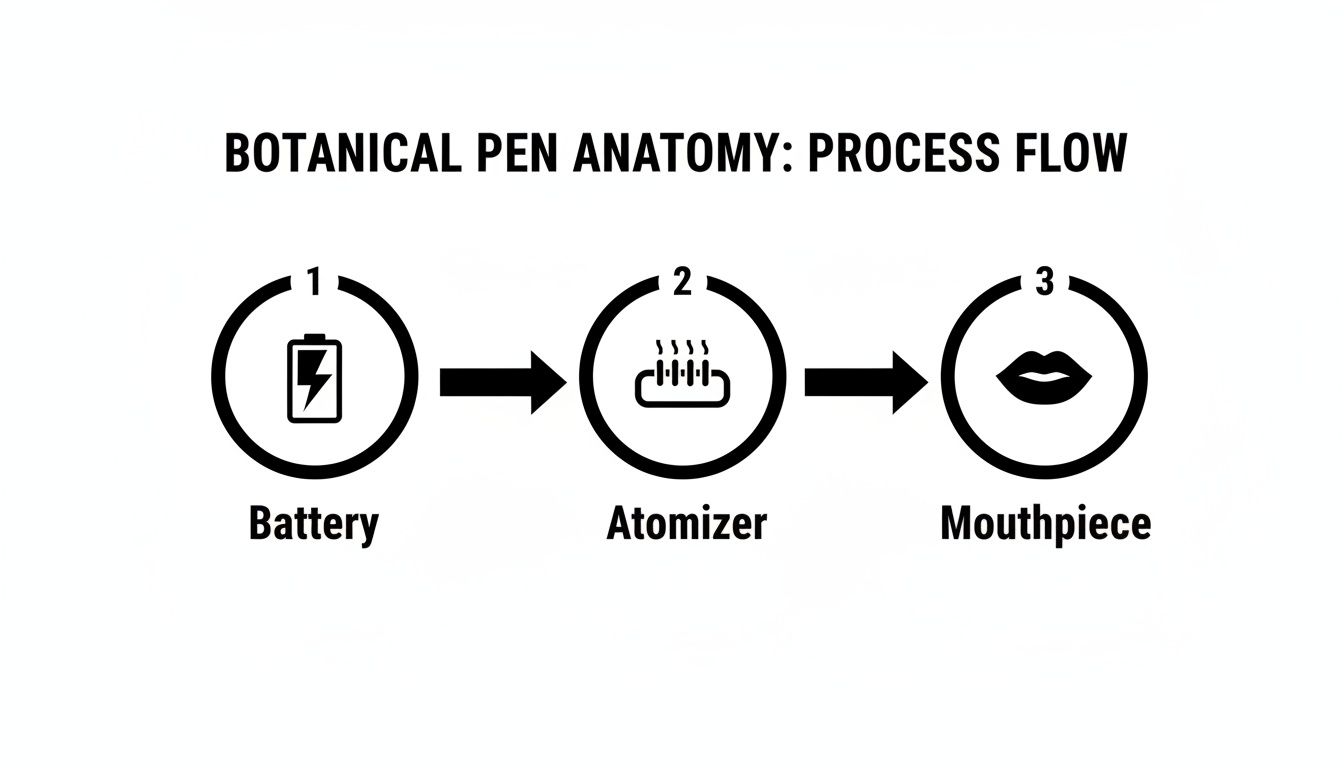
It’s a simple flow: the battery powers the atomizer, which heats your concentrate, and the vapor travels up through the mouthpiece.
How Much Is Enough?
Here's the golden rule for loading: start small. An amount about the size of a grain of rice is the perfect starting point. It might not look like much, but concentrates are incredibly potent, and that tiny dab will easily provide several good hits.
Overloading the chamber is hands-down the most common mistake people make, and it causes a ton of problems:
- Wasted Product: The coils can only heat so much at once. Any extra just melts into a puddle at the bottom, goes to waste, and might even leak out.
- Clogging: That unvaporized wax cools and hardens, clogging up the air holes in your atomizer and making it nearly impossible to get a good draw.
- Harsh Hits: Piling on too much concentrate causes it to heat unevenly. Some of it might even combust instead of vaporizing, which leads to a nasty, harsh taste.
Pro Tip: Instead of trying to drop the concentrate directly onto the coils, gently scrape it off your dab tool onto the inside wall of the chamber, just above the heating element. Then, give the power button a quick pulse—just for a second. The warmth will help the concentrate melt cleanly off the tool and onto the coils.
Taking a moment to choose and load your concentrate carefully sets you up for a perfect session, every single time. It saves you from wasting good product, keeps your pen working properly, and makes sure you get the pure, amazing flavor you paid for.
Mastering Temperature and Inhalation
Figuring out the right temperature is really the secret sauce to getting the most out of your concentrates. Think of your wax pen's heat settings like a chef controlling the flame on a stove—a small tweak can totally transform the final dish, turning a decent experience into an amazing one. This is where you go from just using your pen to truly mastering it.
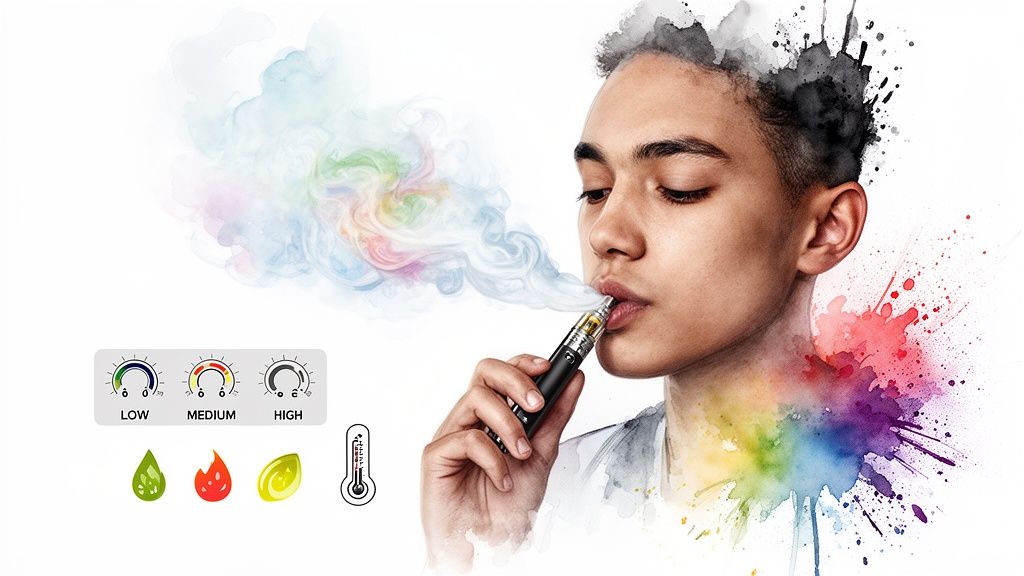
The amount of heat you use directly affects everything from how intense the flavor is to how thick the vapor gets. Your pen probably has a few different voltage settings, and those are your tools for dialing in the perfect session for whatever concentrate you've got.
Finding Your Ideal Temperature Setting
Most modern wax pens come with a few preset heat levels, usually shown by different colored lights. The exact temperatures will vary a bit from device to device, but they generally fall into three key categories that are perfect for vaping concentrates.
Low Heat (Flavor Chasing): This is the sweet spot for terpenes, which are the aromatic compounds that give your concentrate its signature flavor and smell. Lower temps keep these delicate molecules intact, giving you a smooth, tasty hit with less visible vapor. It’s the way to go for high-quality live resin or budder where the flavor is everything.
Medium Heat (The All-Rounder): This setting gives you the best of both worlds. You’ll get a satisfying blend of rich flavor and solid cloud production. It's a great starting point if you’re not sure where to begin and it works well with just about any concentrate, from shatter to crumble.
High Heat (Cloud Production): Cranking the heat all the way up will produce some seriously thick, dense clouds and more intense effects. The trade-off is flavor, since high temperatures can burn off those delicate terpenes. This setting is really for people who care more about potency and big clouds than taste.
The goal is to find what works best for you. Start low and slowly work your way up. You’ll get a feel for how your favorite concentrates react to different heat levels pretty quickly.
The "Sip, Don't Rip" Inhalation Method
Once you've got your temperature set, how you inhale is the next big piece of the puzzle. A lot of beginners make the mistake of taking a huge, hard pull like they’re hitting a pipe. With a wax pen, that's actually the wrong way to do it and usually just leads to a harsh, unpleasant hit.
Instead, think "sip, don't rip." This just means taking short, gentle, and controlled draws.
Picture sipping a hot coffee or tea. A slow, steady 3-5 second draw gives the coils enough time to vaporize the concentrate efficiently without scorching it. This technique does a much better job of preserving the flavor and makes sure the vapor is cool and smooth. It's a method that holds true even for more advanced setups, which you can learn about in our guide on how to dab cannabis concentrates. This one simple change can make your entire experience so much better.
Mastering these two things—temperature and inhalation—puts you in the driver's seat of your wax pen sessions. You'll be able to ensure every single draw is as smooth, flavorful, and effective as possible.
Keeping Your Wax Pen Clean and Maintained
Let's be real—a gunked-up wax pen is just a bad time. If you want consistently flavorful hits and a device that actually lasts, regular maintenance is non-negotiable. Skipping it is a surefire way to end up with clogs, a nasty burnt taste, and a whole lot of wasted concentrate.
Following a simple routine will save you headaches and cash in the long run. This isn't about a deep, time-consuming chore every day; it's about building a few small habits that keep your pen running like new.
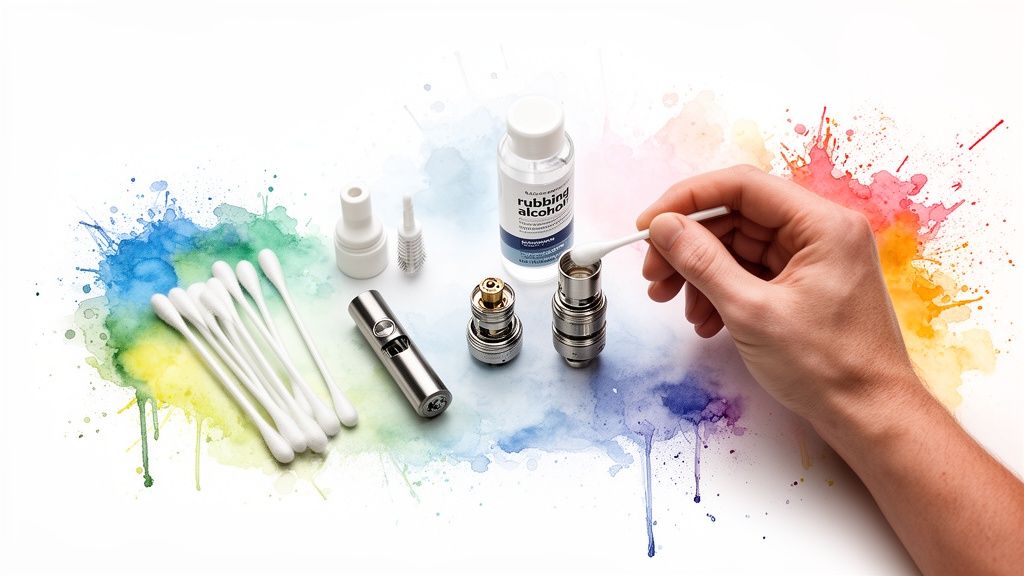
There are basically two levels to keeping your pen pristine: the quick wipe-down after a session and the more thorough deep clean every week or two.
Quick Cleans After Every Use
The easiest way to prevent sticky buildup is to get to it while the atomizer is still warm. Right after your last hit, any leftover residue is soft and way easier to deal with.
Just grab a cotton swab, give it a light dip in isopropyl alcohol (90% or higher is best), and gently swab out the inside of the chamber. Be super careful around the coils—they're delicate and too much pressure can wreck them. This simple wipe-down stops leftover wax from hardening into a stubborn mess.
Performing a Deep Clean
Every couple of weeks, or whenever you notice the flavor or vapor production taking a nosedive, it’s time for a proper deep clean. It's a bit more involved, but it'll bring your pen back to life.
- Take It Apart: First, carefully unscrew all the pieces—mouthpiece, atomizer, and battery. Keep all the little parts together so nothing gets lost.
- Give 'Em a Soak: Pop the mouthpiece and atomizer (check your manual to make sure it's safe for soaking!) into a small dish of isopropyl alcohol. Let them sit for about 30 minutes. This will dissolve all that caked-on gunk you can't reach.
- Clean the Connections: While the other parts are soaking, take a cotton swab with a little alcohol and clean the connection points on the battery and atomizer. Clean contacts mean a reliable flow of power.
- Rinse and Wait: Once everything's done soaking, rinse the parts thoroughly with warm water. Then, and this is important, let them air dry completely. Assembling your pen while it's still damp is a great way to fry the electronics.
Crucial Tip: Never, ever submerge your battery in liquid. The battery is the brain of your device. If it gets dirty, just wipe it down with a dry or very slightly damp cloth. Water and batteries are not friends.
A good cleaning routine keeps your wax pen performing its best, session after session. To make it even easier, here's a simple schedule you can follow.
Your Wax Pen Cleaning Checklist
| Frequency | Task | Tools Needed |
|---|---|---|
| After Every Session | Quick-clean the atomizer chamber. | Cotton swabs, Isopropyl alcohol |
| Weekly | Wipe down mouthpiece and battery threads. | Cotton swabs, Isopropyl alcohol |
| Every 1-2 Weeks | Perform a full deep clean. | Isopropyl alcohol, Small container, Cotton swabs, Warm water |
Stick to this, and you'll protect your investment and ensure every hit tastes as pure and potent as the first. A little effort goes a long way.
Troubleshooting Common Wax Pen Issues
Even if you follow all the right steps, wax pens can be finicky. It’s always frustrating when something goes wrong mid-session, but the good news is that most problems are surprisingly easy to fix. The trick is knowing what to look for so you can get your pen working again without any stress.Most of the time, the issue boils down to a few common culprits: weak vapor, a dead battery, or a clog. Before you jump to the conclusion that your pen is a goner, a quick rundown of the basics will usually solve it.
What's Your Pen Trying to Tell You?
Different symptoms point to different problems, and that blinking light is your pen’s way of talking to you. Is it blinking when you hit the button? Or only when it's plugged in? Paying attention to these little cues is the fastest way to figure out what's wrong.
Let’s walk through the most common situations you’re likely to run into.
Getting No Vapor at All? More often than not, this is just a bad connection. Try unscrewing the atomizer and giving the contact points—on both the battery and the atomizer base—a gentle wipe with a cotton swab dipped in isopropyl alcohol. Screw it back on so it’s snug, but don’t crank it down too hard.
Vapor Seems Weak or Thin? This is the classic sign of a dying battery. Your first move should be to plug it in for a full charge. If you know the battery is full, you might have the heat set too low for your particular concentrate, or it could just be time for a reload.
Tasting Something Burnt or Harsh? A burnt taste is a dead giveaway that your coil is getting hot without enough concentrate on it. You either need to add more wax to the chamber, or you’ve got some old, burnt gunk caked onto the coils. If a fresh dab doesn't solve it, it’s time for a deep clean.
Solving Battery and Charging Issues
Nothing stops a session faster than a battery problem. If your wax pen battery refuses to charge or won’t hold any power, don't panic just yet. First, make sure your charger is actually working by testing it with another device if you have one.
Next, take a close look at the pen's charging port. It’s amazing how often a tiny bit of pocket lint or debris can get in there and block the connection. A quick blast of compressed air can usually clear it right out.
Decoding the Blinking Lights:
- 3 Blinks: This often means there's a short circuit. Check that atomizer connection first.
- 5 Blinks: This is usually the universal sign for a dead battery. Time to charge up.
- 10-15 Blinks: Your pen is probably telling you it's overheating. Just let it sit and cool down for a few minutes before trying again.
The simple, portable design of these devices has made them incredibly popular. This trend goes beyond cannabis, too—the global market for hair removal wax pens is expected to hit USD 119.5 million by 2034. It all comes down to convenience; most pens weigh less than 2 ounces, making them perfect for on-the-go use. Mastering them is key, and just like with vaping, proper prep can make a huge difference. For example, prepping skin with talc can reduce issues by up to 28%. You can dive deeper into this growing market and see how other industries handle user troubleshooting in this in-depth market analysis on gminsights.com.
Once you understand these basic troubleshooting steps, you’ll be able to solve just about any issue that comes your way and really know how to use a wax pen like a pro.
Common Questions About Using a Wax Pen
Even after you get the hang of your new wax pen, a few questions are bound to pop up. Don't worry, that's completely normal. We hear these all the time from folks just starting out and even from seasoned pros.
Think of this as your go-to reference for those little details that can make a huge difference in your vaping experience.
How Do I Know When My Wax Pen Is Empty?
You’ll know it’s time for a reload when the clouds start getting thin. A big drop in vapor is the first sign. Soon after, the flavor will fade and eventually get a funky, slightly burnt or metallic taste. That's the sound of your hot atomizer coil crying out for more concentrate.
It's a good idea to reload before you hit that point. Get in the habit of peeking into the chamber after a few rips to see how much wax is left. Constantly heating an empty coil—sometimes called 'dry firing'—is a surefire way to wear out your atomizer and shorten its lifespan.
Can I Use Any Concentrate in My Wax Pen?
Not quite. Wax pens are specifically built for thicker, more solid types of concentrates. Think wax, shatter, budder, and crumble. These forms melt down nice and clean on the coils without turning into a runny mess.
Stay away from really thin oils, like the kind you'd find in a pre-filled vape cartridge. They're too liquid and can leak right through the atomizer, flooding the chamber and possibly wrecking your battery. The same goes for concentrates with a lot of leftover plant material, like old-school hash; they just don't vaporize well and will clog up your coils in no time. For the best performance, always stick to high-purity concentrates designed for dabbing.
What Is the Difference Between a Wax Pen and a Dab Rig?
Both get the job done when it comes to vaporizing concentrates, but they offer two totally different worlds of experience. A dab rig is the big, stationary setup that looks like a water pipe. It needs an external heat source, usually a torch, to heat a glass or quartz "banger." Rigs are all about delivering massive, water-cooled hits and are definitely meant for at-home sessions.
A wax pen, on the other hand, is your discreet, portable, battery-powered companion. It's built for convenience, producing smaller, more controlled hits without any need for a torch or other accessories.
Simple Analogy: Think of a dab rig as a home stereo system and a wax pen as a good pair of portable headphones. Both play the same music, but one is designed for power at home, and the other is built for portability and ease of use on the go.
How Long Should My Atomizer Coils Last?
This one really depends on you—how often you use it, what kinds of concentrates you're vaping, and how well you keep it clean. For a regular user, a single coil should last anywhere from one to three months.
You'll know it's time for a replacement when you start noticing a few key signs:
- A persistent burnt taste that just won't go away, even after a deep clean.
- Visible, dark gunk on the coils that you can't scrub off.
- The coil completely stops heating up, even with a fully charged battery.
The single best thing you can do to get more life out of your atomizer is to clean it gently and regularly.
Ready to put your new skills to the test? Cannavine offers a curated selection of premium concentrates perfect for your wax pen. Browse our live inventory online for pickup or delivery in Northern California and find your new favorite today. https://trycannavine.com