When it comes to indica vs sativa vs hybrid, the real difference is in their chemical profiles, not the old, dusty labels. The classic idea that indicas make you sleepy and sativas give you energy is just too simple. What you actually feel comes down to a strain's unique mix of cannabinoids and terpenes, which all work together to create a specific experience.
Debunking the Great Cannabis Debate
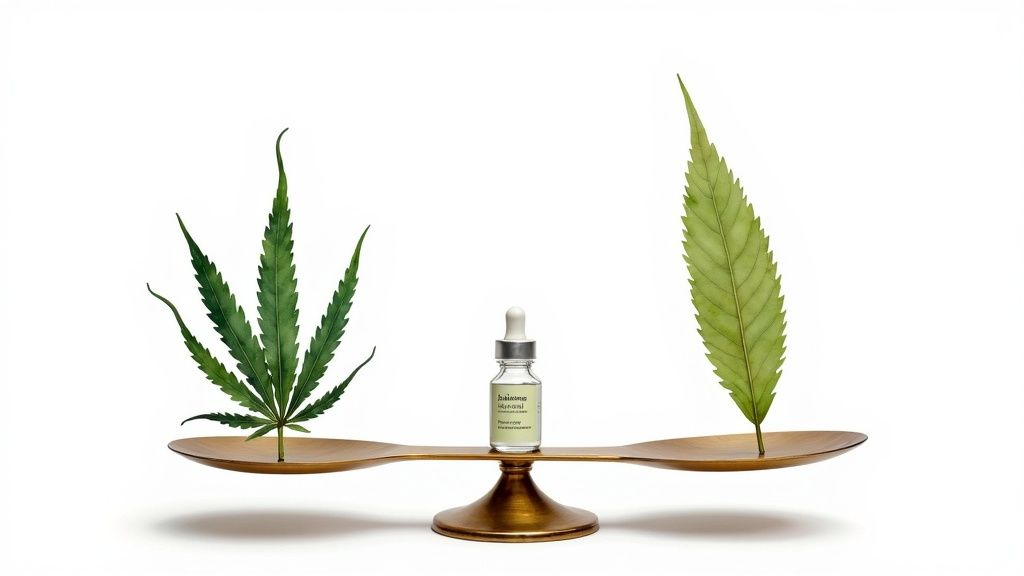
For decades, the cannabis community ran on a simple rule of thumb: Indicas give you a relaxing “body high,” and Sativas deliver an energizing “head high.” Hybrids were just the happy medium. While that was a decent starting point back in the day, modern science paints a much more detailed picture.
The effects you get from a certain strain aren't just about its family tree. Instead, they're orchestrated by a complex dance between all the chemical compounds in the plant. We call this the entourage effect, where cannabinoids and terpenes team up to produce unique results.
Beyond the Labels
Cannabinoids like THC (tetrahydrocannabinol) and CBD (cannabidiol) are the main drivers of cannabis's effects. THC is what causes the psychoactive "high," while CBD provides therapeutic benefits without the buzz. But they’re only part of the story.
Terpenes, the fragrant oils that give cannabis its signature smell and flavor, are just as important in shaping your experience. For instance:
- Myrcene: This earthy, musky terpene is often linked to those classic relaxing and sedating effects.
- Limonene: A zesty, citrusy terpene known for its ability to lift your mood and spirits.
- Pinene: An earthy terpene that can help promote alertness and focus, just like a walk in the woods.
A so-called "Sativa" strain with a ton of myrcene might feel surprisingly relaxing, while an "Indica" packed with limonene could be pretty uplifting. This is exactly why looking at the chemical profile is a much better bet than trusting an old label.
Understanding this shift helps you make smarter choices at the dispensary. In the global recreational cannabis market, valued at USD 2.00 billion in 2024, hybrids are dominating sales precisely because they're so versatile. In fact, hybrids make up over 50% of dispensary sales in major markets because they can be fine-tuned for very specific effects. You can find more insights about the global recreational cannabis market online.
To put it all in perspective, here’s a quick look at how the old myths stack up against what we know today.
Cannabis Types Traditional Myths vs Modern Science
| Strain Type | Traditional Belief | Modern Understanding |
|---|---|---|
| Indica | Always sedative and relaxing, causing "couch-lock." Best for nighttime use. | Effects depend on the full chemical profile. Strains high in myrcene tend to be sedating, regardless of the Indica label. |
| Sativa | Always energizing and uplifting. Ideal for daytime creativity and focus. | Effects are driven by the dominant terpenes. A Sativa high in limonene or pinene is more likely to be stimulating. |
| Hybrid | A balanced mix of Indica and Sativa effects. | A broad category where breeders create specific cannabinoid and terpene profiles to achieve desired outcomes. |
Ultimately, it’s all about the chemistry inside the plant. Once you start thinking in terms of cannabinoids and terpenes instead of indica and sativa, you’ll have a much easier time finding the perfect strain for you.
What Actually Defines a Strain's Effects
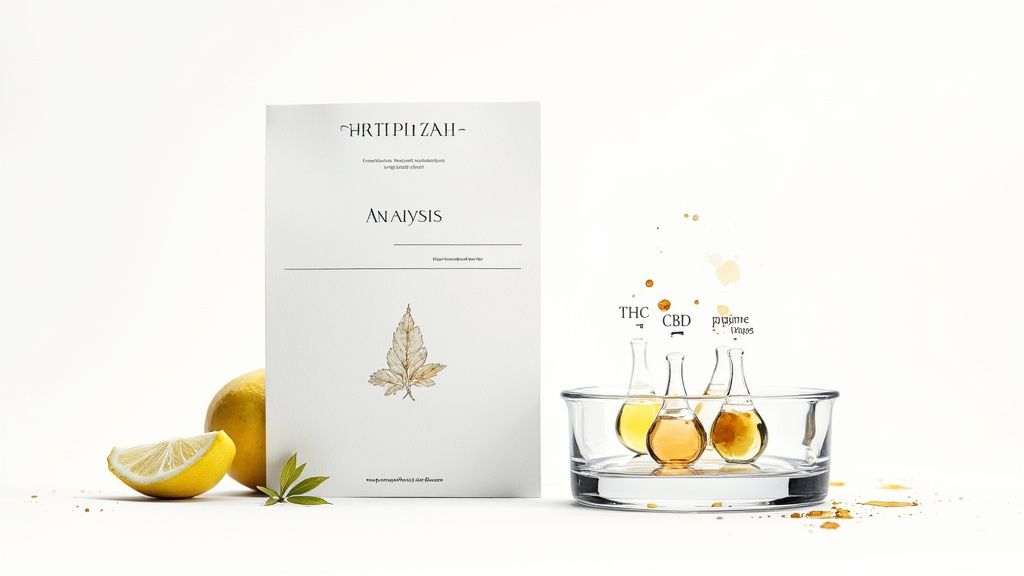
While the whole indica, sativa, and hybrid framework is a decent starting point, the real story behind a strain's effects is written in its chemical profile. Two main types of compounds are running the show: cannabinoids and terpenes. Getting a feel for how these molecules work together is the secret to really predicting how a strain will make you feel.
Think of it like a band. Cannabinoids are the lead singers, setting the overall mood and intensity. The terpenes are the rest of the musicians, adding all the depth, character, and nuance that makes each song unique.
The Role of Major Cannabinoids
Cannabinoids are the primary active ingredients in cannabis that interact with your body’s endocannabinoid system. The two most famous players, by far, are THC and CBD. The ratio between these two is absolutely fundamental to the experience.
- THC (Tetrahydrocannabinol): This is the compound that produces the classic cannabis "high." Generally speaking, a higher THC percentage means a more potent and euphoric experience.
- CBD (Cannabidiol): This is a non-psychoactive compound praised for its therapeutic benefits, like reducing anxiety and inflammation. CBD is also known to balance out the intensity of THC, leading to a more clear-headed, less overwhelming high.
A strain with 25% THC and less than 1% CBD is going to feel worlds apart from one with 15% THC and 10% CBD, even if a dispensary calls them both "hybrids." The first is built for a powerful punch, while the second is all about a milder, more manageable effect.
Terpenes: The Aromatic Architects of Your High
If cannabinoids are the engine, terpenes are the steering wheel, directing the experience. These are the aromatic oils that give cannabis strains their distinct smells and flavors—everything from a sharp citrus tang to the calming scent of lavender. But they do more than just smell nice; they work in tandem with cannabinoids to fine-tune the effects.
This is where the old indica and sativa labels really start to show their age. A strain's terpene profile is a far more reliable crystal ball for its effects than its supposed genetic history.
Here are a few common terpenes and the kind of vibe they usually bring to the party:
- Myrcene: This terpene has an earthy, almost clove-like scent and is famous for its relaxing, sedating properties. It’s a huge reason why some strains—regardless of their indica or sativa tag—can leave you glued to the couch.
- Limonene: Just like it sounds, this one is found in citrus rinds and is known for its uplifting, mood-boosting effects. Strains high in limonene are often perfect for daytime use or shaking off stress.
- Pinene: Smelling like a fresh pine forest, this terpene is known to help with alertness and focus. It can even help counteract some of the short-term memory fogginess that THC can cause.
- Linalool: With a floral, lavender-like aroma, linalool is associated with calming, anti-anxiety effects.
The crucial takeaway is this: A "sativa" rich in myrcene can feel more sedating than an "indica" packed with limonene. This is why reading a lab report is more powerful than relying on an outdated category.
This is why certain chemical profiles are driving the market right now. Cannabis indica currently leads the global cannabis market, valued at USD 39.21 billion in 2024, largely because its typical terpene and cannabinoid combinations are so effective for consumers. Clinical studies have even shown that high-myrcene strains can reduce migraine pain by up to 65% more effectively than others, proving how much terpenes can shape the outcome.
Once you start understanding this chemical synergy, you can make choices based on predictable effects, not just old labels. You can even see how breeders intentionally cultivate specific profiles by checking out premium cannabis seeds from growers like Equilibrium Genetics. This knowledge empowers you to look past the marketing and find the precise experience you're looking for.
Comparing Indica Sativa and Hybrid Profiles
While the modern way to shop for cannabis is all about chemical profiles, it’s still super helpful to understand the classic distinctions between indica, sativa, and hybrid strains. Think of these categories as a friendly framework, a way to get your bearings when you first look at a dispensary menu. They're like broad genres of music—knowing you want rock is a great start, but the specific band and album will determine the actual sound.
The old-school comparison of indica vs sativa vs hybrid comes from years of observation, starting with how the plants actually look. Sativas grew tall and lanky with skinny leaves in the long, sunny days of equatorial places like Southeast Asia. Meanwhile, indicas evolved in the harsh mountains of the Middle East, staying short and bushy with wide leaves so they could finish their life cycle before the weather turned.
This history is what led to the general effects we associate with them today. But let’s be real—after decades of cross-breeding, a plant's appearance isn't a reliable predictor of its effects anymore. You might find a strain that looks like a classic indica but delivers a surprisingly energetic buzz, all thanks to its unique mix of cannabinoids and terpenes.
Botanical and Chemical Signatures
The real magic is in the chemistry. A strain's unique cocktail of cannabinoids and terpenes is what truly shapes your experience, and this is where the old-school labels start to connect with modern science.
-
Classic Indica Profile: Traditionally, people linked indicas to relaxing, body-heavy effects. This is largely thanks to a high concentration of the terpene myrcene, which is known for its sedating qualities. It’s the main reason indicas got their "in-da-couch" reputation. While they used to have more balanced CBD levels, modern breeding has pushed many indicas to be high in THC.
-
Classic Sativa Profile: Sativas are famous for their head-focused, cerebral effects, often driven by high THC-to-CBD ratios. Their terpene profiles usually feature uplifting compounds like limonene (think citrusy and mood-boosting) and pinene (sharp and focus-enhancing). This is the chemical combo that fuels their reputation for creativity and energy.
-
Typical Hybrid Profile: Hybrids are exactly what they sound like—the result of crossing indica and sativa plants. Breeders create them to dial in specific effects, blending the best traits from both sides of the family. Their chemical profiles are all over the map, designed to create balanced, nuanced experiences, like pain relief without the heavy sedation.
While sativas are famed for citrusy limonene, indicas often lean on earthy myrcene for their classic relaxing effects. This terpene-driven difference is a more accurate way to anticipate a strain's character than just looking at its name.
Indica vs Sativa vs Hybrid A Feature Breakdown
The truth is, modern cannabis has blurred the lines so much that a strain’s lab report—its Certificate of Analysis (COA)—is its true ID card. Pure sativas or indicas are incredibly rare these days. Still, knowing the classic profiles helps you make sense of those lab results.
To make things a little easier, we’ve put together a table that breaks down the typical traits of each category. Use this as your starting point, but always trust the lab test for the most accurate info.
| Feature | Classic Indica Profile | Classic Sativa Profile | Typical Hybrid Profile |
|---|---|---|---|
| Typical Effects | Relaxing, Sedating, "Body High" | Energizing, Uplifting, "Head High" | Balanced, Nuanced, Varies by Dominance |
| Common Use Cases | Sleep Aid, Pain Relief, Stress Reduction | Creativity, Focus, Socializing | Versatile, All-Purpose, Specific Needs |
| Dominant Terpenes | Myrcene, Caryophyllene, Linalool | Limonene, Pinene, Terpinolene | A mix of terpenes from both parent strains |
| Plant Appearance | Short, Bushy, Broad Leaves | Tall, Lanky, Narrow Leaves | A blend of physical traits |
| Origin Regions | Mountainous, Harsh Climates (e.g., Afghanistan) | Equatorial, Hot Climates (e.g., Thailand) | Cultivated Globally in Controlled Settings |
Ultimately, it's best to treat these profiles as signposts, not as gospel. They point you in the right direction, but your final destination is always determined by the unique mix of cannabinoids and terpenes in the product you choose.
Matching Your Strain to Your Desired Outcome
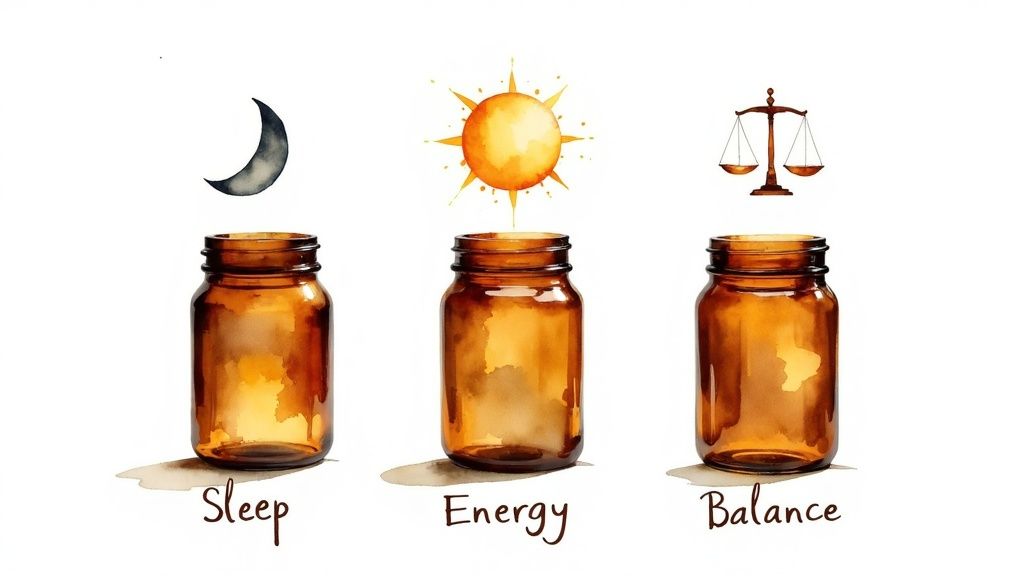
Knowing the science is one thing, but putting it into practice to get the feeling you're after is where the real magic happens. Forget guessing based on the old indica vs sativa vs hybrid model. You can now match a strain’s chemical fingerprint directly to your goals. This turns cannabis shopping from a game of chance into an intentional wellness choice.
Whether you're after deep relaxation after a brutal week, a creative kick for a new project, or just some balanced relief to cruise through your day, there's a chemovar profile out there for you. It's all about knowing what to look for on the lab report.
For Deep Relaxation and Sleep
If you're trying to quiet a racing mind, melt away muscle tension, or just get some solid sleep, you’ll want strains with a very specific chemical signature. These are the profiles that bring on those calming, sleepy effects, and they aren't always classic "indicas."
Your perfect relaxation profile will probably include:
- High Myrcene Content: This terpene is famous for its sedating qualities. Look for strains where myrcene is the top terpene listed; it's heavily linked to that "couch-lock" feeling that helps so many people finally unwind.
- Presence of Linalool: With its calming, lavender-like scent, linalool is a champ at easing anxiety. When you find myrcene and linalool together, you've got a powerhouse duo for stress relief.
- Moderate THC with Some CBD: Super-high THC can sometimes backfire and cause anxiety. A strain with a more moderate THC level (15-20%) and a bit of CBD (1-5%) can deliver that body relaxation without sending your mind into overdrive.
Think about someone dealing with chronic back pain after a long shift. A strain loaded with myrcene and the anti-inflammatory terpene caryophyllene could be the perfect combo for pain relief and muscle relaxation, letting them finally rest comfortably.
For Energy, Creativity, and Focus
When it's time to buckle down on a project, get into a creative flow, or just feel more social and upbeat, you're looking for a totally different mix of compounds. These are the strains that sharpen your senses and wake up your brain—often labeled "sativas," but it's the terpenes that are really running the show.
For an energetic and focused vibe, look for strains with:
- Dominant Limonene or Terpinolene: Limonene gives you that zesty, mood-lifting effect that's perfect for shaking off stress and sparking a positive mindset. Terpinolene offers a more complex, heady buzz that many artists and thinkers find ideal for creative work.
- A Touch of Pinene: This terpene can help with alertness and might even help offset some of the short-term memory fogginess from THC, keeping you on point.
- Higher THC to CBD Ratio: For a truly stimulating and euphoric feeling, strains with a high THC percentage and very little CBD are usually the most effective.
The key is to connect your desired feeling back to the specific compounds that produce it. A desire for "energy" translates to a search for limonene, while a need for "sleep" points directly to myrcene.
For Balanced Daytime Relief
A lot of us need to manage symptoms like anxiety or chronic pain during the day without getting knocked out or feeling uncomfortably high. This is where the beauty of hybrid profiles comes in, offering a perfect middle ground that gives you relief while keeping you functional and clear-headed.
A balanced profile for daytime use often has:
- A 1:1 THC to CBD Ratio (or similar): Strains with almost equal amounts of THC and CBD are fantastic for taking the edge off anxiety. The CBD acts as a buffer, softening the intense psychoactive effects of THC.
- A Mix of Terpenes: Look for a nice blend of calming terps like linalool alongside uplifting ones like limonene. This creates a nuanced effect that can soothe your nerves without making you sleepy.
This balanced approach is perfect for someone trying to ease social anxiety before a get-together or manage nerve pain while still needing to stay focused at work. By looking at the whole chemical profile, you can dial in your cannabis experience with precision, making sure the outcome always matches your intention.
How to Navigate a Dispensary with Confidence
Walking into a dispensary for the first time can feel like a lot to take in. Rows and rows of choices. But here’s the secret: once you learn to look past the indica vs sativa vs hybrid labels and focus on a product's chemical profile, you gain the power to choose with total confidence. It really just comes down to reading the data and knowing what to ask for.
The most important tool you have is the lab-tested menu data, sometimes called a Certificate of Analysis (COA). Think of it like a nutritional label for your cannabis. It cuts through the clever marketing and flashy strain names to give you the hard facts. To get really granular, check out our complete guide on how to read a cannabis dispensary menu.
Decoding the Lab Report
When you’re looking at a detailed menu or a product’s lab report, there are a few numbers you should immediately zero in on. These data points will tell you far more about the potential effects than any indica or sativa sticker ever could.
Here’s what to look for:
- Total Cannabinoids: This is your big-picture number for overall potency. It’s not just THC—it includes CBD and all the other minor cannabinoids that shape the experience.
- THC and CBD Percentages: This ratio is everything. A high-THC, low-CBD strain will likely hit you with intense psychoactive effects. On the other hand, a product with a balanced 1:1 ratio of THC to CBD usually offers a much milder, more functional experience.
- Dominant Terpenes: Any good dispensary will list the top three to five terpenes. Are you seeing myrcene, known for relaxation? Limonene for a mood lift? Or maybe pinene for focus? This is your best clue for understanding the nuanced effects a strain might have.
Remember, a huge THC percentage doesn't automatically mean a "better" product. A strain with 18% THC and a rich, complex terpene profile will often provide a far more enjoyable and effective experience than a bland strain that just happens to have 30% THC.
Consumption Method Matters
The way you consume your cannabis makes a massive difference in the experience—from how quickly you feel the effects to how long they stick around. Picking the right method is just as crucial as picking the right chemical profile.
Let's break down the most common options:
- Inhalation (Smoking/Vaping): This is the fastest route, with effects kicking in within just a few minutes. Vaping tends to give you a cleaner taste that really lets the strain's terpenes shine, while smoking provides that classic, traditional feel. Effects typically last for 1-3 hours.
- Edibles: Be prepared to wait a bit. Edibles are processed through your liver, so they can take anywhere from 30 minutes to 2 hours to kick in. When they do, though, the effects are significantly stronger and can last for 4-8 hours or more, making them a great choice for long-lasting relief.
- Tinctures: Tinctures, dropped under the tongue, are a nice middle ground. They kick in relatively quickly (15-45 minutes) and the effects last longer than smoking but not as long as a typical edible.
Talking to Your Budtender
Think of your budtender as your personal cannabis guide, not just a cashier. Their job is to help translate the effect you’re looking for into the perfect product. So, instead of just asking for "an indica," get specific about your goals.
Try starting the conversation with something like this:
- "I'm looking for something to help me unwind and quiet my thoughts before bed. I've had good luck with strains high in myrcene."
- "I need something for daytime anxiety that won’t make me feel sluggish. Do you have anything with a balanced THC-to-CBD ratio?"
- "I'm working on a project and need a creative spark. What do you have that's high in limonene or terpinolene?"
When you focus the conversation on effects and chemical profiles, you give your budtender the information they need to find exactly what you’re looking for. You'll leave feeling confident that you got a product that truly meets your needs.
Your Personal Strain Selection Guide
Now it’s time to put all this knowledge to work. Walking into a dispensary doesn't have to be a guessing game. Armed with an understanding of cannabinoids and terpenes, you can move beyond the simple indica vs sativa vs hybrid labels and start shopping with a purpose.
Think of it as creating a personalized checklist. You know what you want to feel, and now you know how to find the chemical profile that will get you there. To make it even easier, let’s walk through three common scenarios. Ask yourself these questions before you shop, and you'll be able to dial in your perfect strain with confidence.
Choosing a Strain for Sleep and Relaxation
If the goal is to melt away the day's stress or finally get a solid night's sleep, you'll want to focus on calming compounds.
- What's the goal? To ease muscle tension, quiet a racing mind, and drift into a deep, restorative rest.
- What time of day? Evening or right before you hit the pillow.
- What's my THC tolerance? Keep it moderate. Too much THC can sometimes backfire and cause anxiety. Look for strains in the 15-22% THC range.
- What terpenes should I look for? Myrcene is your best friend here. Strains where it's the dominant terpene are famous for their sedating effects. Look for backup from linalool (lavender's calming compound) and caryophyllene for extra relaxing and anti-inflammatory benefits.
Selecting for Creativity and Energy
Need a spark for a creative project, a little social lubrication, or just some daytime focus? You'll be looking for a completely different chemical profile.
- What's the goal? To sharpen your focus, get the creative juices flowing, and put a little lift in your mood.
- What time of day? Daytime or early evening is usually best for these types of strains.
- What's my THC tolerance? Higher THC levels often go hand-in-hand with more stimulating effects. If you're comfortable with it, look for something with 20%+ THC.
- What terpenes should I look for? Keep an eye out for strains high in limonene, terpinolene, or pinene. These are the aromatic compounds that tend to drive that classic, uplifting head high.
Finding Balanced Pain and Anxiety Relief
Sometimes you just need to manage symptoms during the day without getting glued to the couch. For that, a balanced profile is exactly what you need.
- What's the goal? To take the edge off anxiety or manage pain while staying functional and clear-headed enough to tackle your day.
- What time of day? Anytime, but especially useful for daytime relief.
- What's my THC tolerance? This is where cannabinoid ratios really shine. Strains with a 1:1 THC to CBD ratio are fantastic for knocking out anxiety without an overwhelming high.
- What terpenes should I look for? A well-rounded effect often comes from a nice mix of terpenes. Think limonene for mood, caryophyllene for inflammation, and linalool to smooth out any anxiety.
This decision tree gives you a great visual for how to approach choosing the right product. It all comes down to checking the lab report, considering your consumption method, and leaning on expert advice.
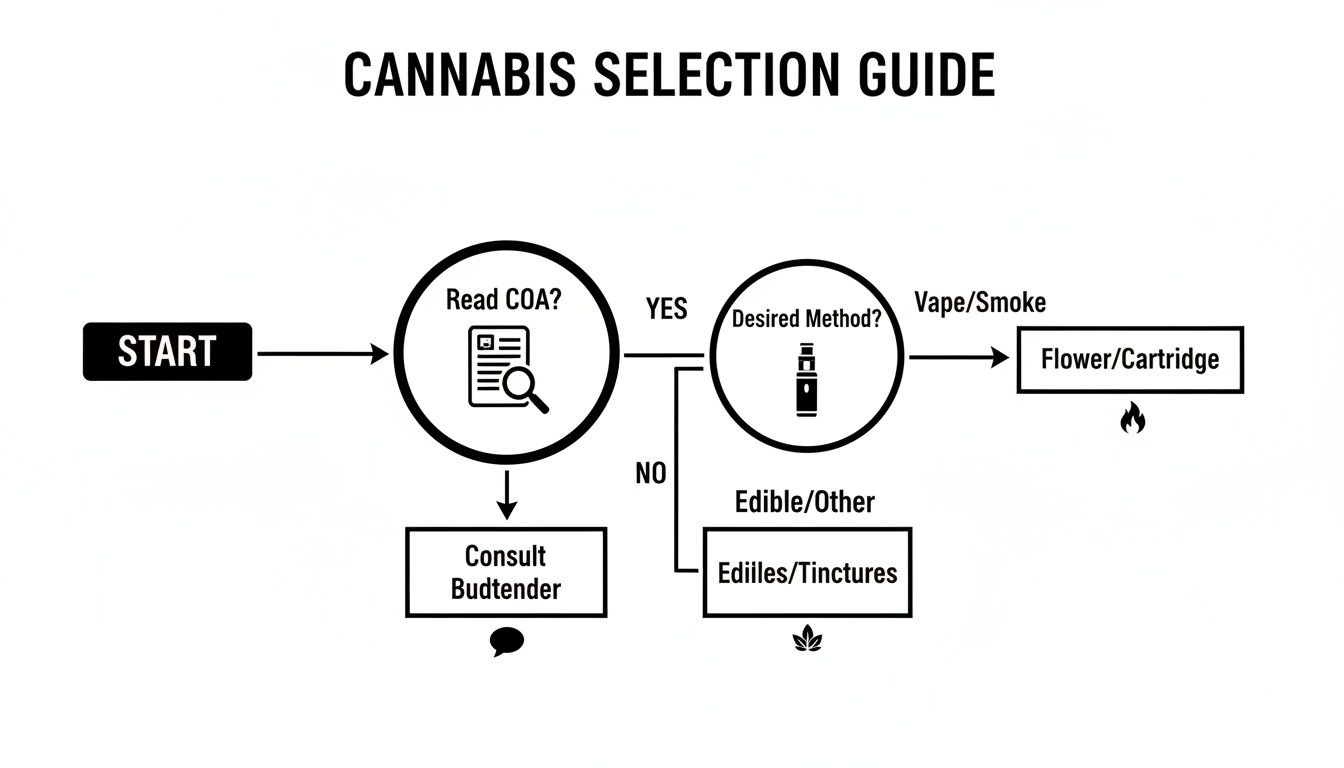
The flowchart drives home the point that your product's chemical makeup and how you use it are the most important factors. If you want to take a deeper dive and see how this works in practice, you can find the right strain for you with our more detailed guide.
Busting Common Cannabis Strain Myths
Even after you get the hang of cannabinoids and terpenes, a few old myths about indica, sativa, and hybrid strains tend to stick around. Let's tackle some of the most common questions and clear the air once and for all.
Think of these as the final nail in the coffin for the old way of thinking. It’s all about the chemistry, not the category.
Do All Indicas Really Cause "Couch Lock"?
Not a chance. That heavy, sleepy feeling we call "couch-lock" is almost always thanks to a terpene called myrcene. And while a lot of classic indica strains are packed with it, that’s definitely not a hard-and-fast rule.
You could easily grab an "indica" with low myrcene and feel surprisingly functional. On the flip side, a sativa-dominant hybrid loaded with myrcene could have you melting into your sofa for hours. It's the terpene profile that tells the real story, not the indica label.
Can a Sativa Strain Actually Make Me Feel Relaxed?
Absolutely. Sativas have a reputation for being energizing, but their chemical makeup is what truly matters. Find a sativa strain with a healthy amount of the terpene linalool—the same one found in lavender—and you might be surprised by its calming, anxiety-busting effects.
A sativa with plenty of linalool or even a balanced THC-to-CBD ratio can deliver a beautifully relaxed yet clear-headed experience. This is the perfect example of why you have to look past the label to get the effects you're really after.
How Long Do Effects from Different Strains Last?
This is a big one. The duration of your high has very little to do with whether a strain is an indica, sativa, or hybrid. It’s almost entirely about how you consume it.
Your consumption method dictates how quickly the effects kick in and how long they'll stick around.
- Inhalation (Vaping/Smoking): This is the fastest route. You'll feel the effects within minutes, and the experience typically lasts somewhere between 1 to 3 hours.
- Edibles: Since your body has to digest them, edibles take their sweet time. Expect a delay of anywhere from 30 minutes to 2 hours before they kick in. But once they do, the effects are much more intense and can last from 4 to 8 hours—sometimes even longer.
Understanding this difference is key to having a good time, especially if you're new to cannabis. The very same strain can offer a short, manageable session when vaped, but turn into a long, powerful journey as an edible. Always factor in your method.
Ready to put this knowledge to the test and find your perfect strain? The expert budtenders at Cannavine are here to walk you through our incredible selection of lab-tested cannabis. Check out our menu online for quick pickup or delivery. Visit https://trycannavine.com to get started