When it comes down to the joint vs blunt debate, it’s all about what you’re rolling with. A joint is rolled in a thin, light paper—often made from hemp or rice—that’s designed to let the pure flavor of your cannabis flower shine through. A blunt, on the other hand, is wrapped in a thicker tobacco leaf or hemp wrap, giving you a much slower burn and adding its own unique flavor to the mix.
Understanding the Fundamental Differences
When you walk into a dispensary like Cannavine, choosing between a joint and a blunt is like picking between two classic, yet totally different, ways to enjoy cannabis. Each one offers a distinct experience shaped by what it’s made of, how it’s built, and the culture behind it. Getting a handle on these differences is your first step to figuring out which one is right for you.
The main point of divergence is the wrap itself. This single choice really dictates everything that follows—from the taste and aroma to how long your session lasts. Think of it as choosing between a clean, simple canvas (a joint) and a rich, textured one (a blunt).
The Foundation Materials
A joint is all about simplicity and keeping the focus on the flower. The rolling papers are intentionally thin and nearly tasteless, designed to be as unobtrusive as possible. The most common materials you'll find are:
- Hemp Paper: A go-to, sustainable option that burns slowly and adds a subtle, earthy note.
- Rice Paper: Usually the thinnest paper you can buy, it's virtually flavorless and gives you a super smooth burn.
- Flax Paper: A classic choice, known for its silky feel and reliable, even burn.
Blunts, however, bring a much bolder character to the table by using wraps made from tobacco. This can be done the old-school way by emptying out a cigarillo or by using one of the many commercially produced blunt wraps available today. And while traditional blunts are all about the tobacco, the modern market has plenty of tobacco-free options, too.
- Tobacco Wraps: These deliver that classic slow, even burn and add the stimulating kick of nicotine.
- Hemp Wraps: A super popular tobacco-free alternative that mimics the slow burn of a traditional blunt but without any nicotine.
- Palm Leaf Wraps: Another natural, tobacco-free choice famous for an extra-slow burn and its own earthy flavor profile.
This table breaks down the essential characteristics that set these two smoking methods apart.
| Characteristic | Joint | Blunt |
|---|---|---|
| Wrapping Material | Thin rolling paper (hemp, rice, flax) | Tobacco leaf, cigar wrap, or hemp wrap |
| Primary Flavor | Pure cannabis flower (terpene-focused) | A mix of cannabis and the wrap's flavor |
| Burn Rate | Relatively fast | Slow and prolonged |
| Typical Size | Smaller, holds 0.5 to 1 gram | Larger, holds 1 to 3+ grams |
| Nicotine Content | None | Yes (unless using a hemp/palm wrap) |
Ultimately, whether you go for a joint or a blunt sets the entire tone for your experience, influencing everything from flavor and duration to whether it's a solo session or one to share with friends.
A Detailed Comparison of Joints and Blunts
To really get into the joint vs. blunt debate, we have to look past the basics and see how every little detail shapes your experience. From the paper you use to the way it burns, everything matters. This side-by-side breakdown will cover the practical differences you actually care about.
The biggest fork in the road is the rolling material. A joint is rolled with thin paper that’s nearly tasteless, while a blunt uses a much thicker wrap made from tobacco or hemp. This one difference sends ripples through everything else, from flavor to how long your session lasts.
This graphic gives you a quick visual summary of what makes a joint a joint, and a blunt a blunt.
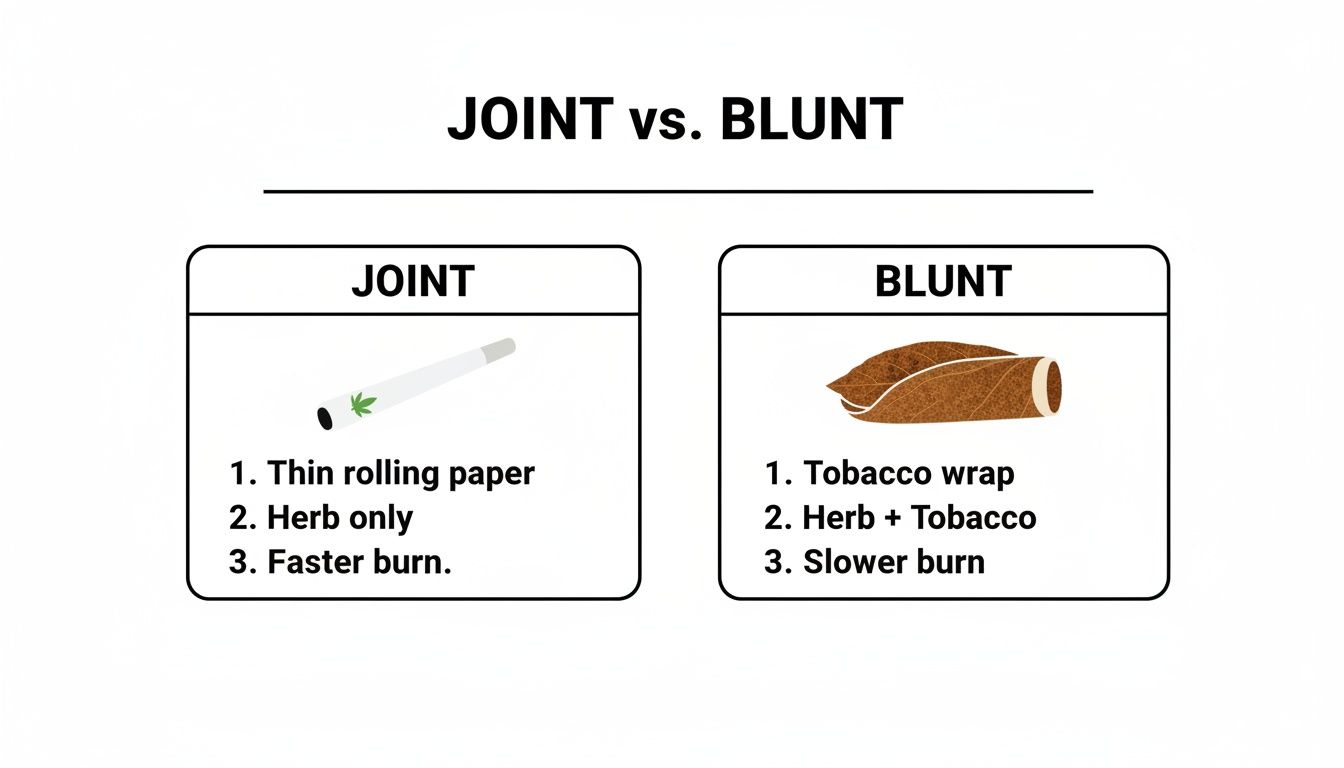
As you can see, a joint is all about its simple paper construction. A blunt’s personality, on the other hand, comes from its heavier, more robust tobacco or hemp wrap.
Flavor Profile and Aroma
When you light up a joint, you're tasting the cannabis, plain and simple. The rolling paper—whether it's made from hemp, rice, or flax—is designed to be a neutral player. Its only job is to burn clean and let the strain's unique terpene profile shine.
For instance, if you roll up a top-shelf strain like Jack Herer, you’ll get those bright, piney, citrus notes without anything getting in the way. You’re tasting the flower exactly how the grower wanted you to.
Blunts are a whole different story. A classic tobacco wrap brings its own distinct flavor to the party, which is often sweet or earthy, and it mixes right in with the cannabis aroma. This creates a blended profile where the wrap is just as much a part of the flavor as the flower. Modern hemp wraps give you that slow-burning blunt experience but with more flavor options, from fruity to something more natural.
The core difference in taste is purity versus complexity. A joint offers a pure expression of the cannabis strain, making it ideal for connoisseurs. A blunt provides a complex, layered flavor experience where the wrap itself is an active ingredient.
Burn Rate and Session Length
How thick the wrap is directly impacts how long your session will go. Joint papers are thin, so they burn pretty fast. A standard joint might last you 5-10 minutes, which is perfect for a quick solo smoke or sharing with one other person.
In contrast, the thick, sturdy nature of a blunt wrap means it burns much slower and more evenly. A blunt can easily keep going for 20-40 minutes, sometimes even longer, depending on how big and tight it's packed. This makes it the undisputed champion for bigger social circles where it can be passed around multiple times without someone constantly needing a lighter.
Size and Cannabis Capacity
There's a huge difference in how much flower each one can hold, and that has major implications for your dose and for sharing.
- Joints: Usually hold somewhere between 0.5 and 1 gram of cannabis. They’re smaller, easier to carry around discreetly, and built for personal use or small groups.
- Blunts: Are way bigger, holding anywhere from 1 to 3 grams, and sometimes even more. Their massive capacity is exactly why they're the go-to for group sessions—one blunt can easily satisfy several people.
This size difference is a big deal. Trying to smoke an entire blunt by yourself is a much more intense ride than smoking a standard joint, simply because of how much more cannabis you’re consuming.
Joint vs Blunt At a Glance
To help make the choice easier, this table sums up the key differences we’ve just talked about. Think of it as a quick cheat sheet for picking the right option for the moment.
| Characteristic | Joint | Blunt |
|---|---|---|
| Wrapper Material | Thin rolling paper (hemp, rice) | Thicker wrap (tobacco, hemp, palm leaf) |
| Dominant Flavor | Pure cannabis flower terpenes | A blend of cannabis and the wrap's flavor |
| Burn Rate | Fast (5-10 minutes) | Slow and consistent (20-40+ minutes) |
| Average Capacity | 0.5 to 1 gram | 1 to 3+ grams |
| Best Use Case | Solo sessions, flavor tasting, quick use | Group gatherings, long sessions, robust flavor |
| Tobacco/Nicotine | None | Yes (unless using a non-tobacco wrap) |
At the end of the day, neither one is flat-out "better." The right choice is all about context—what are your goals for the session, who are you with, and what kind of cannabis experience are you looking for?
Analyzing Health and Potency Implications
When you’re weighing the pros and cons in the joint vs. blunt debate, health and potency are two of the biggest factors to think about. The materials used to roll each one create wildly different experiences, impacting more than just flavor—they change the physiological effects, too. Your personal health priorities and tolerance level should really guide your decision here.
The main health difference boils down to a single ingredient: tobacco. Traditional blunts are rolled with tobacco leaf wraps, which means you're introducing nicotine and other byproducts from tobacco combustion. Joints, on the other hand, are made from papers like hemp or rice and contain no tobacco at all.
This isn’t a small detail. Nicotine is a highly addictive stimulant, and having it in a blunt wrap can definitely alter the overall effect, often adding a stimulating "head rush" to the cannabis high. For anyone actively avoiding nicotine or worried about its health impacts, a joint is the obvious choice.
The Impact of Nicotine and Combustion
The tobacco in a blunt fundamentally changes its health profile. When you smoke a traditional blunt, you’re inhaling smoke from both cannabis and tobacco combustion. This combination exposes you to the chemicals and carcinogens found in tobacco smoke, on top of those from cannabis.
For consumers looking for a "cleaner" experience that lets the pure effects of the cannabis shine through, joints offer a much more direct path. Without the added variable of nicotine, you get an experience shaped entirely by the cannabinoids and terpenes of your chosen flower.
Choosing a joint over a traditional blunt eliminates exposure to nicotine and the additional compounds produced by tobacco combustion. This makes it a preferred method for health-conscious consumers or anyone looking to experience the unadulterated effects of cannabis.
Thankfully, the market has evolved. Today, you can find plenty of tobacco-free blunt wraps made from materials like hemp or palm leaves. These products mimic the slow-burning, hefty experience of a classic blunt without the nicotine, offering a great middle ground for those who love the blunt format but want to skip the tobacco.
Understanding Potency and Dosing Dynamics
Beyond the health side of things, the sheer size difference between a joint and a blunt has huge implications for potency and dosing. It's not that the cannabis inside a blunt is magically stronger, but the volume is just so much greater.
A standard joint usually holds somewhere between 0.5 and 1 gram of cannabis. A blunt, however, can easily pack 1 to 3 grams, sometimes even more. This means a single blunt session can deliver a significantly higher total dose of THC and other cannabinoids compared to a single joint.
This larger capacity makes blunts a powerhouse, but it also demands respect. For a newer user or someone with a lower tolerance, trying to finish an entire blunt could lead to an overwhelmingly intense experience.
To put it in perspective, think about how a session might differ:
- Solo Joint Session: A person smoking a 0.75-gram joint with 20% THC flower is consuming up to 150mg of THC.
- Solo Blunt Session: That same person smoking a 2-gram blunt with the same flower is consuming up to 400mg of THC.
That’s a huge jump in THC intake, and it’s why blunts are so often shared in group settings where the dose is spread among several people. For solo use, a joint gives you much more predictable and manageable dosing.
When deciding between a joint vs. blunt, be honest about your tolerance and the intensity you’re looking for. If you want precise control over your dose or you're newer to cannabis, a joint is a safer, more practical choice. But if you're a seasoned user or sharing with friends, a blunt's capacity offers a long-lasting, powerful session that’s tough to beat.
Choosing the Right Roll for the Right Moment
Figuring out whether to roll a joint or a blunt isn't about which one is "better." It's about what's better for the moment you're in. The best choice really comes down to what you're trying to achieve, who you're with, and the kind of vibe you're going for.
Think of a joint as your go-to for a more personal, focused experience. Because it’s smaller and burns faster, it’s ideal for a quick solo session or sharing with just one other person. It’s the perfect companion for winding down in the evening, sparking some creativity, or just taking a quick break.
On the other hand, a blunt is built for a crowd. Its huge capacity and slow, even burn make it the star of the show at parties, long conversations, and group hangouts. It's meant to be passed around and can easily last long enough for everyone in a circle to get a few good hits.
When to Pick a Joint
A joint really shines when you want subtlety, flavor purity, or just plain convenience. Its discreet nature and clean taste make it a super versatile choice for all kinds of personal moments.
You'll probably want to roll a joint when you want to:
- Truly Taste the Terpenes: If you’ve spent good money on a top-shelf strain with a killer flavor profile, a joint is your best bet. The paper is neutral, so it won’t get in the way of those delicate citrus, pine, or berry notes from your flower.
- Have a Quick Solo Session: A typical joint is a manageable dose that lasts about 5-10 minutes. It’s perfect for unwinding after work without signing up for a long, heavy high.
- Keep Things Low-Key: Joints are smaller and the smoke they produce is less intense and smells more like pure cannabis. It fades a lot faster than the thick, sweet smoke from a blunt, making it a more considerate option in some settings.
When you choose a joint, you're choosing to focus on the cannabis itself—from its unique flavor to its specific effects. The strain you pick will really shape the experience. For a deeper look into that, check out our guide on the differences between indica, sativa, and hybrid strains to find the perfect flower for your next joint.
When a Blunt Is the Better Call
For those long, communal smoke sessions, the blunt is the undisputed champion. Its sturdy build and massive capacity are basically designed for sharing and lasting power.
A blunt is the clear winner for:
- Social Gatherings and Parties: A single blunt can easily satisfy a group of four or more people, burning nice and slow as it makes its way around the circle. Plus, the tough wrap can handle being passed around without falling apart.
- Extended Conversations: That 20-40 minute burn time is perfect for settling in for a good, long chat with friends. It keeps the vibe going without someone having to stop and roll a new one every ten minutes.
- A Robust, Long-Lasting High: Because blunts hold so much more cannabis (1-3+ grams), they deliver a much stronger and longer-lasting effect. This makes them great for seasoned users or groups looking for a potent, shared high.
Situational Recommendation: Go for a joint when you want to savor the flavor of your flower or need a quick, controlled solo session. Grab a blunt when you're with a group and the goal is a long-lasting, shared experience where a slow burn is a must.
At the end of the day, picking between a joint and a blunt is all about context. Just think about who you’re with, how much time you have, and what kind of experience you want. Do that, and you'll pick the right roll every time.
Navigating the Modern Pre-Roll Market
The rise of pre-rolls has completely changed the game, making the whole joint vs blunt debate a lot easier to settle. Forget about the hassle of grinding and rolling; now you can just walk into a spot like Cannavine, look at a menu, and pick out a perfectly rolled smoke. This isn't just a small corner of the cannabis world, either—it's a massive part of the industry.
The numbers don't lie. Pre-rolls, which include both joints and blunts, make up a huge slice of the legal cannabis pie, accounting for about 15–16% of all sales in the U.S. In recent years, cannabis lovers have bought over 388 million pre-rolls, adding up to more than $4.1 billion in sales. You can dig into more of these trends over at DaySavers.com. This explosion in popularity shows just how much people value the convenience and variety pre-rolls bring to the table.
Understanding Pre-Roll Product Descriptions
When you’re browsing a dispensary menu, knowing how to decipher the product descriptions is the key to finding exactly what you’re looking for. The details really matter, whether you're grabbing a pre-rolled joint or a blunt.
- Strain Name and Type: Every description will tell you the strain (like OG Kush or Blue Dream) and whether it's an indica, sativa, or hybrid. This is your first and best clue about the kind of effects you can expect.
- Total Cannabinoids: Pay attention to the THC and CBD percentages. This number tells you how potent the flower is, which is crucial for figuring out your dose.
- Net Weight: This is simply how much cannabis is packed into the pre-roll. You'll typically see sizes from 0.5 grams to 2 grams or even more.
- Wrap Material: For blunts, the menu might note if it's a classic tobacco wrap or one of the newer tobacco-free hemp wraps.
So, if you see "Indica Joint – 1g – 28% THC," you know you’re getting a one-gram joint filled with potent indica flower that’s probably great for chilling out. On the other hand, a "Hemp-Wrapped Blunt – 2g – 22% THC" is a bigger, tobacco-free option that’ll burn slow and steady.
The biggest shift we've seen in the pre-roll world is the explosion of infused options. These aren't your standard joints or blunts—they're kicked up a notch with cannabis concentrates for a whole new level of potency and flavor.
The Rise of Infused Pre-Rolls
Infused pre-rolls are everywhere these days, and for good reason. They now make up an estimated 44–48% of all pre-roll sales. These products take a regular joint or blunt and power it up by adding high-potency concentrates.
A few common ways they’re made include:
- Kief-Dusted: The outside of the pre-roll gets a light coating of cannabis oil and is then rolled in kief—the super-potent crystals from the plant. It adds a serious kick.
- Infused Internally: Concentrates like live resin, hash, or distillate are mixed right in with the ground flower before rolling. This makes for a smooth, even burn and a powerful high from start to finish.
- Twaxed: This is when a "snake" of concentrate, like wax or shatter, is wrapped around the outside of the pre-roll. It looks cool and melts down as you smoke.
These heavy hitters are perfect for seasoned cannabis fans or for sharing with a group. If you're curious to learn more about how they're made and what to expect, take a look at our complete infused pre-rolls guide for all the details. Understanding these modern options means you can walk into any dispensary and find the perfect pre-rolled joint or blunt for whatever vibe you're going for.
A Practical Guide to Rolling Your Own

For a lot of us, there's a certain satisfaction that comes from rolling your own. It's a hands-on ritual, and getting it right is a skill worth having. Whether you're team joint or team blunt, a good rolling technique is the difference between a frustrating, uneven smoke and a smooth, enjoyable session.
This guide will walk you through the essentials for both, helping you dodge common issues like canoeing or pulling a roll that’s just too tight. Mastering your own process turns a simple task into a satisfying craft.
Mastering the Art of Rolling a Joint
Rolling a joint is a classic, and it's often the first technique people learn. The whole process is about finesse and getting that cannabis distributed just right for the perfect burn.
- Prep Your Flower: Start by grinding your cannabis so it's consistent and fluffy. You don't want to turn it into dust—that just restricts airflow and makes for a tough draw.
- Add a Filter: Pop a filter, or "crutch," at one end of your rolling paper. It gives the joint some structure, stops you from inhaling bits of flower, and lets you smoke it all the way down without singed fingers.
- Shape and Seal: Gently pinch the paper between your fingers, rolling it back and forth to shape the cannabis into a cone or cylinder. Once it’s nice and compact, lick the sticky strip and seal it up.
You're looking for something that feels firm but not packed solid. That’s the key to a smooth, easy pull.
Techniques for Rolling a Perfect Blunt
Rolling a blunt takes a little more patience. Those wraps are thicker and not as forgiving as joint papers, so the real secrets are in prepping the wrap and getting a solid seal.
First thing's first: you have to prep your wrap. If you’re using a classic cigarillo, you'll need to carefully slice it open lengthwise and dump the tobacco. If you have a commercial blunt wrap, just unroll it.
Next, you’ll want to moisten the wrap just enough to make it pliable—be careful not to get it soggy. Pack your cannabis in evenly, then tuck and roll the wrap tightly around the flower. Sealing is the make-or-break moment. Use a good amount of moisture along the seam, then "bake" it by running a lighter's flame quickly back and forth along the seal without actually touching it.
One of the most common mistakes is a weak seal. That’s what causes a blunt to unravel or burn unevenly, which is what we call canoeing. Take that extra moment to really bake the seam shut. It’s what guarantees a slow, consistent smoke from start to finish.
If you really want to kick things up a notch, some rollers like to dust the outside of their finished joint or blunt with a fine layer of trichomes. If you want to know more about this potent concentrate, you can learn all about what kief is and how to use it from our detailed guide.
Answering Your Questions About Joints and Blunts
The whole joints vs. blunts debate naturally brings up a lot of questions about price, potency, and health. We hear them all the time from our customers, so let's clear the air and give you the straightforward answers you need.
Which Is More Cost-Effective, a Joint or a Blunt?
For a solo session, joints are almost always easier on the wallet. Rolling papers are cheap, and you don’t need much flower to fill one—typically just 0.5 to 1 gram. This makes them perfect for a quick, personal smoke without using up your stash.
Blunts are the opposite. The tobacco or hemp wraps cost more, and they are built to hold a lot more cannabis, often anywhere from 1 to 3 grams. While the initial cost is higher, if you're sharing with a big group, one blunt can actually be more economical than rolling up several different joints.
Does a Blunt Get You Higher Than a Joint?
This is a common one. A blunt usually feels more powerful, but that’s mostly because you’re simply smoking more cannabis at once. Since a blunt can hold two or three times as much flower as a joint, you're getting a much bigger dose of THC in a single session.
There's another factor, too. If you're using a traditional tobacco wrap, the nicotine delivers its own stimulating "head rush." Many people find this buzz combines with the THC to create what feels like a more intense high.
Can You Get Blunts Without Tobacco?
You sure can. The market has exploded with tobacco-free options that give you that classic, slow-burning blunt experience without the tobacco. These wraps are usually made from things like hemp, palm leaves, or even certain tea leaves.
Tobacco-free wraps are a game-changer. They deliver the slow, even burn and hefty feel of a classic blunt but skip the nicotine. They’ve become incredibly popular for people who love the format for social hangs but want to avoid tobacco.
What Is an Infused Pre-Roll?
Think of an infused pre-roll as a joint or blunt that’s been kicked up a notch with cannabis concentrates. This process jacks up the potency quite a bit and can add some really interesting flavors you wouldn't get from flower alone.
There are a few ways it's done:
- Kief-Dusted: The outside of the pre-roll is lightly coated in cannabis oil and then rolled in kief for an extra punch.
- Internally Infused: Concentrates like hash, live resin, or distillate are mixed right in with the ground flower before it's rolled.
- Twaxed: This is when a thin "snake" of concentrate, like wax or shatter, is wrapped around the outside of the finished pre-roll.
Infused pre-rolls are a fantastic choice if you have a higher tolerance or you're just looking for a more powerful experience.
Ready to find your perfect roll? Here at Cannavine, we keep a hand-picked selection of the best pre-rolled joints, blunts, and infused options ready for pickup or delivery. Check out our live menu online and find exactly what you're looking for at https://trycannavine.com.