When you spot mildew on cannabis, you're looking at a common fungal growth that typically shows up as a white, dusty layer on the leaves and buds. But this isn't just a cosmetic flaw; it's a huge red flag signaling poor growing conditions that can drastically tank the quality, potency, and safety of the flower.
For anyone who enjoys cannabis, knowing how to spot it is non-negotiable.
Why Mildew on Cannabis Matters to You
Think about buying a beautiful piece of fresh fruit or a block of artisanal cheese, only to get it home and find it's covered in mold. It's an instant disappointment. Mildew on your cannabis is the exact same thing. This invasive fungus ruins the very things you look for in good flower, turning what should be a great experience into a potentially harmful one.
This goes way beyond looks. The presence of mildew means the product is compromised. It can wreck everything from the aroma and taste to the actual effects. Instead of the rich, complex terpene profile you paid for, you get a dusty, musty smell and a harsh, unpleasant taste.
The Problem with Powdery Mildew
The most frequent offender you’ll come across is powdery mildew. It’s a notorious headache in cannabis cultivation everywhere, with specific fungal species causing those classic white patches on the plant. These fungal colonies can explode in indoor, greenhouse, and even outdoor grows, wrecking the plant's health and ruining the final harvest.
But it's more than just a quality problem—consuming contaminated cannabis brings real health risks. No one wants to be inhaling fungal spores when they're trying to find relief or just relax. This is exactly why it's so critical to know what you're looking for.
At its core, identifying mildew on cannabis is a fundamental consumer skill. It empowers you to protect your health, ensure you get what you paid for, and make smarter, more confident purchasing decisions every single time.
To help you get a quick handle on this, here's a simple breakdown.
Mildew on Cannabis At a Glance
| Aspect | Description for Consumers |
|---|---|
| What It Looks Like | A white or grayish, powdery or web-like coating on leaves, stems, or buds. It might look like flour was sprinkled on the plant. |
| Common Causes | High humidity, poor air circulation, and moderate temperatures create the perfect breeding ground for these fungal spores. |
| Why It's a Concern | Mildew degrades the quality, potency, and flavor of cannabis while posing health risks from inhaling mold spores, especially for those with allergies or compromised immune systems. |
Spotting mildew is your first line of defense, ensuring you only bring home clean, high-quality cannabis from the start.
Key Concerns for Consumers
When you're buying cannabis, being on the lookout for mildew is a must. Here’s a quick rundown of what's at stake:
- Degraded Quality: Mildew literally eats away at the plant, destroying the cannabinoids and terpenes that give the flower its potency, aroma, and flavor.
- Potential Health Risks: Breathing in mold spores can trigger respiratory irritation, allergic reactions, and even more serious issues for people with weakened immune systems.
- Waste of Money: If you buy a product that's contaminated, you've paid for something that's unusable and needs to be thrown out immediately.
Knowing how to spot and steer clear of mildew is one half of the battle. The other half is knowing how to stop it from growing on the products you've already brought home. For more on that, check out our guide on the best practices for storing weed to keep it fresh and safe. A clean, high-quality product is the foundation of any good cannabis experience.
How to Visually Identify Mold on Your Cannabis
Learning to spot mildew on your cannabis is a crucial skill for any consumer. Forget fancy lab equipment—your own eyes are the best first line of defense for making sure the flower you’re about to buy or enjoy is clean and high-quality. Taking a moment to really look at your bud can save you from a nasty experience and potential health problems down the road.
The usual suspect is powdery mildew, and it pretty much looks just like it sounds. Picture a fine dusting of flour or powdered sugar sprinkled across the leaves and buds. It shows up as a flat, dull, white or grayish-white film. You might be able to wipe it off, but don't be fooled—the fungus has already sunk its roots deep inside the plant tissue.
Then there’s the more sinister-looking botrytis, which most growers know as bud rot or gray mold. This stuff is nasty. Instead of sitting on the surface, botrytis attacks the bud from the inside out, turning the core into a dark, mushy mess. On the outside, you might see gray, brown, or even black web-like fibers that make the bud feel weirdly soft and damp.
Trichomes vs. Mildew: A Critical Distinction
One of the biggest mix-ups for newcomers is telling the difference between the good stuff (trichomes) and the bad stuff (mildew). At a quick glance, both can look like a white coating, but getting up close and personal reveals who’s who.
Trichomes are the tiny, glistening crystals that make quality cannabis sparkle. These are the plant's resin glands, working hard to produce the cannabinoids and terpenes you're looking for. Under a light, they should glitter like a field of tiny diamonds or little glass mushrooms, giving the bud a frosty and sticky feel. These glands are also what produce the potent, powdery substance known as kief.
Mildew, on the other hand, has zero sparkle. It’s completely flat and lifeless, absorbing light instead of reflecting it back at you. The texture is more like common dust or fine cobwebs, creating a dull film that just looks wrong.
This concept map helps put it all into perspective, showing how a quick visual check for contaminants like mildew is a core part of judging overall cannabis quality.
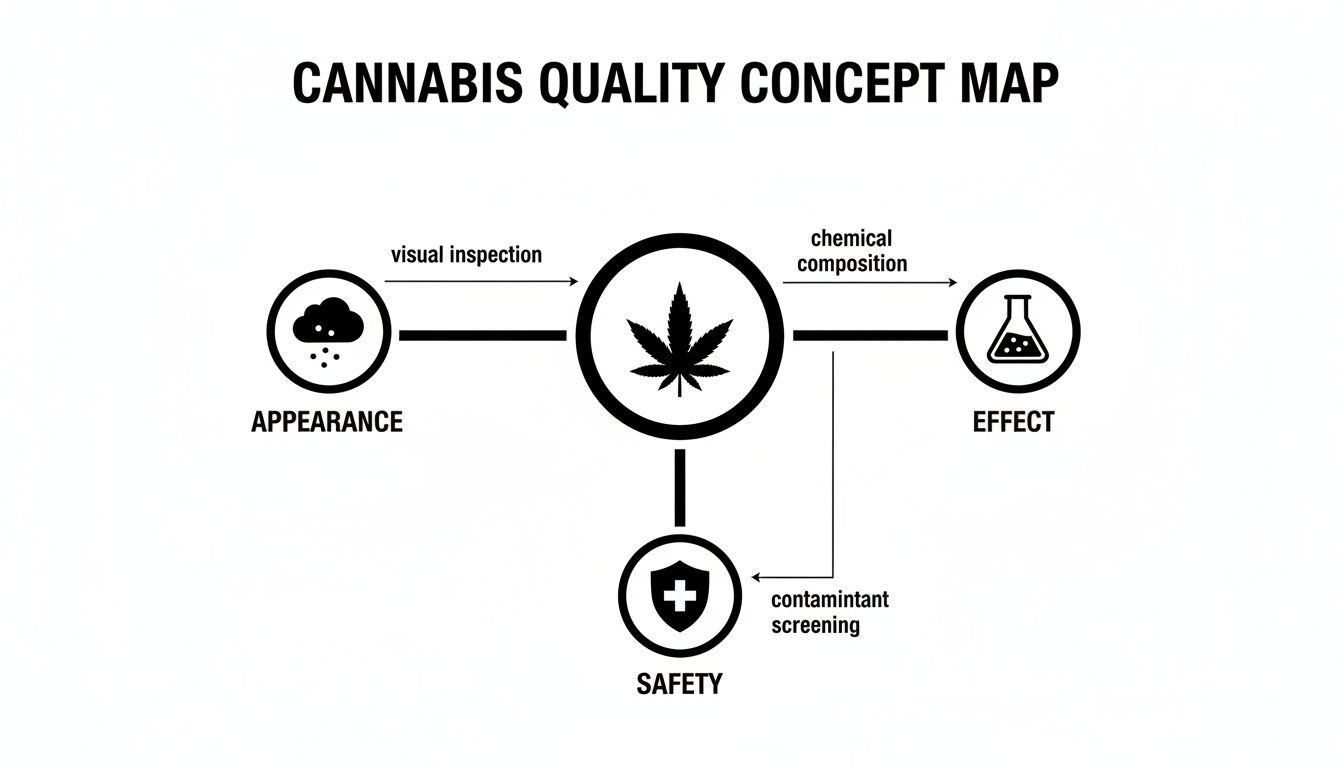
As the map shows, everything is connected. A product's appearance, safety, and its ultimate effect all start with that first careful look.
Trichomes vs. Mildew vs. Bud Rot: A Visual Guide
When you're checking out cannabis, use your senses. Clean flower should smell earthy, sweet, or citrusy—not musty like a damp basement. If you catch a whiff of something "off," that's an immediate red flag.
To help you inspect your flower with confidence, we've put together a quick comparison table. It breaks down the key differences between those desirable sparkly trichomes and the harmful molds you want to avoid.
| Characteristic | Trichomes (Good) | Powdery Mildew (Bad) | Botrytis/Bud Rot (Bad) |
|---|---|---|---|
| Appearance | Glistening, crystal-like, sparkly. Looks like a coating of sugar. | Dull, flat, powdery white or gray spots. Looks like flour dust. | Fuzzy, web-like gray or brownish fibers. Dark, decaying core. |
| Texture | Sticky to the touch, resilient. | Dry and chalky. Can sometimes be wiped off. | Soft, spongy, or even slimy. Buds fall apart easily. |
| Smell | Aromatic; terpenes produce scents like pine, citrus, or skunk. | Musty, mildewy, or like a damp basement. | Damp, rotting, or musty smell. Unpleasant and distinct. |
This table is your cheat sheet for telling the good from the bad and the ugly.
Pro Tip: Still not sure? Use the flashlight on your phone. Shine it directly on the buds. Healthy trichomes will catch the light and shimmer like crazy. Mildew will just look dull and powdery, while the creepy, web-like structure of botrytis will be much easier to see.
At the end of the day, trust your gut. If something looks or smells wrong with your cannabis, it probably is. Never feel weird about asking a budtender for a closer look before you buy. A good dispensary will always put quality first and be happy to show you they have nothing to hide.
The Health Risks of Consuming Contaminated Cannabis
Beyond the sheer disappointment of a ruined stash, the conversation around mildew on cannabis gets serious fast. We’re talking about your health. While a healthy person might just get a little irritated, smoking moldy weed can pose some significant risks, especially for certain people. It's not just about a nasty taste; it's about pulling fungal spores directly into your lungs.
When you light up or vape, the heat doesn’t just magically destroy all the mold spores. Instead, it can make them airborne, giving them a direct ticket into your respiratory system. This can kick off a whole range of unpleasant, and sometimes dangerous, reactions.
For most folks, breathing in these spores might trigger some immediate but fairly mild symptoms. Picture a surprise allergy attack—one you unknowingly invited. You might find yourself coughing, wheezing, dealing with sinus pain, or a runny nose as your body scrambles to kick out the intruders.
When the Risks Escalate
That irritation can become something far more dangerous for people with compromised immune systems. For them, inhaling mold from cannabis isn't a minor annoyance; it can be life-threatening. This group includes people going through chemotherapy, living with HIV/AIDS, or those who've had organ transplants.
In these situations, the body’s defenses are already working overtime and are too weak to fight off a fungal invasion. This can lead to serious lung infections, with the most infamous being aspergillosis. This nasty infection is caused by the Aspergillus fungus—a common mold that sometimes pops up on cannabis. Aspergillosis can cause severe breathing problems and, in the worst cases, can be fatal.
This is exactly why product safety is a huge deal in the legal cannabis market. Good dispensaries and producers know that their customers include vulnerable individuals who depend on clean, tested products to stay healthy.
The second you find mildew on cannabis, it stops being a quality problem and becomes a public health problem. The legal market has a massive responsibility to make sure every single product on the shelf is clean, protecting every customer—especially the most vulnerable.
This problem has gotten bigger lately. Since Canada legalized cannabis in 2018 and the U.S. passed the Farm Bill, powdery mildew has exploded across the North American cannabis scene. This surge makes transparent lab testing more critical than ever. We need to know that mold limits—usually under 1,000 CFU/g—are being met to protect consumers from health issues, which can impact 20-30% of immunocompromised users. You can read more about these findings on PMC.
Potential Health Complications from Moldy Cannabis
The specific health fallout depends on the type of mold and your own immune system. Here are some of the main risks that come with consuming contaminated cannabis:
- Respiratory Irritation: This is the most common issue. Think coughing, wheezing, and shortness of breath as your lungs try to deal with the spores.
- Allergic Reactions: If you already have mold allergies, you can expect more intense symptoms like sinus inflammation, congestion, and even full-blown asthma attacks.
- Sinus and Lung Infections: Spores love the warm, damp environment of your sinuses and lungs. They can settle in and cause persistent infections like bronchitis or sinusitis.
- Systemic Fungal Infections: This is the most serious risk, primarily for the immunocompromised. Fungi like Aspergillus can escape the lungs and get into the bloodstream, leading to a body-wide infection that attacks multiple organs.
At the end of the day, the only real way to dodge these health risks is to buy your cannabis from licensed, reputable dispensaries. They are legally required to sell products that have passed strict third-party lab tests for all kinds of contaminants, including mold and mildew. That diligence is your best defense against the hidden dangers lurking in contaminated cannabis.
How Responsible Growers Keep Cannabis Clean
Keeping mildew off cannabis isn’t about luck—it’s about meticulous science and a whole lot of dedication. The best growers don’t just react when a problem pops up; they build their entire cultivation environment to stop fungi like powdery mildew from ever getting a foothold in the first place.
Think of it less like a garden and more like a high-tech cleanroom. Professional cultivators manage their grow spaces with an incredible level of precision. They’re not just growing plants; they’re managing a complex ecosystem where every single variable is measured, tracked, and tweaked to help cannabis thrive while shutting down fungal intruders. This proactive mindset is what separates premium, clean cannabis from a contaminated crop.
The whole process starts way before a single seed ever hits the soil. It begins with designing a facility that actively fights contamination through smart engineering and strategic planning.
Mastering the Grow Room Environment
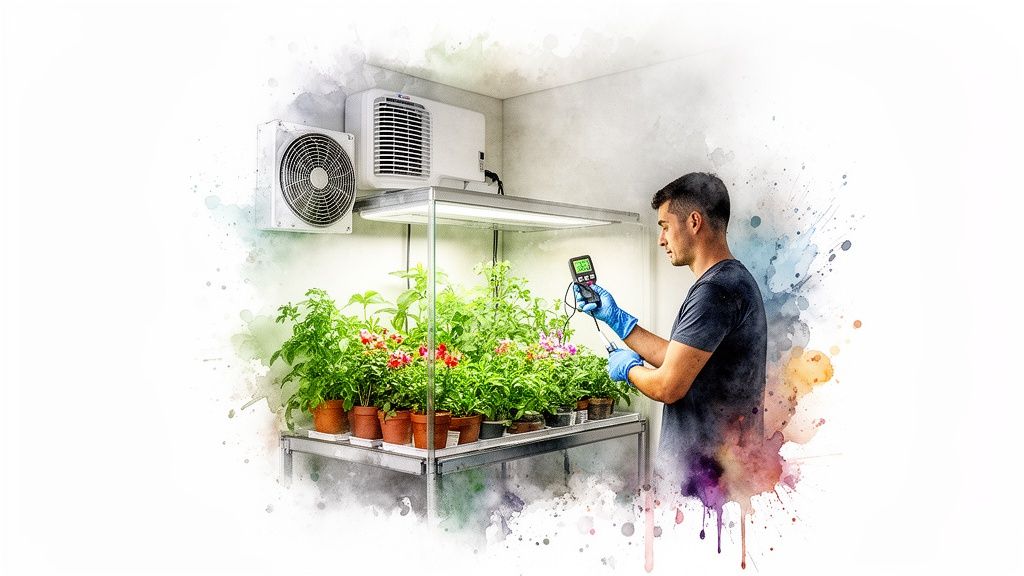
The most powerful weapon against mildew is total environmental control. Fungi love stagnant, humid air, so growers are relentless about creating conditions that make it impossible for spores to settle down and multiply. It's a constant balancing act managed with some seriously sophisticated tech.
Here are the key environmental controls they focus on:
- Humidity Management: Growers use powerful, commercial-grade dehumidifiers to keep relative humidity in the sweet spot. During the flowering stage, they often keep it below 50%, creating an environment that’s just too dry for mildew spores to germinate.
- Air Circulation: Stale air is mildew’s best friend. Cultivators use strategically placed oscillating fans and beefy HVAC systems to ensure a constant, gentle breeze moves around every part of the plant—from the top colas right down to the lowest leaves.
- Temperature Regulation: Consistent temps are a must. By preventing big temperature swings, especially when the lights go out, growers stop condensation from forming on the leaves, which would otherwise roll out the welcome mat for fungus.
This level of control is a 24/7 job, and it’s a big part of what separates a professional operation from a casual home grow.
Proactive Prevention and Safe Treatments
Even in the most tightly controlled rooms, sneaky spores can find a way in. That's why responsible growers layer their environmental controls with proactive, plant-safe prevention strategies. Think of it as a shield that protects the crop from a potential invasion.
These preventative measures are always chosen with consumer safety as the absolute top priority. You won't find harsh chemical fungicides in the legal market. Instead, cultivators rely on integrated pest management (IPM) techniques that are both effective and clean.
A grower's job is 90% prevention and 10% reaction. By focusing on creating a hostile environment for mildew from day one, we ensure the final product is as clean and pure as the plant was meant to be.
Some of the most common and trusted methods include using organic fungicides like potassium bicarbonate or introducing beneficial microbes that simply outcompete the bad fungi. A more recent innovation is the use of UV-C light. A 2023 discovery at Cornell University even pinpointed the first natural resistance gene, PM1, in Cannabis sativa against powdery mildew. Until strains with this gene become common, growers lean on alternatives like sharp humidity control and UV-C light, which has been shown to wipe out up to 99% of spores in trials.
Ultimately, the goal is always to produce flower that is clean from the very start, which minimizes the need for any treatment at all. This careful attention continues long after harvest, too. Getting the dry and cure right is the final, critical step in keeping mildew away. To see how the pros handle it, check out our guide on how to properly dry and cure your cannabis.
Using Lab Testing to Guarantee Product Safety
Giving your cannabis a quick once-over is a great first step, but the real proof of a clean, safe product comes from the lab. In the legal cannabis world, third-party lab testing is the gold standard. It provides an unbiased report card on everything from the flower's potency to its purity. Learning how to read these reports is what turns you from a hopeful buyer into an empowered, informed consumer.
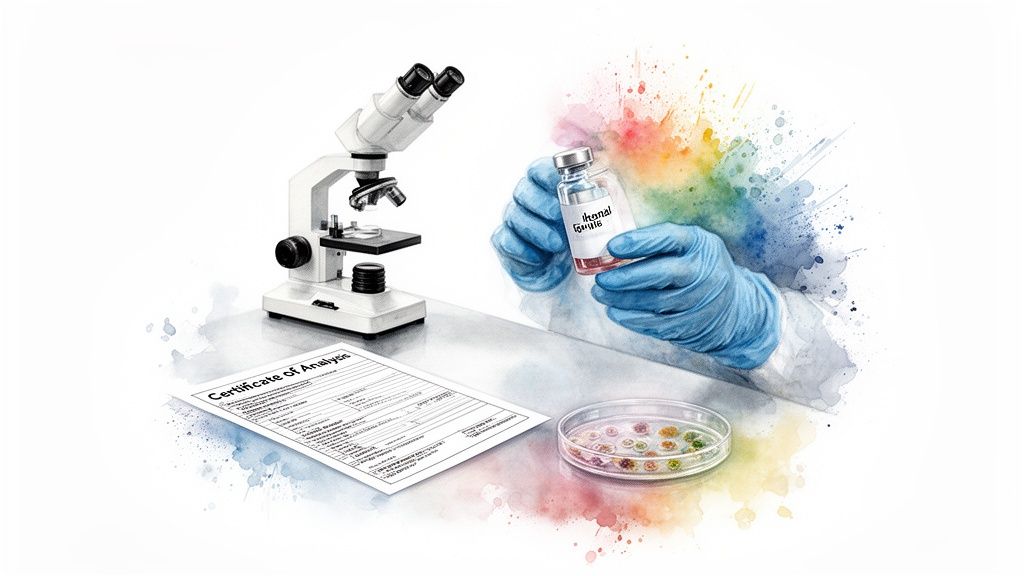
This is where the Certificate of Analysis (COA) comes into play. You can think of a COA as the product's official transcript. It's a detailed document from an accredited, independent lab that verifies a cannabis product has been tested for cannabinoids, terpenes, and, most critically, contaminants like pesticides, heavy metals, and microbes—including mildew and mold.
Any reputable dispensary in a legal market should have a COA handy for every single product on their shelves. Often, you can just scan a QR code on the packaging to pull it up. If they can’t show you one, that’s a huge red flag.
Reading a Certificate of Analysis
At first glance, a COA can look pretty intimidating with all its scientific terms and numbers. Don't worry, you only need to focus on a couple of key sections to make sure the product is free from harmful mildew and mold. The main section you're interested in is labeled microbials or microbiological screening.
This part of the report details the test results for yeast, mold, and specific harmful bacteria. You'll typically see the results displayed in CFU/g, which stands for "colony-forming units per gram." It's just a scientific way of counting the number of viable fungal or bacterial cells in the sample.
A low CFU/g count isn't a bad thing. Spores are literally everywhere in our environment. What really matters is that the count is well below the legal limit set by state regulators.
What to Look For on the Report
When you find that microbials section, you’re really just looking for one simple thing: a "Pass" result. The labs compare their findings to state safety thresholds and give a clear pass or fail grade.
Here’s what to zero in on:
- Total Yeast & Mold: This is the big-picture count for all fungal life. Each state sets its own acceptable limit, but it’s often around 10,000 CFU/g.
- Aspergillus: Some COAs go a step further and test for specific dangerous molds. You want to see "Not Detected" or "ND" next to species like Aspergillus flavus or Aspergillus niger.
- Overall Result: Look for a clear and prominent "Pass" for the entire microbial screening panel.
A "Pass" on a COA is your guarantee. It means the product has met strict safety standards and is considered safe to consume. It should be a non-negotiable benchmark for any product you think about buying.
Never feel shy about asking your budtender to see a COA or to help you make sense of it. A knowledgeable staff member at a licensed dispensary like Cannavine will be more than happy to walk you through the results. It’s part of their commitment to transparency and your safety. This simple act of checking the lab report is the most powerful tool you have to make sure the cannabis you’re enjoying is clean.
What to Do If You Find Mold on Your Product
It's a gut-wrenching moment: you get home from the dispensary, open up your purchase, and find what looks like mold on your cannabis. The first thought for many is to try and save the investment. But before you do anything else, you need to know one crucial, non-negotiable rule: do not consume it.
That means no smoking, no vaping, and definitely no trying to cook it into edibles. Some people think you can treat it like a block of cheese and just slice off the fuzzy parts. This is a huge mistake. Mold is a lot like an iceberg—what you see on the surface is only a tiny fraction of the problem.
Underneath that visible fuzz, a network of fungal roots, called mycelium, has almost certainly spread throughout the entire bud. These roots are completely invisible to the naked eye and can produce harmful mycotoxins that stick around even if you cut the visible mold away. Trying to "fix" it is a battle you can't win, and it puts your health directly at risk.
Your Immediate Action Plan
Okay, so you found mold. Don't panic. There's a simple and straightforward way to handle this that keeps you safe and helps the dispensary get to the bottom of the issue.
Here’s exactly what you should do:
- Isolate the Product Immediately: Get the contaminated cannabis into a sealed bag or container right away. This is important because it stops the spores from spreading to your other products or getting into the air in your home.
- Document Everything: Grab your phone and take clear, well-lit photos or a quick video of the bud. Make sure the moldy spots are obvious. Also, find your receipt or proof of purchase—you'll need it.
- Contact the Dispensary: Give the shop where you bought it a call or send them an email. Calmly explain what you found and be ready to share the photos you took.
The second you spot mold, that product is no longer safe to consume in any way, shape, or form. It's just not worth the serious health risks that come with inhaling mold spores and mycotoxins.
Why Your Next Step Matters
Getting in touch with the dispensary is a really important step. Licensed retailers like Cannavine are built on a foundation of product safety and have procedures in place for exactly these kinds of situations. Any reputable shop will want to know about a quality control problem so they can ensure they're only selling clean, properly tested cannabis.
By reporting the problem, you're actually doing your part to strengthen the legal market. A licensed dispensary stands behind what they sell and will usually work with you on a solution, like an exchange or a refund. That level of accountability is something you'll never get on the illicit market, and it's a huge part of what makes buying legal cannabis a safe and confident experience. At the end of the day, your health is always the number one priority.
Common Questions About Mildew on Cannabis
Even after getting the rundown on cannabis mildew, a few specific questions always seem to pop up. We get it. That's why we've put together this quick-reference guide to tackle the most common queries we hear from customers and growers.
Think of this as your go-to spot for clearing up any lingering doubts. We'll give you straight, clear answers so you can handle any situation with confidence and keep your cannabis experience a safe one.
Can You Smell Powdery Mildew on Cannabis?
Yes, you often can, but your nose isn't the most reliable tool for the job. Fresh, high-quality cannabis has a vibrant and distinct smell thanks to its terpenes—you know, those citrusy, piney, or funky aromas we all love. Mildew throws a wrench in that, introducing a smell that just doesn't belong.
Cannabis hit with powdery mildew will often give off a musty, damp, or basement-like odor. It's a scent that's noticeably "off," completely lacking the fresh pop of a clean product. The catch is that a small, early-stage infestation might not smell strong enough to notice. That's why a good, close visual inspection is always your best bet.
Is It Safe to Use Moldy Weed in Edibles?
Absolutely not. This is a dangerous myth we need to bust right now. The thinking goes, "If I cook it, the heat will kill the mold, right?" Unfortunately, it’s not that simple.
While high temperatures might kill the fungal spores themselves, they do nothing to get rid of the mycotoxins some molds produce. These are nasty, toxic compounds that can easily survive the heat of your oven. When you eat them, you risk getting seriously sick.
Never try to "rescue" moldy cannabis by turning it into edibles, tinctures, or anything else. The mycotoxin risk is real, making the final product unsafe no matter how you process it.
How Can You Tell Mildew from Frosty Trichomes?
This is probably the most important skill every cannabis consumer needs to learn. At a quick glance, a dusting of mildew can look a bit like a heavy coat of trichomes, but up close, the difference is night and day.
- Trichomes: These are the good guys—the tiny, crystal-like glands that cover premium flower. They sparkle and glisten under light, like little diamonds. They're part of the plant and give the bud its sticky feel.
- Mildew: This is a contaminant that just sits on the surface. It looks like a dull, flat, powdery substance, almost like someone sprinkled flour on the bud. It absorbs light instead of reflecting it and has a chalky or sometimes web-like texture.
Here's a simple trick: use your phone's flashlight. Shine it on the bud. Trichomes will glitter and throw the light back at you. Mildew will just look flat and lifeless.
What Is the Best Way to Store Cannabis to Prevent Mold?
Proper storage is your number one defense against mildew once you bring your cannabis home. Mold loves two things: high humidity and stagnant air. Your job is to create the exact opposite environment.
For the best results, keep your flower in an airtight glass container, like a simple mason jar. Store that jar in a cool, dark, and dry place—a closet or cabinet is perfect. Stay away from the fridge or freezer, where temperature swings can create condensation. The sweet spot for humidity inside the jar is between 58% and 62%, which keeps mold away while perfectly preserving the terpenes. The easiest way to nail this is by tossing a two-way humidity control pack right in with your flower.
At Cannavine, we believe everyone deserves clean, safe, and professionally lab-tested cannabis. Our entire menu is curated with quality in mind, so you can shop knowing you're getting the best. Come see the difference that high standards make.