If you're wondering what sativa does, the simplest way to think about it is an energizing, uplifting, and cerebral experience. Many people compare it to the buzz from a strong morning coffee. For this reason, sativa is widely known as the 'daytime' cannabis, often sought after to spark creativity, sharpen focus, and elevate mood.
Understanding Sativa Effects

Think of sativa as the go-to for activity and engagement. While its counterpart, indica, is all about relaxation and even sedation, sativa typically delivers a stimulating "head high" rather than a heavy "body high." This has made it a popular choice for social gatherings, artistic projects, or just knocking out your to-do list with a bit more enthusiasm.
The effects most often reported by sativa fans include:
- Increased Energy and Alertness: Many feel a burst of energy that helps them power through fatigue.
- Enhanced Creativity and Focus: It can be just the thing to break through a creative block or really zone in on a task.
- Mood Elevation: Users frequently describe feelings of happiness, euphoria, and a general sense of optimism.
A Quick Comparison
To really put it in perspective, let's look at a quick side-by-side of the classic stereotypes. This helps set the stage for understanding why people might choose one over the other for different situations or times of day.
Sativa vs Indica Common Effects at a Glance
| Attribute | Sativa (The 'Head High') | Indica (The 'Body High') |
|---|---|---|
| Primary Feeling | Energizing and Uplifting | Relaxing and Sedating |
| Mental Effects | Stimulating, Cerebral, Focus-Enhancing | Calming, Mellow, Thoughtful |
| Body Effects | Mild, Light, Active | Heavy, Soothing, "Couch-Lock" |
| Best For | Daytime, Creative Tasks, Socializing | Nighttime, Unwinding, Sleep |
Of course, these are generalizations, and everyone's experience can be a little different. But this classic breakdown is a great starting point.
It’s this reputation for stimulant-like, cerebral effects that has made sativa a major player in the global cannabis market.
For decades, “sativa-type” varieties have been marketed for their energy-boosting and creativity-enhancing properties. This strong consumer demand has led to sativa representing a huge and growing slice of the commercial cannabis pie worldwide. You can explore more about cannabis cultivation market trends to see just how much consumer preferences shape what ends up on dispensary shelves.
Going Beyond the Sativa and Indica Labels
While the sativa versus indica conversation is a great place to start, it's just the tip of the iceberg in today's cannabis world. Think of these labels less as strict scientific classifications and more like helpful signposts, pointing you in a general direction rather than guaranteeing a specific destination.
Here’s a good way to look at it: calling a strain "sativa" is like calling a restaurant "Italian." You're probably expecting pasta and some kind of red sauce, but the actual meal could be anything from a quick slice of pizza to a five-course gourmet dinner. The label gives you a hint, but the real story is in the ingredients.
Why Most Cannabis Is a Hybrid
Truth is, after centuries of cross-breeding, nearly every strain you'll find on a dispensary shelf today is technically a hybrid.
Pure sativa or pure indica plants are incredibly rare in the commercial market. Growers have spent decades selectively breeding plants to get the best traits—things like high THC content, specific flavors, or faster growing times. Naturally, this meant mixing genetics along the way.
This long history of hybridization is why a strain labeled "sativa" might still offer some relaxing body effects, or why an "indica" could give you a surprising mental boost. Understanding the difference between indica and sativa is still valuable, but it’s just the first step on your journey.
The Real Drivers of Sativa Effects
So, if you can't always trust the label, what really shapes your experience? It all boils down to a strain's unique chemical fingerprint, which is made up of two key components.
- Cannabinoids: These are the main active compounds in cannabis. THC is the most famous one, responsible for the core psychoactive effects, while others like CBD can help moderate or tweak the experience.
- Terpenes: These are the aromatic oils that give each strain its distinct smell and flavor—everything from citrus and pine to berry and diesel. But they do more than just smell good. Terpenes work together with cannabinoids to steer the high in a synergy known as the "entourage effect."
A strain’s uplifting, sativa-like buzz comes from a very specific combination of these compounds, not from a simple botanical label. For instance, a strain that’s rich in the terpene limonene (which has a citrusy scent) is far more likely to elevate your mood, no matter if its package says sativa or indica.
The "sativa" label is a powerful marketing tool used by retailers to signal a desired outcome—like energy and focus—to consumers. This has had a real economic impact, especially as legalization has expanded.
In fact, your demand for this kind of product variety has helped make North America the dominant force in the global cannabis market. The United States and Canada drive the largest share of legal cannabis revenue; one analysis reported North America represented roughly 69% of the market in a recent assessment. You can discover more insights about the global cannabis market and see how what you ask for shapes what growers produce. It just goes to show that what you look for on a menu directly influences the products that become available.
The Chemical Team Behind Sativa's Uplifting Buzz
So, what’s really going on at a chemical level to create that classic energetic sativa feeling? It isn't just one single compound doing all the work. Instead, it’s a team effort between two key types of molecules: cannabinoids and terpenes. Getting a handle on how they work together is the secret to finding the exact effects you’re after.
Think of it like this: your cannabis experience is a car. The cannabinoids, especially THC, are the engine. They provide the raw power and the main psychoactive effect. Without THC, the car just isn't going anywhere.
But the engine alone doesn't decide where the car goes or how it handles on the road. That’s where terpenes come in.
Terpenes: The Steering Wheel of Your Experience
Terpenes are the fragrant oils found in cannabis and countless other plants, like pine trees, lemons, and lavender. They’re what give a strain its unique smell and taste. But they do a lot more than that. They act as the steering wheel and pedals for your experience, directing THC’s power to produce a specific outcome.
This incredible teamwork is known as the entourage effect. It’s the idea that all the compounds in cannabis work better together than they do on their own. A sativa-dominant strain feels uplifting precisely because its specific mix of terpenes guides the THC toward a more stimulating, cerebral result.
When you're trying to figure out what a sativa will do, looking at the terpenes is often way more helpful than just looking at the THC percentage.
The entourage effect is all about synergy. It's the difference between a solo guitarist and a full orchestra—the combination produces a much richer, more complex result than any single instrument could alone.
Common Terpenes in Sativa Strains
While there are hundreds of terpenes out there, a few show up again and again in strains known for their classic sativa effects. Learning to spot them on a product's lab report can be a total game-changer. You can find detailed info on specific terpene profiles for our products to get a better idea of what to expect.
Here are a few of the all-stars that help shape the sativa experience:
- Limonene: Just like the name sounds, this terpene has a zesty citrus aroma you'd find in lemons and oranges. It’s famous for its connection to mood elevation, stress relief, and an overall feeling of well-being. If you want a sativa to brighten your day, a limonene-heavy strain is a great place to start.
- Pinene: With that crisp, fresh scent of a pine forest, pinene is known for helping with alertness, focus, and even memory retention. It's one of the reasons some sativas are so popular for creative projects or studying—it can help balance out some of the short-term memory fogginess THC can sometimes cause.
- Terpinolene: This one has a more complex, layered aroma—often described as floral, fruity, and a little herbal. While it's one of the less common terpenes, it shows up frequently in energizing sativa-dominant strains and is thought to be a major contributor to their uplifting buzz.
By paying attention to these key chemical players, you can move beyond the simple "sativa" label and start choosing products based on the specific experience you really want.
How Your Consumption Method Shapes the Sativa Experience
Knowing what a sativa can do is just one piece of the puzzle. How you choose to consume it is just as important in shaping your experience. Think of the consumption method as the control panel for your high—it determines how fast the effects come on, how long they'll last, and even their overall intensity.
It's a lot like getting your morning caffeine. You can sip a cup of coffee for a slow, steady lift, or you can down an espresso shot for an immediate jolt. Cannabis works in a similar way. Inhaling sativa by smoking or vaping delivers an almost instant effect, while edibles offer a much slower, longer-lasting journey.
This graphic gives a great visual of how THC and terpenes team up to create the experience you feel, a process that is directly influenced by your consumption method.
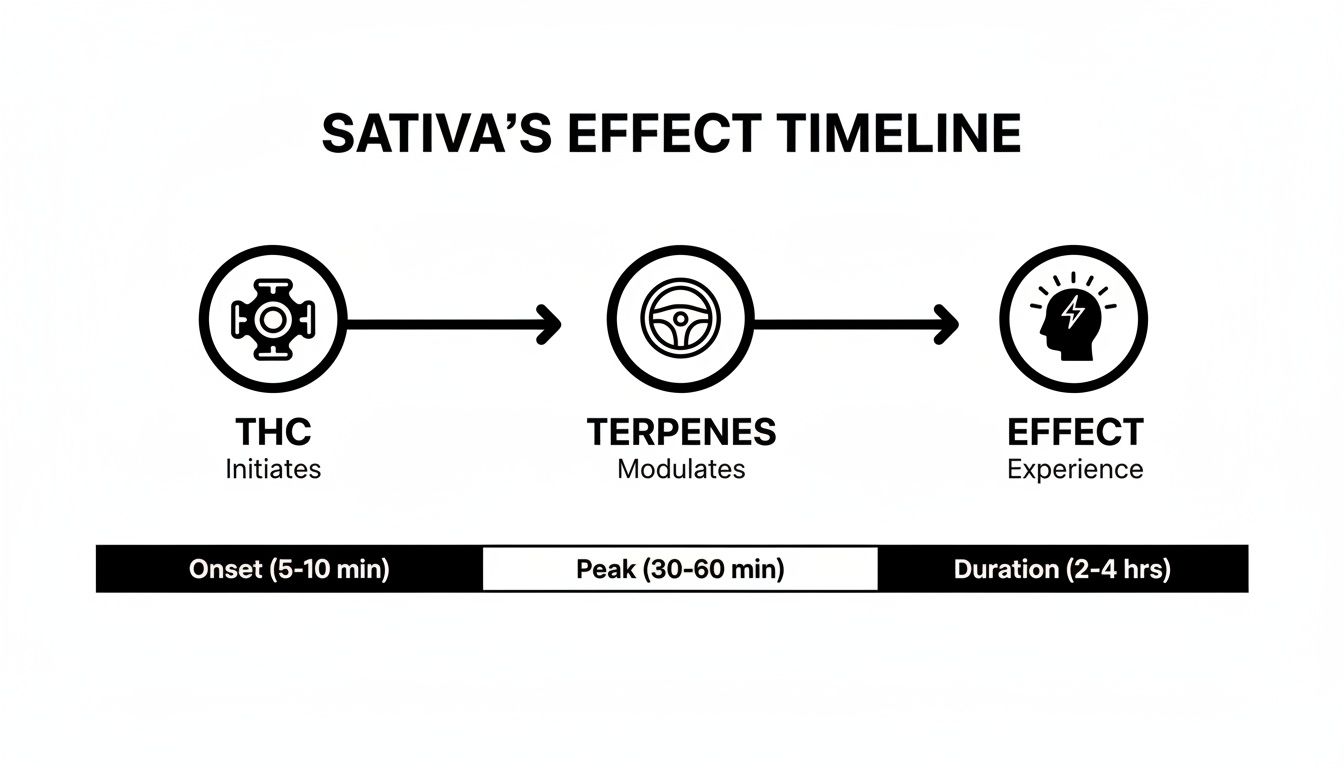
While the strain’s cannabinoids and terpenes set the destination, your consumption method is the vehicle that determines the speed and length of the trip.
Inhalation: Smoking and Vaping
When you inhale sativa—either by smoking flower or hitting a vape—the active compounds are absorbed directly into your bloodstream through the lungs. This is by far the fastest way to feel the effects, which usually kick in within just a few minutes.
You'll typically feel the peak of the experience within 30 minutes, and the entire high usually lasts between one to three hours.
This quick onset is perfect for times when you need an immediate boost, like firing up your creativity before starting a project or getting a little burst of social energy. Since the effects are quick to appear and fade relatively fast, it’s also much easier to control your dosage and avoid taking too much.
Oral Consumption: Edibles
Edibles are a completely different ballgame. When you eat a sativa-infused product, the THC has to travel through your digestive system and get processed by your liver. In the liver, it’s converted into a much more powerful compound known as 11-hydroxy-THC.
This journey through the body has two major implications:
- A Slow Onset: It can take anywhere from 30 minutes to two full hours to start feeling anything. Patience is key.
- A Long Duration: Once the effects finally arrive, they can stick around for four to eight hours, sometimes even longer.
This makes edibles an excellent choice for a sustained, all-day mood lift or prolonged focus. But that delayed onset is serious business. The golden rule with edibles is always start low and go slow. Wait at least two hours before even thinking about taking another dose to avoid an uncomfortably intense experience.
Sublingual Consumption: Tinctures
For those looking for a happy medium, tinctures are a fantastic option. These are liquid extracts you drop under your tongue, where they get absorbed by the mucous membranes and go directly into your bloodstream.
This sublingual method bypasses the digestive system, giving you a much faster onset than edibles—typically around 15 to 45 minutes. The effects tend to last for about two to four hours. Tinctures offer a great combination of a relatively quick onset and very precise dosing, making them a versatile choice for anyone wanting more control than an edible but a longer-lasting effect than smoking.
To make it even clearer, let's break down how these methods stack up against each other.
Comparing Sativa Consumption Methods
| Method | Onset Time | Duration | Best For |
|---|---|---|---|
| Inhalation (Smoking/Vaping) | 1-5 minutes | 1-3 hours | Immediate effects, creative bursts, social energy, easy dose control. |
| Oral (Edibles) | 30 minutes – 2 hours | 4-8+ hours | Long-lasting, sustained effects for all-day relief or focus. |
| Sublingual (Tinctures) | 15-45 minutes | 2-4 hours | A balance of fast onset and longer duration with precise dose control. |
As you can see, the method you choose fundamentally alters the timeline and feel of the sativa high. Inhalation is a quick sprint, while edibles are a long-distance marathon. Tinctures land somewhere comfortably in between.
How to Choose the Right Sativa Product for You
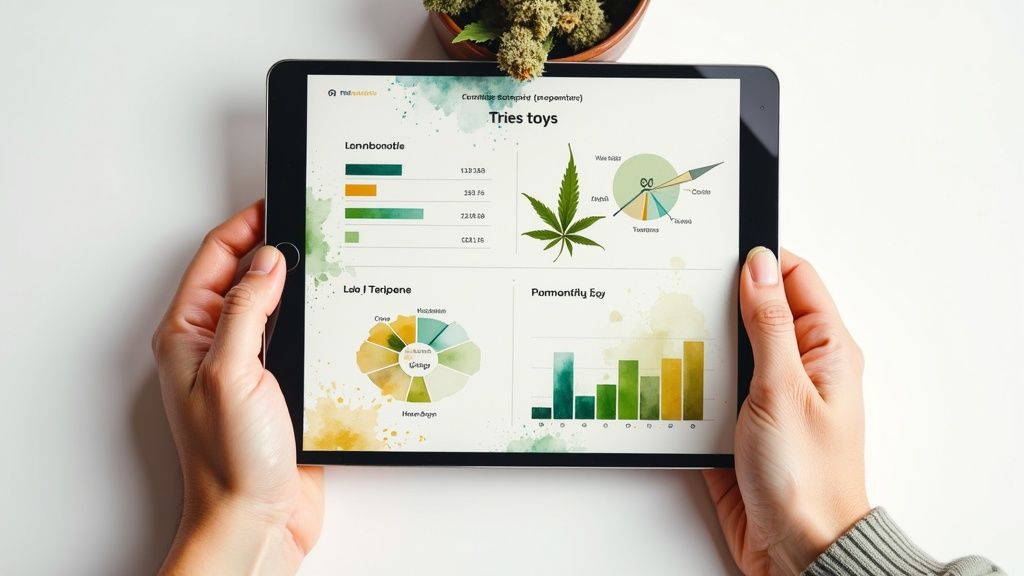
Walking into a dispensary and seeing a wall of options can be a lot to take in. To find a sativa that actually delivers the energizing effects you’re looking for, you have to look past the label. It’s all about what’s inside: the specific combination of cannabinoids and terpenes.
Think of yourself as a cannabis detective. Instead of just asking for "a sativa," you can learn how to read a product's lab report and ask much smarter questions. This is how you take control and find a product that consistently hits the mark, whether you need creative focus, a social spark, or just a little mood lift.
Decode the Lab Report
Every legal cannabis product comes with a Certificate of Analysis (COA), which is just a fancy name for its lab report. This is your treasure map. It breaks down the exact chemical profile of what you're buying, giving you a clear picture of its potential effects.
Here are the two most important things to look for:
- Cannabinoid Percentages: Look beyond just the THC number. Is there any CBD in there to help smooth out the high? What about other cannabinoids like CBG, which many people find helpful for focus?
- Terpene Profile: This is your best clue to how a strain will really feel. The report lists the dominant terpenes and their amounts. For that classic sativa buzz, keep an eye out for uplifting terpenes like limonene (citrusy, mood-lifting) and pinene (piney, focus-enhancing).
Learning to read these reports might feel like learning a new language at first, but it's the most reliable way to find the right strain for you.
Ask Your Budtender the Right Questions
Your budtender is your guide, but the more specific you are, the better they can help you. Instead of just saying you want a sativa, try asking questions that get to the heart of the experience you’re after.
These questions shift the conversation from a vague category to a specific outcome you want to achieve.
To get the best recommendation, try asking things like:
- "I'm looking for a sativa for creative work that won't make me feel anxious. What do you recommend?"
- "What are the main terpenes in this strain? I'm hoping for something with limonene."
- "I want an energetic high, but not something that feels too racy. What would you suggest?"
By focusing on your desired effects and the product's chemical makeup, you can walk into any dispensary with confidence and find the perfect sativa every single time.
Common Questions About Using Sativa
Even with the basics down, you probably still have a few questions about what trying sativa is really like. Let's run through some of the most common things people ask so you can feel totally confident before you dive in.
Think of it as the final, practical checklist before you start exploring.
Can Sativa Cause Anxiety or Paranoia?
Yes, for some people, it definitely can—especially if you take too much THC. Sativa's trademark stimulating effects can sometimes get a little too stimulating, leading to racing thoughts or feeling uncomfortably on edge. Honestly, it's one of the most important things to be aware of as you figure out how sativa works for you.
The golden rule here is to start low and go slow. Seriously. Take a single puff or a tiny piece of a low-dose edible. Then, wait and see how you feel. Give it plenty of time before even thinking about having more. Another pro tip is to look for strains that have a bit of CBD or calming terpenes like linalool to help balance out the experience and keep it from getting too "racy."
Will Using Sativa Affect My Sleep?
Most likely, yes. Because of their energizing nature, using a sativa right before bed is a lot like chugging an espresso and then trying to hit the hay. The whole point of the experience is to promote wakefulness, not rest.
Sativas are really best for daytime activities when you're looking for that creative or mental boost. If you want something to help you unwind and get ready for sleep, a strain labeled as an indica is a much better bet. As a general rule, it's smart to lay off the sativa for at least four to six hours before you plan on sleeping.
It's worth remembering that your own body chemistry is a huge factor. While sativa is known for energy, a very high dose can sometimes make people feel tired or "crash" as the main effects start to fade.
How Long Do Sativa Effects Last?
This one comes down entirely to how you consume it. Your delivery method is just as important as the strain you pick.
- Smoking or Vaping: This is the fast lane. You'll feel the effects in just a few minutes, but they'll typically only last for one to three hours.
- Edibles: This is the scenic route—slowest to start but lasts the longest. It can take anywhere from 30 minutes to two hours to kick in, but once it does, you're in for a ride that can last from four to eight hours, sometimes even longer.
- Tinctures: These are a great middle ground. You'll usually feel them in 15 to 45 minutes, and the effects hang around for about two to four hours.
Of course, your personal metabolism, how often you use cannabis, and the exact dose you take will all play a big part in this timeline, too.
Is It Possible to Build a Tolerance to Sativa?
Absolutely. If you use sativa regularly and frequently, your body will adapt, and you'll notice that you need more to get the same feeling. This is a totally normal physiological response to THC in general, not just with sativas.
To manage this, many people take a "tolerance break" (or t-break). It's as simple as it sounds: just take some time off from cannabis, whether it's a few days or a couple of weeks, to let your system reset. You could also try just cutting back on your dose or how often you consume. Some people even find that switching up their strains helps keep their tolerance from climbing too fast.
Ready to explore the world of energizing sativas with confidence? The expert team at Cannavine is here to help you find the perfect lab-tested product to match your goals. Browse our curated selection of top-shelf flower, vapes, and edibles online for convenient pickup or delivery. Visit us at https://trycannavine.com to get started.